When people hear a taiko performance, they may notice the depth of a Nagado Daiko, the focused attack of a Shime Daiko, or the movement and energy of a Katsugi Daiko. The wood matters, but it is only one part of the instrument’s acoustic system.
Wood density, grain, and stiffness can influence how a shell responds to vibration. However, the final sound also depends on the drum’s diameter and height, whether the shell is hollowed from one log or assembled from staves, shell thickness and internal profile, drumhead material and thickness, head tension, environmental conditions, and the player’s technique. For that reason, descriptions such as “deep,” “bright,” or “powerful” should be treated as useful tendencies rather than guaranteed results.
This guide focuses on practical purchasing decisions using JINLEI’s current product lines: Keyaki and Ash solid-shell options, Kapiac laminated or stave-built models, and Paulownia used specifically for Katsugi Daiko.
How Material and Structure Work Together
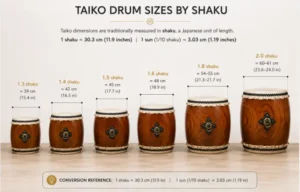
When the drumhead is struck, energy moves through the hide, the shell, and the surrounding air. A harder or denser shell may reflect and sustain energy differently from a lighter shell, but the effect cannot be separated from the drum’s dimensions and construction. A large Kapiac Nagado with a carefully designed laminated shell may project more strongly than a smaller solid-wood drum, while two drums made from the same species can sound different because their shell thickness, internal shape, hides, or tension are not identical.
The most useful comparison is therefore not wood species alone. Buyers should compare the complete specification: material, shell structure, size, weight, drumhead, tension, intended stand, and how often the drum will be moved.
JINLEI Material and Product Options
Keyaki (Zelkova) – Kei Series Nagado Daiko
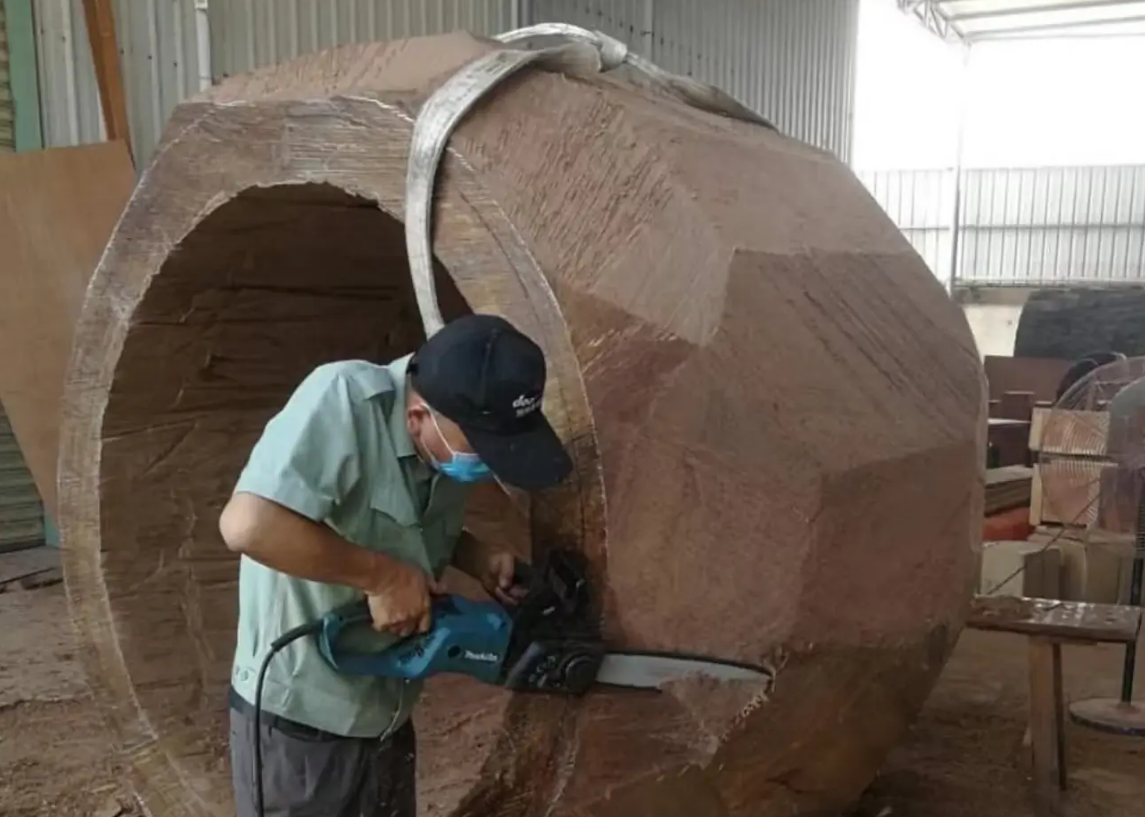
JINLEI’s Kei Series Nagado Daiko uses Japanese Keyaki in a kurinuki, or hollowed-out solid-shell, construction. Keyaki is valued for its hardness, durability, traditional grain, and association with classic Nagado making. In a comparable size and setup, players may perceive a focused response, strong projection, and sustained resonance, but those outcomes still depend on the shell profile, cowhide, and tension.
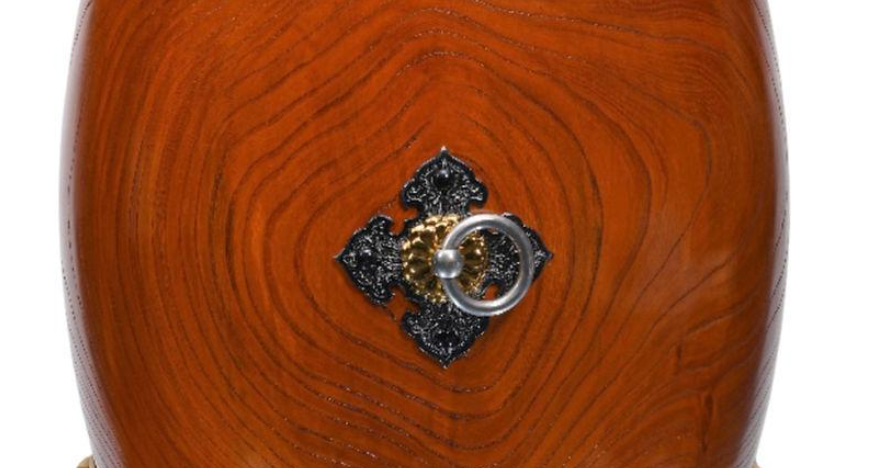
Best fit: buyers who prioritize traditional solid-log construction, long-term institutional ownership, concert presentation, and the visual character of natural Keyaki. Purchasing note: it is a premium, heavier option, and natural wood can vary in weight and grain.
Ash – Hikari Series Solid-Wood Options
JINLEI’s Hikari Series includes Ash models, including solid-wood Nagado options. Ash offers a practical balance of structural strength, responsiveness, availability, and cost. It is often chosen by schools, dojos, and performance groups that want a solid-wood instrument without moving directly to the price level of premium Keyaki.
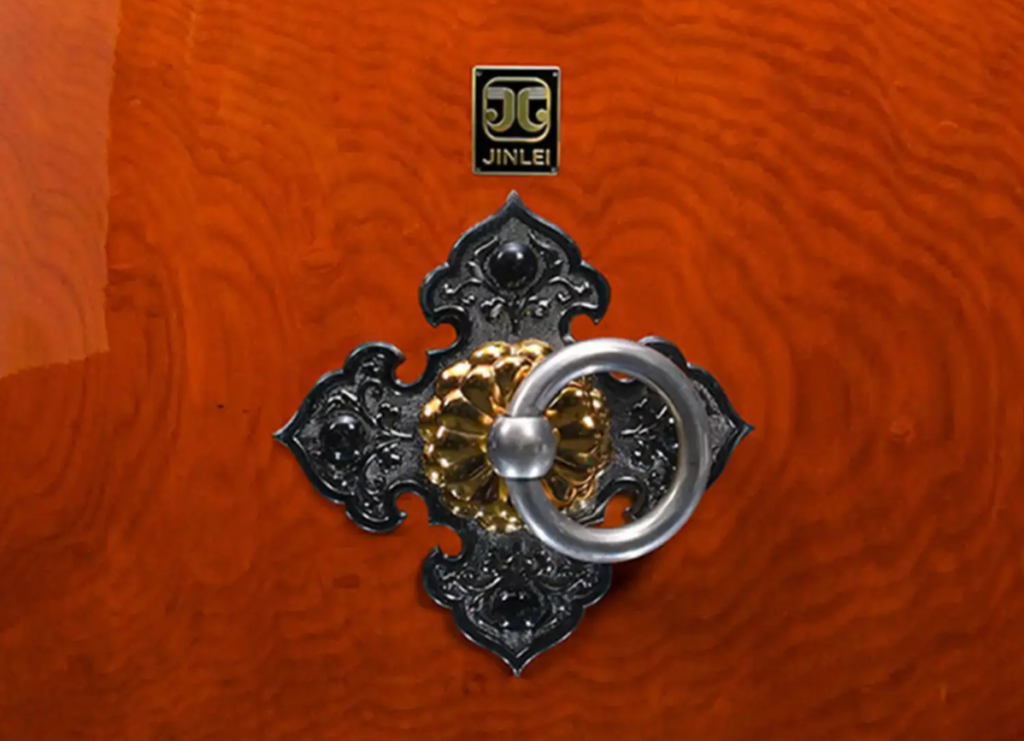
Ash is commonly described as clear and balanced, but it should not be presented as having one fixed sound. Size, shell thickness, cowhide selection, and head tension can change attack, body, sustain, and projection significantly.
Best fit: organizations seeking a durable solid-wood drum for rehearsal and performance, with an emphasis on value and consistent group use. Purchasing note: ask for the exact model, size, construction, and current weight estimate rather than deciding from the word “Ash” alone.
Kapiac – Do Series Nagado and O-Daiko
For a Nagado that needs to be lighter and easier to move, JINLEI’s relevant recommendation is the Kapiac Do Series, not a Paulownia Nagado. The Nagado Daiko Kapiac Do Series uses a laminated structure designed to combine lower weight, durability, and accessible pricing. JINLEI positions it for schools, groups, and teams that move drums between classrooms, rehearsal rooms, stages, or elevated platforms.
JINLEI also uses Kapiac stave construction for Do Series O-Daiko, including reinforced joinery intended to make large drums more practical to transport and install. The acoustic result should be assessed as a complete instrument; a laminated or stave shell does not automatically mean weak projection or inferior musical value.
Best fit: mobile Nagado setups, school fleets, growing dojos, touring groups, budget-conscious ensembles, and large drums that must be moved regularly. Purchasing note: compare the actual dimensions and weight with available doors, vehicles, stands, storage rooms, and handling staff.
Paulownia – Katsugi Daiko Only
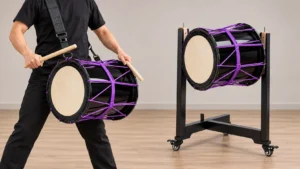
At JINLEI, Paulownia is currently used for Katsugi Daiko in the Hono Series. These rope-tensioned drums are designed for shoulder-carried playing, so low weight directly supports movement, choreography, parades, festivals, and mobile stage performance.
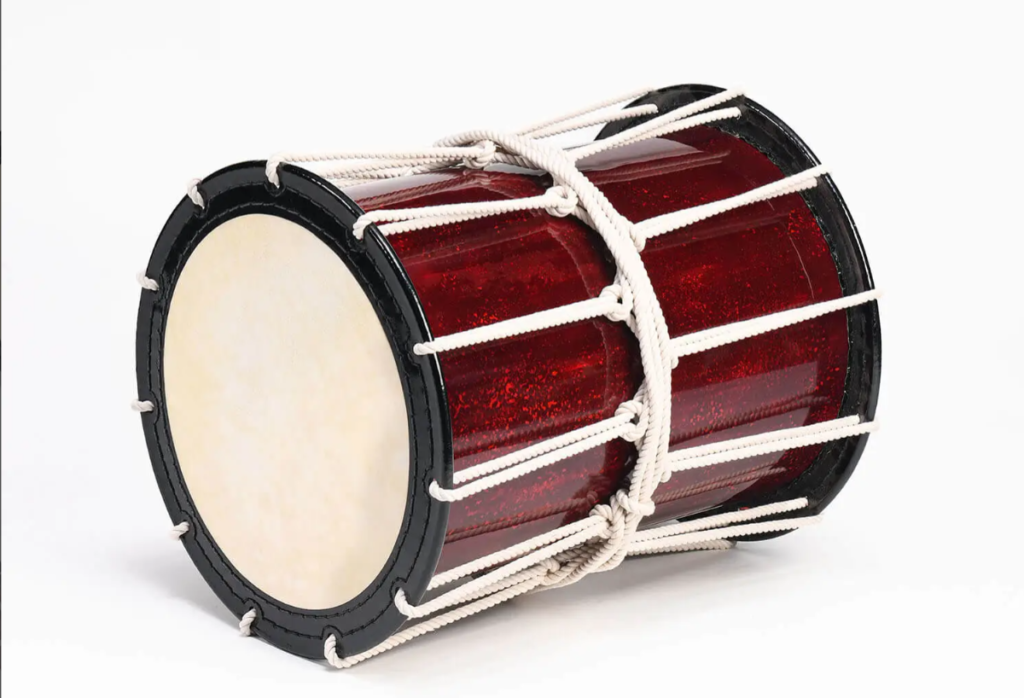
Paulownia should not be broadly recommended across JINLEI’s Nagado, O-Daiko, school, or touring ranges. It is a product-specific solution for Katsugi. Its response may be described as clear and quick in this design, but the thinner drumhead, rope tension, shell dimensions, and playing technique are equally important to the result.
Best fit: performers who need a shoulder-carried Katsugi for movement-based repertoire. Purchasing note: use the lighter, thinner Katsugi bachi recommended for the model; heavier sticks or use outside its intended role may damage the drumhead.
Material, Product, and Use-Case Comparison
| Material / structure | JINLEI example | Practical tendency | Suitable scenarios | Buying advice |
|---|---|---|---|---|
| Keyaki, kurinuki solid shell | Kei Series Nagado | Traditional premium construction; heavier; natural variation | Concert use, institutions, long-term collections | Choose for construction and application, not prestige alone |
| Ash, solid wood | Hikari Series Nagado and other Ash models | Strong value-to-performance balance; model-specific response | Schools, dojos, rehearsal and performance | Confirm exact size, construction, hide, and weight |
| Kapiac, laminated / stave shell | Do Series Nagado and O-Daiko | Lower-weight, mobile, budget-conscious construction | Schools, touring, mobile stages, larger fleets | Check handling route, vehicle, stand, and storage |
| Paulownia, rope-tension shell | Hono Series Katsugi Daiko | Very light; designed for shoulder-carried movement | Parades, festivals, choreography, mobile performance | Do not generalize to Nagado; use appropriate Katsugi bachi |
Purchasing Recommendations by Scenario
Schools and Beginner Programs
If drums will be moved frequently and the program needs multiple matching Nagado, start by comparing the Kapiac Do Series because its laminated structure, mobility, and pricing are aligned with school and group use. If the program prioritizes solid-wood construction and has sufficient storage, handling capacity, and budget, compare an Ash Hikari model in the same size. Paulownia is relevant only when the program specifically needs Katsugi Daiko for shoulder-carried performance.
Dojos and Community Ensembles
Build the collection around function rather than one wood species. Kapiac Nagado can support regular movement and fleet purchasing; Ash or Keyaki solid-shell Nagado can serve featured repertoire or buyers who prefer traditional construction; Katsugi should be added when movement-based parts are actually required. A mixed collection can provide more practical value than choosing every drum from the same material.
Touring and Cultural Exchange Programs
For touring Nagado, prioritize the Kapiac Do Series and confirm the weight of the selected size before ordering. For choreography, parades, or shoulder-carried parts, choose the Paulownia Hono Series Katsugi. A soft case is useful for storage and routine transport, but international freight still requires professional external packaging.
Professional Stage and Institutional Use
Compare Keyaki Kei, Ash Hikari, and Kapiac Do models at equivalent sizes and intended tension. Keyaki may suit buyers seeking a premium traditional kurinuki Nagado; Ash may provide a strong solid-wood alternative; Kapiac may be the more practical choice when stage changes, touring, or installation weight matters. Venue acoustics, microphone use, repertoire, and ensemble balance should guide the final choice.
Large O-Daiko Purchases
For large O-Daiko, logistics become part of the instrument specification. JINLEI’s Kapiac Do Series uses a stave-built structure with reinforced joints to reduce weight and improve handling relative to a comparable large solid-log shell. Before ordering, confirm doorway clearance, stand dimensions, caster requirements, vehicle capacity, storage conditions, and the number of people available for setup.
What to Verify Beyond the Wood Species
The manufacturing section can be summarized as a buyer’s verification checklist. Ask how the shell is constructed, whether the selected model is kurinuki or laminated/stave-built, what the finished dimensions and estimated weight will be, which hide is used, how the drum is tensioned, what stand and bachi are appropriate, and what storage and transport protection are required. These factors are more useful than relying on a single claim about the wood’s sound.
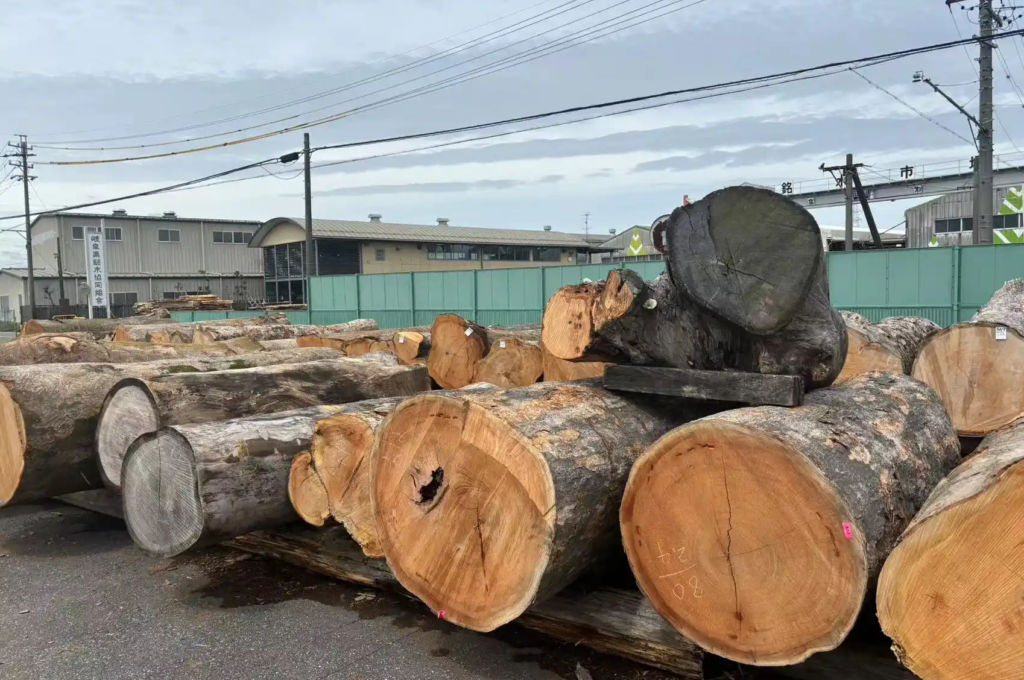
Wood preparation, shell symmetry, internal profile, edge reinforcement, hide selection, and even tension all contribute to consistency and durability. They matter, but they do not need to be repeated as a full manufacturing narrative here. Buyers who want the detailed production process can read JINLEI’s separate craftsmanship guide.
Conclusion
Wood influences a taiko drum’s weight, structural behavior, appearance, and acoustic response, but it does not determine the final sound by itself. Size, shell structure, thickness, drumhead, tension, environment, and playing technique all work together.
For JINLEI products, the practical distinction is clear: Keyaki Kei for premium traditional Nagado construction; Ash Hikari for a solid-wood balance of performance and value; Kapiac Do for lighter, mobile Nagado and O-Daiko applications; and Paulownia Hono specifically for shoulder-carried Katsugi Daiko. Choose the complete instrument that fits the performance, handling, storage, and budget requirements of your organization.
FAQs
Does heavier wood always produce better sound?
No. A heavier shell may behave differently, but sound quality also depends on size, construction, shell thickness, hide, tension, and playing context. A lighter, well-designed drum may be the better instrument for a mobile ensemble.
Which JINLEI Nagado is best when portability matters?
The Kapiac Do Series Nagado is the relevant lightweight option. Its laminated structure is intended for schools, groups, and teams that need easier movement and installation.
Does JINLEI use Paulownia for Nagado Daiko?
JINLEI currently uses Paulownia for Katsugi Daiko in the Hono Series. It should not be presented as a general material recommendation for JINLEI Nagado or O-Daiko.
Can two drums made from the same wood sound different?
Yes. Differences in size, shell structure, thickness, internal profile, hide, tension, environment, and craftsmanship can produce clearly different results.
Which option should a school consider first?
A school that needs several mobile Nagado should compare the Kapiac Do Series. If solid-wood construction is a priority and handling conditions allow it, an Ash Hikari model is another option. Paulownia is relevant only when a Katsugi is needed.