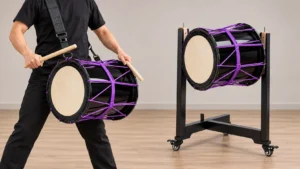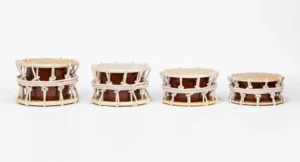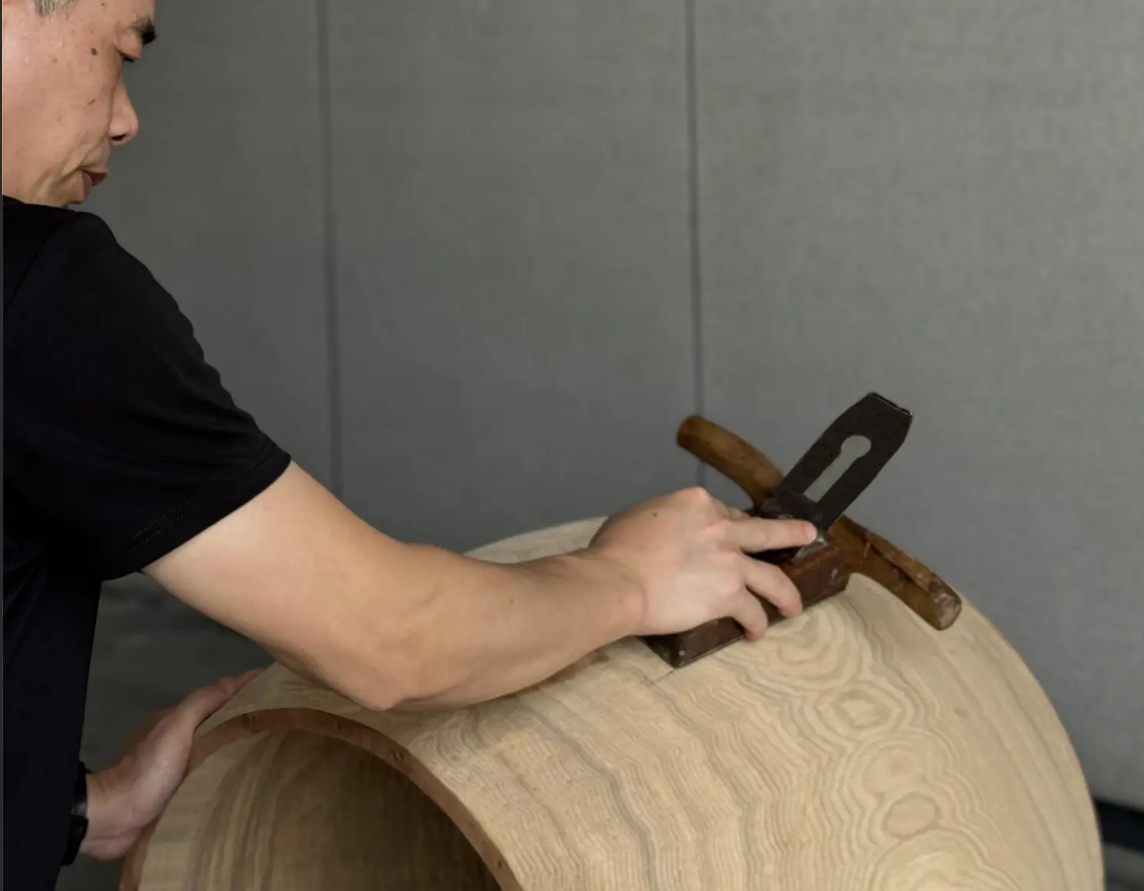
Two taiko drums can have the same dimensions, a similar finish, and nearly identical product photos—yet differ in price by thousands of dollars. The difference is rarely explained by “better wood” or “more handwork” alone.
For a high-end Kurinuki taiko, the body is hollowed from one suitable section of a large log. The maker pays not only for the timber that survives, but also for the oversized raw log, the material removed during hollowing, several years of seasoning, warehouse space, repeated inspection and reshaping, and every shell that cracks or fails to meet the intended grade along the way. By the time a finished drum is sold, much of its cost was committed years earlier.
That is a very different cost structure from a stave-built or laminated shell. These constructions should not be treated as inferior by default: a well-engineered stave shell can be professional, durable, lighter, easier to transport, and practical for schools or ensembles that need a matched set. The right comparison is not simply “solid versus joined wood,” but how each drum is designed, seasoned, headed, finished, tested, and supported.
This guide explains where the price of a professional taiko drum comes from, with particular attention to JINLEI’s Kurinuki production experience.
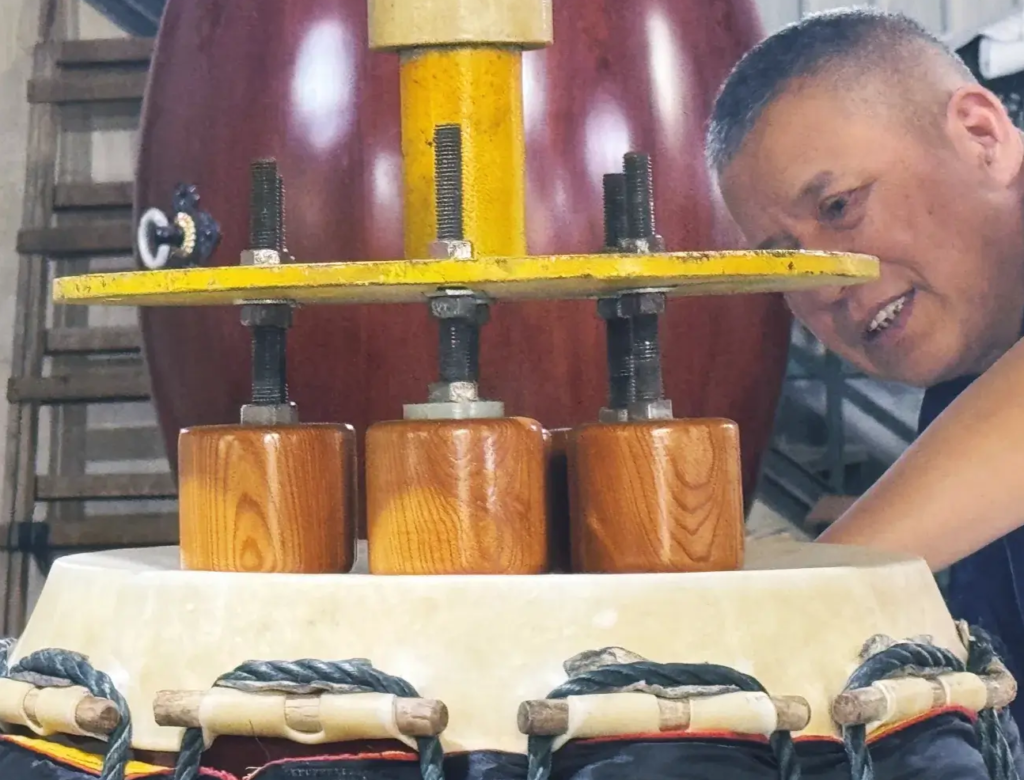
The Short Answer: Buyers Are Paying for Yield, Time, and Judgment
A professional taiko’s factory price can reflect five different kinds of cost:
- Material selection and yield: a Kurinuki shell requires a log large and sound enough to leave a stable drum body after the center and exterior have been removed.
- Time and inventory: the rough shell may occupy warehouse space and working capital for years before it can become a finished instrument.
- Skilled intervention: makers repeatedly inspect, turn, thin, carve, finish, head, and test the drum rather than performing one uninterrupted production sequence.
- Attrition and quality grading: cracked, distorted, or acoustically unsuitable shells may be discarded or sold as B-grade material.
- Finishing and support: hide selection, heading, lacquer or coating, hardware, sound testing, customization, repair capability, and warranty service all add value after the shell is seasoned.
International freight is important too, but it should be evaluated separately as part of the total landed cost, not described as if it were all part of manufacturing.
1. Kurinuki Wood Cost Is Really a Yield Problem
A solid shell begins with much more wood than the buyer sees
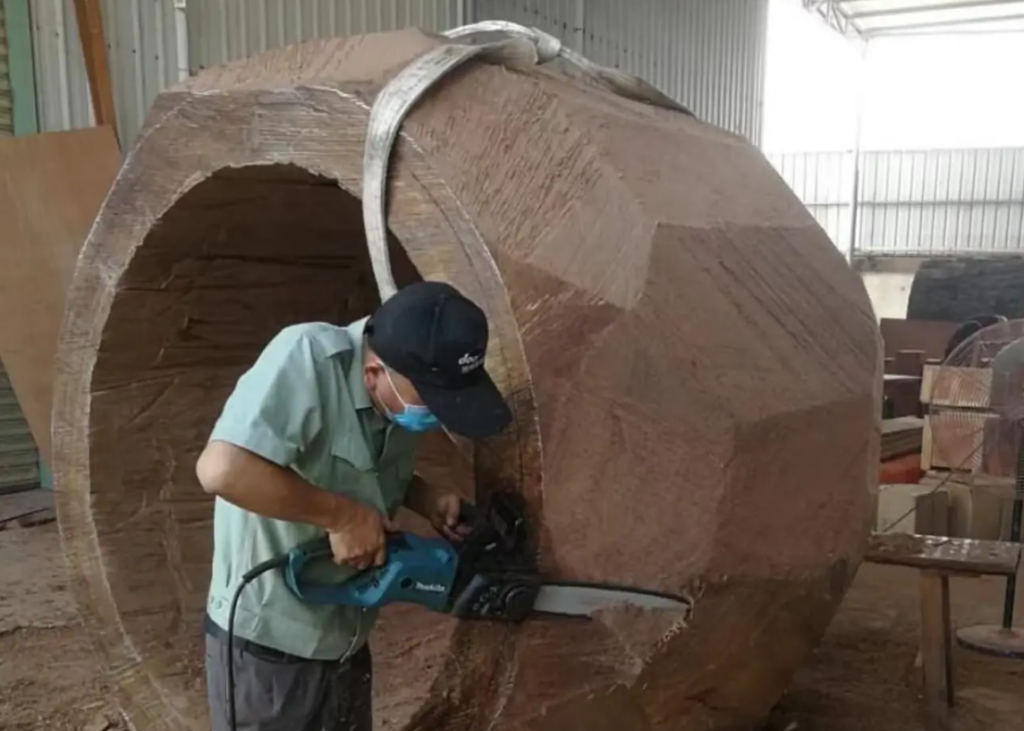
Kurinuki means that the drum body is hollowed from a single piece of wood. This method requires a log whose diameter, length, maturity, grain direction, and internal condition are suitable for the intended drum. A large finished playing diameter therefore demands an even larger raw log.
The maker cannot judge every defect from the bark. Knots, checks, decay, reaction wood, irregular grain, and hidden internal stresses may only become apparent after the log is cut or hollowed. The center is removed, the exterior is reduced, and additional material is lost during shaping and final correction. The cost of the finished shell therefore includes the wood that did not become part of the finished drum.
This is why a larger Kurinuki taiko does not increase in price in a simple, linear relationship with its diameter. As size increases, suitable logs become scarcer, each candidate contains more capital, and failure later in the process becomes more expensive.
Species matters, but selection within a species matters too
Wood species influences density, weight, workability, stiffness, and tonal behavior. It is not a complete quality grade. Two logs of the same species can behave differently because of growth history, grain orientation, moisture distribution, and defects.
Professional selection therefore considers:
- finished diameter and required wall thickness;
- grain continuity and the position of the pith;
- knots, checks, decay, and other visible defects;
- likely movement during drying;
- weight and handling requirements;
- the target balance of projection, sustain, and tonal color.
A maker’s value lies partly in rejecting unsuitable material early and recognizing which promising shells deserve years of further work.
2. A Kurinuki Shell Is Prepared in Years, Not Weeks
JINLEI’s “three summers” seasoning process
At JINLEI, many solid shells used for current production began preparation roughly three years earlier. The normal target is for a shell to pass through three summers of natural drying, although the complete period can range from approximately two years to five years or longer depending on diameter, wall thickness, species, initial moisture, climate, and the shell’s behavior.
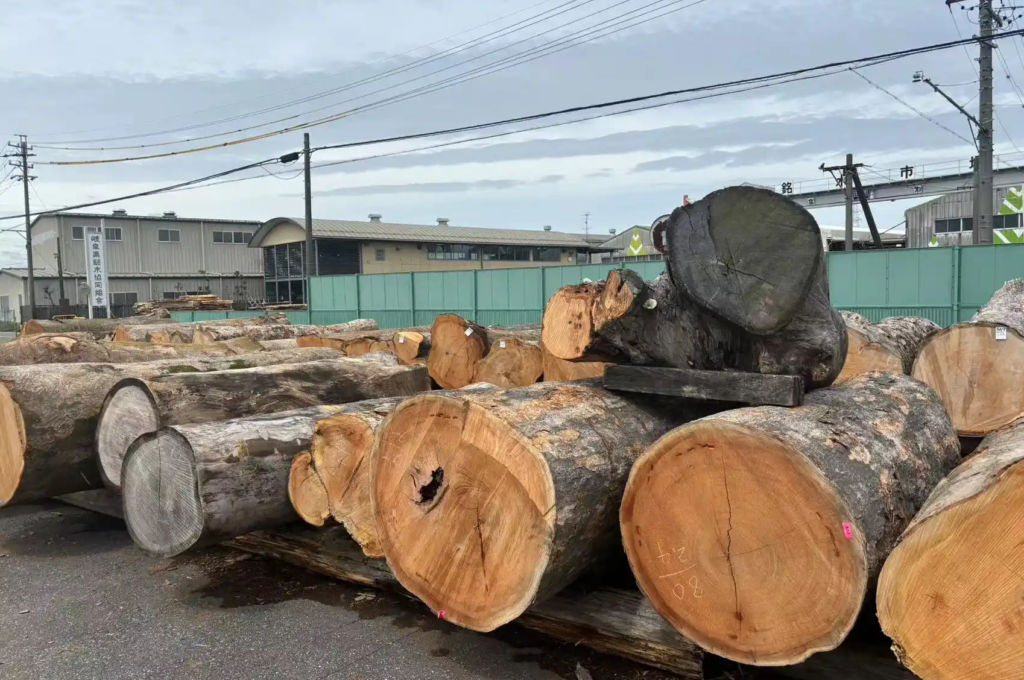
The shell is not simply hollowed and left untouched. During seasoning, JINLEI gradually reduces material from the exterior and interior in stages. The body is also turned periodically so that one orientation does not remain exposed to the same airflow and environmental conditions for the entire period. Makers inspect the shell between stages and adjust the next cut according to how it is moving.
Inside the factory, this long stabilization process is described as the shell’s seasoning. It is a managed inventory process as much as a drying process: thousands of bodies may be stored at different stages, each occupying space and requiring identification, turning, inspection, and judgment.
The aim is risk reduction, not a promise that natural wood will never move. The USDA Forest Products Laboratory explains that wood shrinks differently in its tangential, radial, and longitudinal directions. Differential shrinkage creates drying stresses and can contribute to distortion, surface checks, internal checking, and other defects. Proper handling and gradual processing help manage these risks, but cannot make an unstable piece of wood suitable by force. See the Forest Products Laboratory’s Wood Handbook chapter on properties related to drying and chapter on drying defects.
This long cycle is established traditional practice
JINLEI’s precise sequence is its own manufacturing practice, but multi-year seasoning is not merely a marketing story. Japanese taiko maker Miyamoto Unosuke Shoten publicly describes shaping logs into rough bodies and then drying them naturally for approximately three to five years. Its craftspeople subsequently finish the shell with different hand planes according to the grain. See Miyamoto’s published taiko-making process.
That comparison is useful because it shows why “handmade in several weeks” is incomplete when applied to Kurinuki taiko. Several weeks may describe a sequence of final machining, coating, heading, and assembly after materials are ready. It does not describe the years required to turn a green or partially dried rough body into a stable, usable Kurinuki shell.
- more efficient shipping and storage;
- less dependence on rare, oversized logs;
- practical configurations for schools, workshops, and touring groups.
Its quality depends on timber preparation, joint engineering, adhesive system, wall design, finishing, headwork, and quality control. Calling every joined or laminated shell “low grade” ignores professional instruments deliberately designed around these advantages.
The more useful question is: Which construction best fits the required sound, handling, quantity, service life, and budge
How Long Can a Taiko Last?
A well-made Kurinuki body can remain in service for generations. Across the traditional drum industry, exceptional solid shells may be used for a century or even several centuries, often with new heads and periodic restoration. This should be understood as the potential of an excellent, well-cared-for shell—not a blanket warranty for every drum. Humidity cycling, direct heat or sun, impact damage, insects, storage, and maintenance all affect life.
JINLEI’s professional stave-built taiko are normally expected to provide several decades of service under appropriate use and care. Again, the head is a wear component and may need replacement earlier than the shell. Institutional buyers should ask separately about expected shell life, head life, reheading, repairability, and warranty coverage.
How to Choose the Right Investment
Choose a premium Kurinuki taiko when one-piece traditional construction, individual tonal character, long-term heritage value, and visual grain are central to the purchase—and when the budget, weight, and production time are acceptable.
Choose a professional stave-built or lightweight model when the priority is equipping a group, moving instruments frequently, controlling landed cost, matching several drums, or expanding a school or community program. A well-made stave drum can be the more intelligent professional choice, not a compromise disguised as one.
Before buying, ask:
- Is the body Kurinuki, stave-built, laminated, or another construction?
- For a Kurinuki body, how long and by what method was it seasoned?
- What happens to shells that crack or fail inspection?
- Is the interior carved or acoustically shaped, and can the maker explain the purpose?
- How are hides selected and tension assessed?
- What sound and structural checks occur before shipment?
- Can the drum be reheaded or repaired, and by whom?
- What is included in the factory price, and what remains in the landed cost?
Final Thoughts
A high-end Kurinuki taiko costs thousands of dollars because its manufacture is a long selection process, not simply a woodworking job. A large log is hollowed, monitored, gradually thinned, turned, and seasoned across multiple summers. Warehouse space and capital remain committed for years, while cracked or unsuitable bodies are downgraded or lost. Only then do final hand shaping, internal carving, hide selection, heading, finishing, hardware installation, sound testing, and service capability enter the price.
At the same time, solid wood should not be used as a shortcut for “good,” nor stave construction as a shortcut for “cheap.” JINLEI produces both to solve different musical and operational problems. The best-value drum is the one whose construction, sound, durability, handling, service support, and total landed cost match the buyer’s real use.
To compare options for a school, ensemble, cultural organization, or touring group, contact JINLEI with the required sizes, quantity, playing environment, transport needs, destination, and budget.
FAQs
Why can a Kurinuki taiko cost several thousand dollars?
Its body must come from a sufficiently large and suitable log, and much of that log is removed. The rough body then requires multi-year seasoning, storage, progressive shaping, inspection, and acceptance of losses from cracks or defects. Hide selection, skilled heading, finishing, hardware, sound testing, and after-sales capability are added only after the shell is ready.
Does a handcrafted taiko take weeks or years to make?
Both descriptions can be correct only if they refer to different scopes. A prepared stave-built 1.6-shaku drum may take JINLEI about four to six weeks to fabricate and finish. Many JINLEI Kurinuki drums require around three years from rough body preparation through seasoning and completion; some solid shells may require approximately two to five years or longer.
Is solid wood always better sounding than a stave-built shell?
No. Construction affects character, but sound also depends on wood properties, dimensions, wall profile, internal shaping, head selection, tension, and workmanship. A well-engineered stave-built taiko can be a professional performance instrument and may be preferable when low weight, consistency, quantity, transport, or budget matters.
Why are large taiko disproportionately expensive?
They require rarer large logs or more material, larger usable hides, heavier handling equipment, more difficult tensioning, and bigger export packages. For Kurinuki construction, a late-stage shell failure also represents more lost material, labor, storage, and time.
How long does a professional taiko last?
An exceptional Kurinuki shell can serve for a century or longer with appropriate care and restoration; professional stave-built JINLEI shells are normally expected to serve for several decades. These are service-life expectations, not universal guarantees. Heads wear and may need replacement, while humidity, storage, use intensity, and repair access strongly influence longevity.
Why do similar-looking taiko have different prices?
Photos do not reveal raw-material yield, years of seasoning, rejected-shell losses, internal carving, hide grading, tension consistency, coating cycles, testing, repair support, or what logistics are included. Buyers should compare construction records and quotation scope, not appearance alone.
Should shipping be included when explaining why the drum is expensive?
Shipping affects what the buyer pays, but it is clearer to separate manufacturing price from total landed cost. Freight, insurance, customs clearance, duties and taxes, and destination delivery vary by order and country and do not represent the intrinsic manufacturing cost of the instrument.
What is the best choice for a school or ensemble?
For large group configurations, a professional stave-built or lightweight series often provides the best balance of sound, durability, weight, consistency, budget, and transport efficiency. A Kurinuki drum makes sense when traditional one-piece construction, individual character, and long-term heritage value justify the additional cost and lead time.