The powerful sound of a taiko drum begins long before it reaches a stage, school, dojo, or cultural center. It starts with a decision that affects nearly every step that follows: how the drum shell will be constructed.
There is no single manufacturing process shared by every taiko drum. At JINLEI, the appropriate materials and construction method depend on the model, size, playing requirements, and customer specifications.
Three shell structures are especially important to distinguish:
- Solid-log hollowed shells, made by shaping and hollowing one piece of timber.
- Stave-built shells, assembled from multiple accurately prepared wood sections.
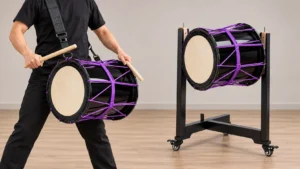
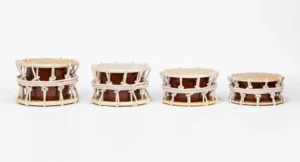
- Oke-style stave-and-rope structures, which use a lightweight stave-built body with rope-tensioned drumheads.
For example, JINLEI Nagado Daiko may be made with either a solid-log hollowed shell or a stave-built shell. Okedo and Katsugi models are more commonly made with stave-built bodies, while Oke-style drums use a distinct stave-and-rope construction. They should not be understood as drums that all pass through the same solid-log hollowing process.
This article explains those differences and follows the practical stages JINLEI uses to turn selected wood and cowhide into professional performance instruments.
The Construction Method Comes First
Before production begins, JINLEI determines the appropriate construction according to the drum type and specification. This is important because shell structure affects the production sequence, weight, appearance, maintenance, and playing characteristics.
| Construction | How the shell is formed | Common JINLEI applications |
|---|---|---|
| Solid-log hollowed | One piece of timber is shaped externally and hollowed internally | Selected Nagado and large traditional-style drums |
| Stave-built | Multiple wood sections are prepared, joined, shaped, and finished as one shell | Nagado options and many other models |
| Oke-style stave and rope | A lightweight stave-built body is paired with rope-tensioned heads | Most Okedo and Katsugi-style applications |
The exact construction of an individual drum should always be confirmed on its product page or quotation. Model names alone do not necessarily identify whether a shell is solid-log or stave-built.
Route One: Solid-Log Hollowed Taiko Shells
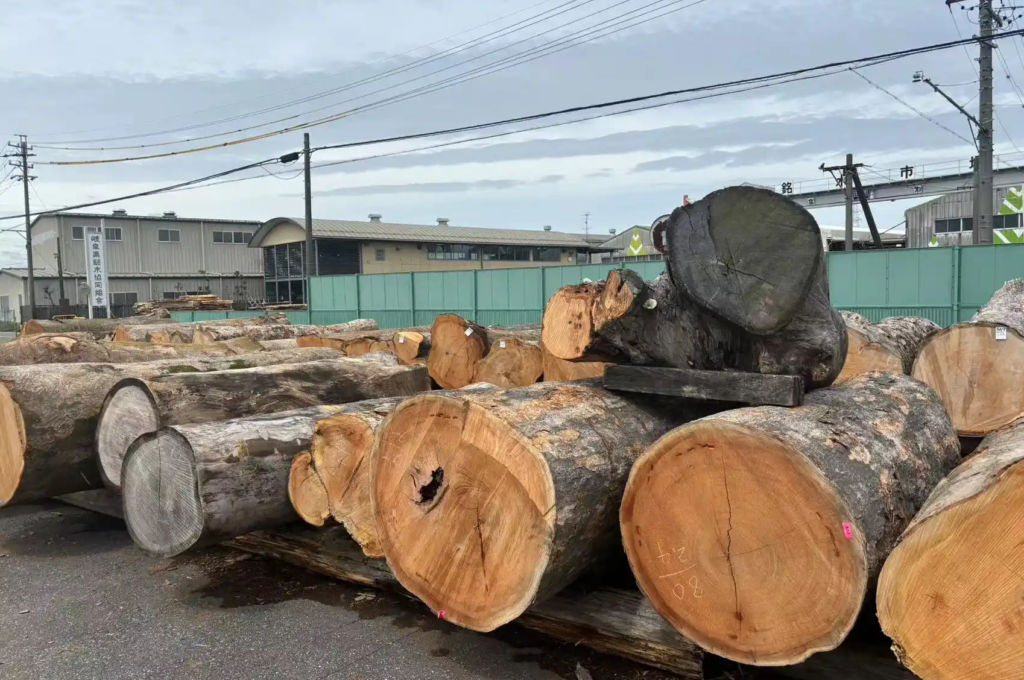
Selecting the Timber
A solid-log shell begins with a single piece of wood large enough and suitable enough for the intended drum. JINLEI works with woods including keyaki (zelkova), ash, bubinga, and African padauk, depending on the model and specification.
The raw material is evaluated before major cutting begins. Grain direction, dimensions, visible defects, and the suitability of the timber for hollowing all influence whether it can be used for a particular drum.
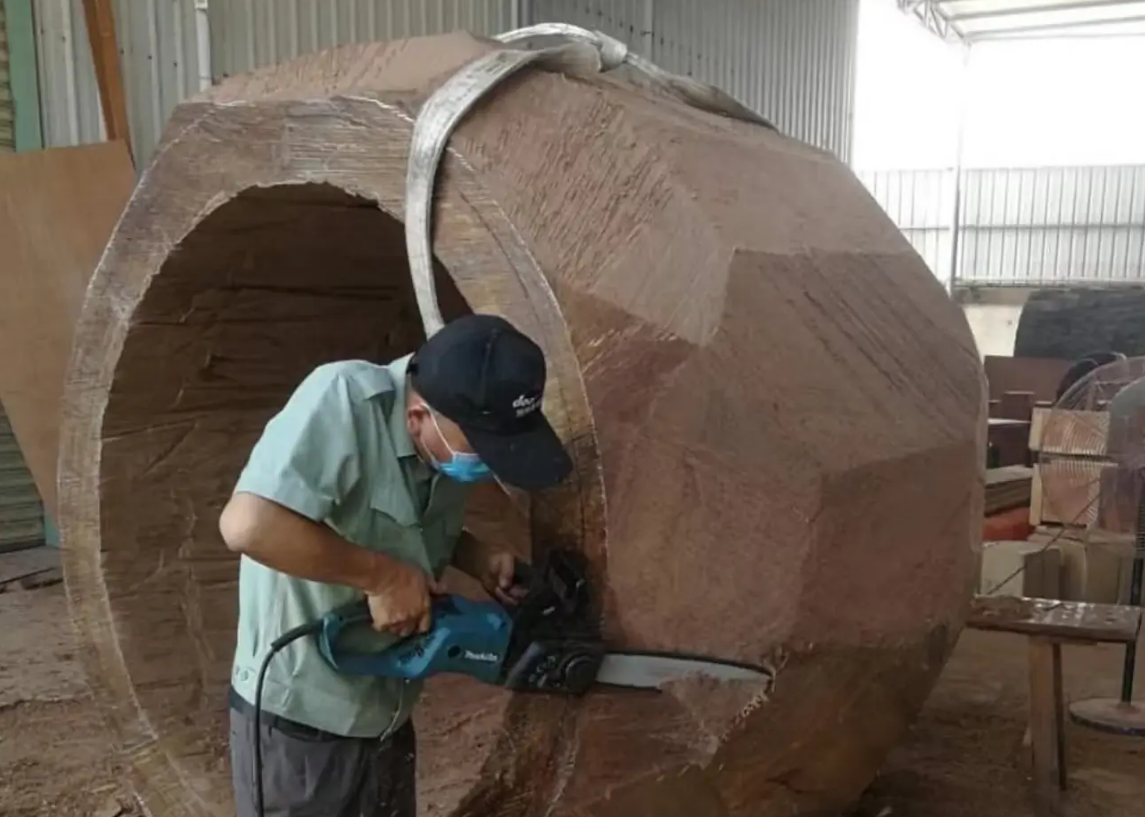
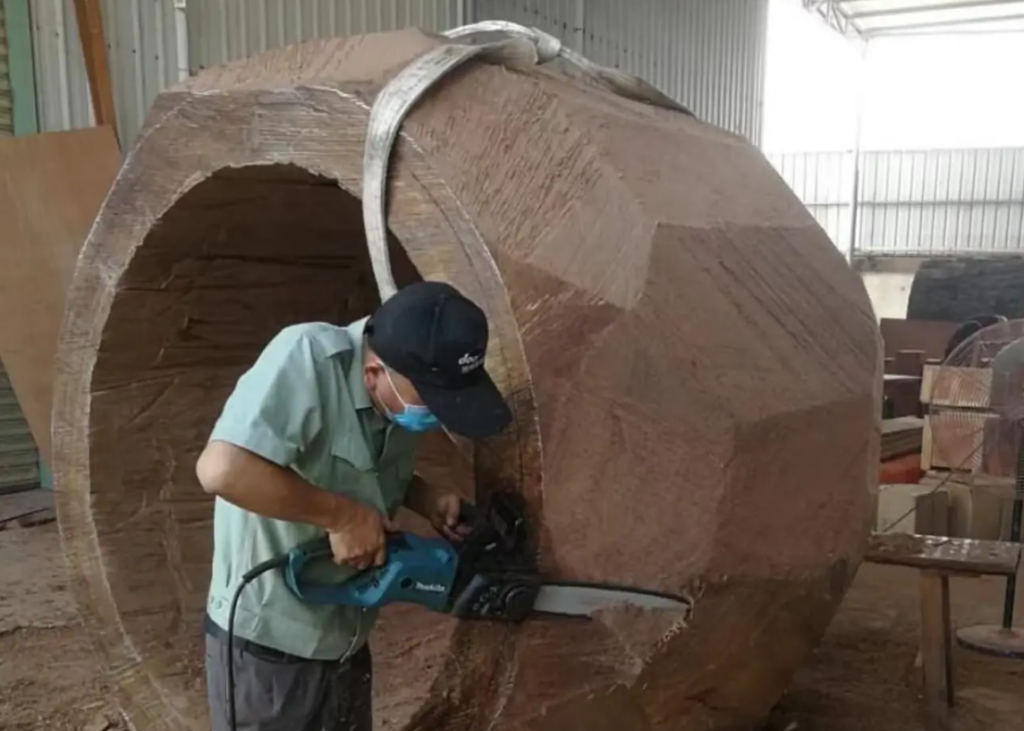
External Shaping and Internal Hollowing
The outside is cut to establish the drum’s main profile. The center is then removed to create the resonating chamber. JINLEI combines manual work with specialized equipment during these stages.
Hollowing is not simply a matter of removing as much wood as possible. The maker must balance:
- shell strength;
- wall thickness;
- overall weight;
- internal shape; and
- the response expected from the finished drum.
After the main hollowing work, the outer surface is refined and the internal chamber can be shaped to support sound reflection. These steps apply specifically to solid-log construction and should not be used to describe stave-built or Oke-style shells.
Long-Term Drying and Stabilization
Solid-log shells require a drying period after the main chamber has been formed. According to JINLEI’s current production information, the natural drying period is generally about two years to more than five years, depending on shell size and condition. Smaller shells may require at least two summers, while larger chambers may need more than five.
This is material-preparation time, not the same as the order-processing time shown for a finished product. JINLEI prepares and manages shell inventory so customers should not assume that every new order begins with a freshly cut log and then waits through the full multi-year drying period.
Only after the wood has reached the required condition does the shell proceed to detailed shaping, sanding, coating, and head installation.
Route Two: Stave-Built Taiko Shells
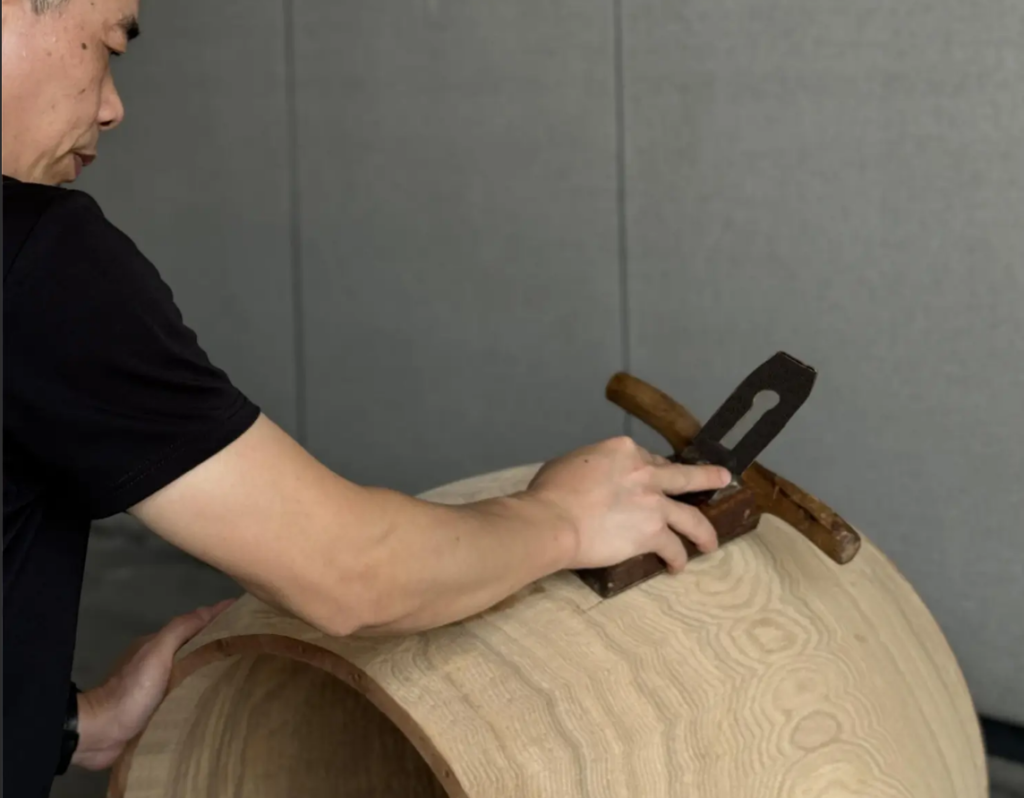
A stave-built shell is constructed from multiple wood sections rather than hollowed from one log. This is a separate manufacturing route, not a shortcut added after solid-log hollowing.
Preparing the Staves
The individual wood sections are selected and cut to controlled dimensions and angles. Accuracy at this stage matters because the pieces must meet evenly when assembled.
The prepared staves are arranged to form the body, then joined and secured. After the structure has stabilized, the assembled shell is shaped and refined so the sections function as one drum body.
Shaping the Completed Body
Once assembled, the exterior is brought to the required profile and the interior is finished for the intended model. The joints, roundness, dimensions, and surface condition are checked before coating or head installation.
Stave construction allows JINLEI to produce a wider range of sizes and specifications while controlling material use and finished weight. A stave-built Nagado remains a Nagado Daiko, but its shell has not gone through the solid-log hollowing and multi-year chamber-drying route described above.
JINLEI can therefore offer different construction choices within the Nagado category. Buyers comparing drums should look at both the model and the shell specification.
Route Three: Oke-Style Stave Bodies with Rope Tension
Oke Daiko, Okedo Daiko, and many Katsugi applications are built around a lighter stave body and rope-tension system. Their construction and intended use differ from a nailed-head, solid-log Nagado.
Building the Lightweight Body
Narrow wood sections are prepared and assembled into the cylindrical Oke-style body. The completed body is shaped, sanded, and finished, with attention to roundness, joint quality, balance, and weight.
Because portability is an important part of many Okedo and Katsugi applications, the structure is designed with movement and performance use in mind. Katsugi drums are commonly carried with a strap, while Okedo drums are frequently chosen for festivals, touring, and stage arrangements that require easier handling.
Rope-Tensioned Drumheads
Instead of fixing the heads to the shell with the same nailed construction used on many Nagado drums, Oke-style drums use heads and rope lacing as a tension system. The rope pattern must distribute tension around the drum, and the final setup is adjusted according to the model and desired response.
This distinction is essential:
- a solid-log Nagado is hollowed from one piece of timber;
- a stave-built Nagado is assembled from multiple wood sections and normally uses fixed heads;
- an Oke or Okedo body is usually stave-built and paired with rope-tensioned heads.
They are related members of the taiko family, but they are not made through one identical shell process.
Selecting and Preparing Natural Cowhide
After the shell route has been completed, attention turns to the drumheads. JINLEI uses selected natural cowhide for many professional taiko models.
Cowhide varies in thickness, elasticity, surface condition, and response. JINLEI therefore sorts and prepares hides according to the size and type of drum rather than treating every piece as interchangeable.
The preparation process includes:
- selecting suitable hide;
- removing hair and preparing the surface;
- drying the material;
- pre-stretching it for the required drum size; and
- storing the prepared head until final fitting.
Because it is a natural material, minor visual differences are normal. The important production task is matching the hide to the drum and controlling tension during installation.
Head Installation Depends on the Drum Structure
The head-fitting method is not identical across all taiko.
Fixed Heads for Nagado and Related Drums
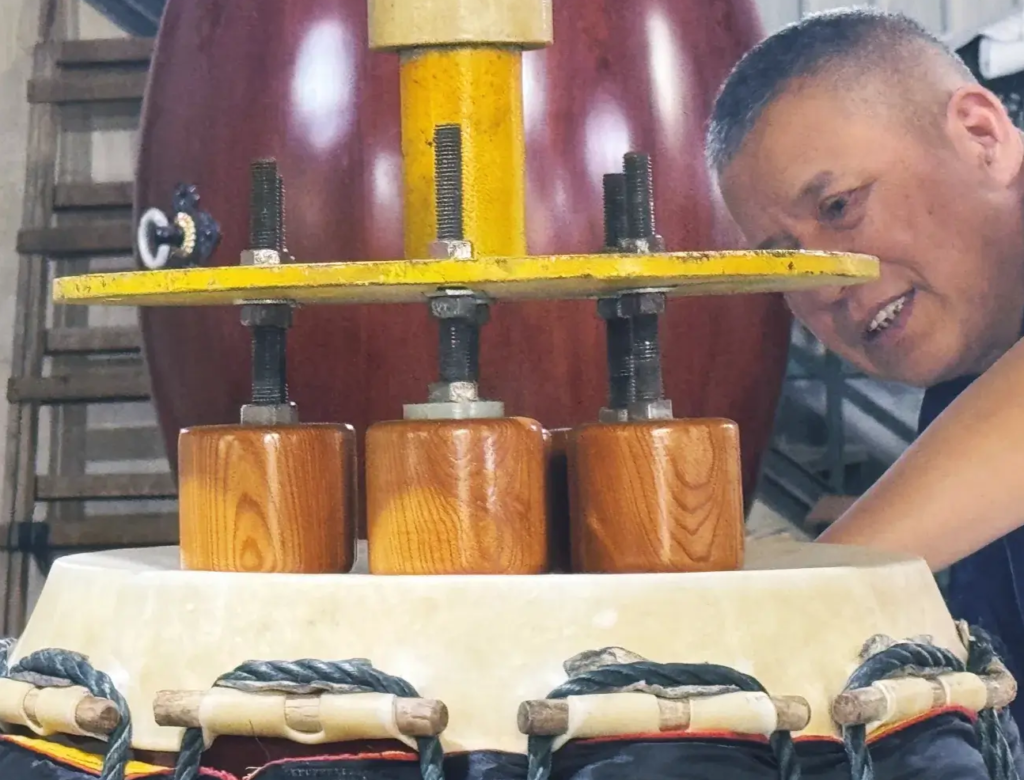
For nailed-head models, prepared cowhide is positioned over the shell and stretched with specialized equipment. A skilled maker checks alignment and adjusts the tension while striking and listening to the head. After the required balance is reached, the head is secured with tacks.
Rope-Tensioned Heads for Oke and Katsugi Models
For Oke-style drums, the prepared heads are connected through the rope-lacing system. Tension is distributed and adjusted through the rope structure rather than permanently fixed to the shell in the same way as a nailed Nagado head.
These different systems influence how the drum is handled, adjusted, and maintained. Buyers should follow the care guidance for their specific model.
Surface Finishing
Finishing protects the wood and gives the drum its final appearance. The exact treatment depends on the model, wood, and selected finish.
For applicable models, JINLEI applies a base color or coating, allows it to dry, sands the surface, and repeats the primer and sanding process as needed before applying the final top coat. The objective is an even, stable finish rather than a heavy coating that hides the construction.
During this stage, makers also review visible joints, edges, hardware areas, and transitions between surfaces. Custom finish requirements, rope colors, logos, or matching ensemble sets should be confirmed before production.
Sound Adjustment and Quality Review
Quality control is carried out during production rather than left entirely to the end. The checks differ according to the construction and model.
Relevant production checks may include:
- dimensions and shell roundness;
- condition of joints or the solid shell;
- surface and finish quality;
- head alignment;
- evenness of tension;
- rope-lacing condition, where applicable;
- hardware or tack installation; and
- playing response during final tension adjustment.
For fixed-head drums, the maker strikes the head while adjusting the hide so that uneven tension can be corrected before final fastening. Rope-tension drums are checked through their own lacing and tension setup.
The completed drum receives a final review before packing. This article does not assign a universal test duration or identical checklist to every model because inspection requirements vary by construction, size, and order specification.
Production Lead Time
Lead time depends on the model, size, construction, availability of prepared materials, order quantity, and customization.
JINLEI’s current Shipping Policy states that order processing before shipment may take 30 to 60 business days, while some complex products may require up to 90 business days when production must begin from an earlier stage.
These are planning ranges rather than a guaranteed schedule for every drum. They also do not include international transit time. Buyers working toward a school term, festival, performance, or project deadline should confirm the production estimate and shipping method with JINLEI before placing the order.
Packing, Soft Cases, and International Shipping
A soft case and international shipping packaging serve different purposes.
What a Soft Case Is For
A JINLEI Taiko Soft Case is intended mainly for:
- storage;
- dust and surface protection;
- movement between practice rooms;
- daily transport; and
- local travel to rehearsals or performances.
Soft cases are sold separately unless a quotation or product listing specifically states that one is included. Customers should select a case that matches the dimensions and style of their drum.
What Protects a Drum During International Shipping
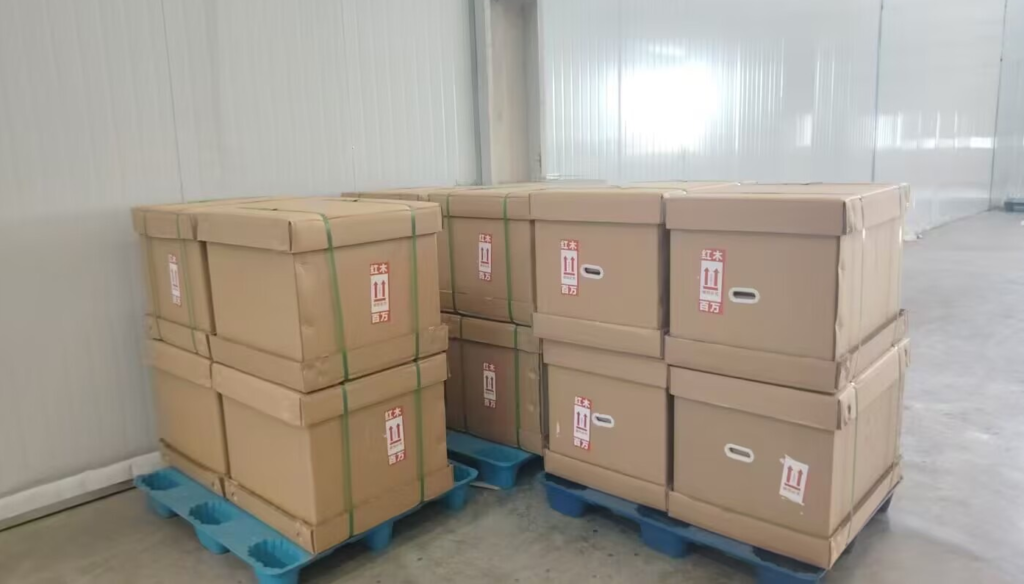
A soft case alone should not be understood as sufficient protection for international freight. Before overseas shipment, the drum requires professional outer packaging selected for its size, weight, structure, and transport method. Internal protection and a suitable external package help reduce movement and impact during handling.
International orders may travel by air or sea. The current Shipping Policy lists average transit times of 7–15 business days by air and 25–40 business days by sea, subject to destination, carrier, customs, and logistics conditions.
Production lead time and transit time should be planned separately.
What JINLEI Can Produce
JINLEI’s practical capability is not limited to one drum or one shell route. The workshop can match different construction methods to different applications, including:
- solid-log and stave-built Nagado options;
- large-format taiko for stage and ensemble use;
- stave-built Okedo and Katsugi drums for more portable applications;
- selected natural cowhide preparation and installation;
- nailed-head and rope-tension systems;
- custom dimensions and finishes, subject to technical review;
- matching drums and accessories for schools or ensembles; and
- worldwide packing and shipping coordination.
For an accurate comparison, buyers should specify where the drums will be used, how often they will be moved, the number of players, preferred dimensions, performance requirements, and delivery deadline.
Choosing the Right Construction
There is no single shell structure that is automatically best for every customer.
A school may prioritize consistent specifications, manageable sizes, and easy replacement or expansion of an ensemble. A professional group may focus on a particular tonal response, visual presence, or traditional material. A touring ensemble may place greater emphasis on weight, rope tension, and transport efficiency.
JINLEI can help buyers compare these factors before production. The most useful questions are:
- Is the requested model solid-log, stave-built, or Oke-style?
- How will the drum be played and transported?
- Is a fixed or adjustable tension system more appropriate?
- Are custom dimensions, finishes, or logos required?
- Are stands, bachi, or soft cases needed as separate items?
- What production and delivery schedule must be met?
Clear answers at the quotation stage help the workshop recommend a suitable construction and prepare an accurate order plan.
Explore JINLEI Taiko Drums
To compare available models and construction options, visit the JINLEI Taiko Drum Collection.
For the solid-log production workflow currently published by JINLEI, see the Taiko Drum Production Process.
For current order-processing and international transit information, refer to the Shipping Policy.
If you are planning a school program, professional ensemble, cultural project, or custom order, contact JINLEI with your required models, quantities, intended use, and target delivery date.
FAQ About JINLEI Taiko Production
Are all JINLEI taiko drums hollowed from a single log?
No. JINLEI uses different construction methods. Selected drums use solid-log hollowed shells, while others use stave-built bodies. Nagado Daiko may be available in both solid-log and stave-built versions. Okedo and Katsugi models are more commonly made with stave-built bodies and rope-tension systems.
What is the difference between a stave-built Nagado and an Oke Daiko?
Both may use shells assembled from multiple wood sections, but their complete structures differ. A stave-built Nagado generally has the Nagado body profile and fixed drumheads. An Oke Daiko normally uses a lighter cylindrical stave body with rope-tensioned heads.
How long does a solid-log shell need to dry?
JINLEI’s published solid-log production information gives a natural drying range of about two years to more than five years, depending on shell size and condition. This material-preparation period should not be confused with the processing time of an individual customer order.
How long does a taiko order take?
The current Shipping Policy gives an order-processing range of 30–60 business days before shipment, with some complex items requiring up to 90 business days. The actual estimate depends on the model, material availability, quantity, customization, and production starting point. International transit time is additional.
How long will a professional taiko drum last?
There is no responsible universal lifespan for every drum. Service life depends on construction, playing frequency, climate, storage, transport, maintenance, and whether components such as heads or ropes are serviced when needed. JINLEI recommends choosing the correct model and following model-specific care guidance.
What does JINLEI check before shipment?
Checks depend on the drum structure and order specification. They may cover shell dimensions and condition, joints, surface finish, head alignment and tension, rope lacing or fasteners, and playing response during final adjustment. The completed instrument is reviewed before packing.
Is a soft case included with the drum?
Not normally. Soft cases are separate products unless the product page or quotation expressly states otherwise. Buyers should confirm the correct case size when ordering.
Can a soft case protect a taiko during international shipping?
A soft case is mainly for storage, daily handling, and local transport. International shipment requires professional outer packaging appropriate to the drum and shipping method. A soft case should not be treated as a substitute for export packing.
Can JINLEI customize taiko drums?
Customization may include dimensions, finish, rope color, logos, or coordinated ensemble sets, depending on the construction and technical feasibility. Requirements should be reviewed with JINLEI before production begins.
What information should I provide when requesting a quotation?
Provide the required model, size, quantity, intended use, preferred construction if known, finish or logo requirements, accessories, destination, and target delivery date. This allows JINLEI to confirm the specification, production estimate, packaging, and shipping options.