When a school, university club, community program, or new taiko group begins buying instruments, one question usually appears early:
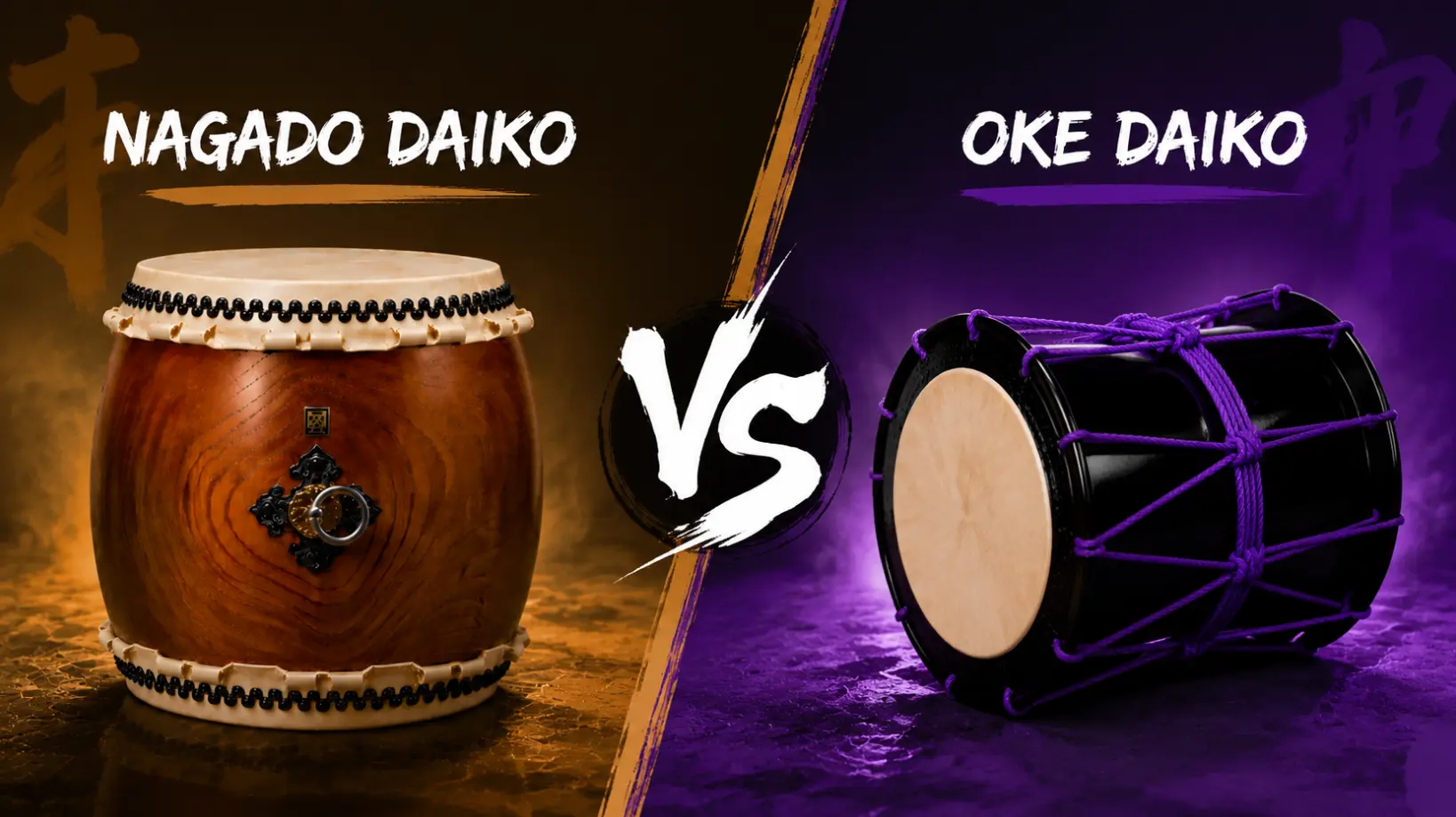
Should we choose Nagado Daiko or Oke Daiko?
The short answer is simple. Choose Nagado Daiko when you need a stable teaching instrument, a grounded ensemble sound, and a drum that will usually remain in one rehearsal space. Choose Oke Daiko when portability, flexible staging, adjustable rope tension, or movement-based performance matters most. For many growing groups, a mixed setup offers the best long-term value.
As a taiko manufacturer supplying schools, dojos, cultural centers, university clubs, performers, and dealers worldwide, JINLEI looks at this decision as a complete system—not only as a choice between two shells. The drum, stand, bachi, case, storage plan, player age, repertoire, and transport routine all need to work together.
This guide explains the practical differences and gives starter configurations you can use when planning a group order.
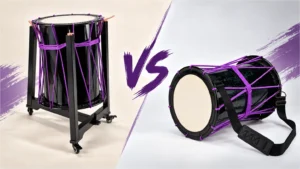
Nagado Daiko vs Oke Daiko: Quick Comparison
| Factor | Nagado Daiko | Oke Daiko |
|---|---|---|
| Construction | Hollowed or stave-built barrel body; tacked heads | Stave-built body; rope-tensioned heads |
| Playing feel | Solid, stable, grounded | Responsive, lively, adjustable |
| Typical sound | Full-bodied, rounded, strong foundation | Clear attack, open response, good projection |
| Weight | Usually heavier | Usually lighter |
| Tuning | Fixed tension | Rope tension can be adjusted |
| Transport | Best when moved less frequently | Well suited to touring and shared rehearsal spaces |
| Beginner use | Excellent core teaching drum | Good on a stand; carried playing requires extra training |
| Best for | Schools, dojos, regular rehearsal rooms, ensemble foundation | Festivals, outreach, touring, choreography, flexible staging |
These are general tendencies. Diameter, body length, wood, head thickness, tension, stand position, room acoustics, and playing technique all affect the final sound.
When to Choose Nagado Daiko
Choose Nagado Daiko when most of the following are true:
- Your group is building a foundational teaching program.
- The drums will remain in one rehearsal room or storage area.
- Many beginners will share the same instruments.
- You want a substantial central voice for unison passages.
- Stable playing positions are more important than fast transport.
- You prefer fixed heads with little routine tension adjustment.
- Traditional barrel-shaped visual presence is important.
Nagado is usually the safest first purchase for a school, dojo, or community program with reliable storage. It gives beginners a stable striking surface and gives the ensemble the weight many listeners associate with taiko.
When to Choose Oke Daiko
Choose Oke Daiko when most of the following are true:
- Instruments must be moved before or after most rehearsals.
- Your group performs at festivals, parades, outreach events, or multiple venues.
- Storage space or vehicle capacity is limited.
- Your repertoire uses mobile entrances or frequent stage changes.
- Adjustable rope tension is useful to your equipment manager.
- You want a lighter drum for younger or smaller performers.
- Rope color and finish customization will support your stage identity.
Oke Daiko is particularly practical for university clubs and touring groups. Its stave-built body is generally lighter than a Nagado of similar diameter, while the rope-tensioned heads provide a responsive feel and flexible visual presentation.
When a Mixed Setup Is the Better Choice
Choose a mixed setup when your program must teach beginners and perform in different environments. Nagado drums can remain the tonal and visual anchors, while Oke drums handle mobile passages, outreach events, and quick stage changes.
A mixed inventory also helps a growing group avoid replacing its first purchase later. You can take the lighter Oke drums to a small event and use the complete ensemble for concerts, workshops, and major performances.

What Is a Nagado Daiko?
Nagado Daiko is one of the most recognizable forms of taiko. Its long, barrel-shaped body carries drumheads that are stretched over both ends and permanently secured with metal tacks. This places it in the broader byō-uchi-daiko family.
Traditional premium Nagado bodies may be hollowed from a single log, a process known as kurinuki. Modern models may also use stave-built construction depending on the size, wood, production method, and price level. In either case, the fixed-head design gives players a consistent instrument that does not normally need tuning before rehearsal.
Typical advantages include:
- A stable and familiar playing response
- A full, grounded tone
- Strong stage presence
- A broad striking surface
- Compatibility with upright, horizontal, and slanted stands
- Limited routine tension maintenance
What Is an Oke Daiko?
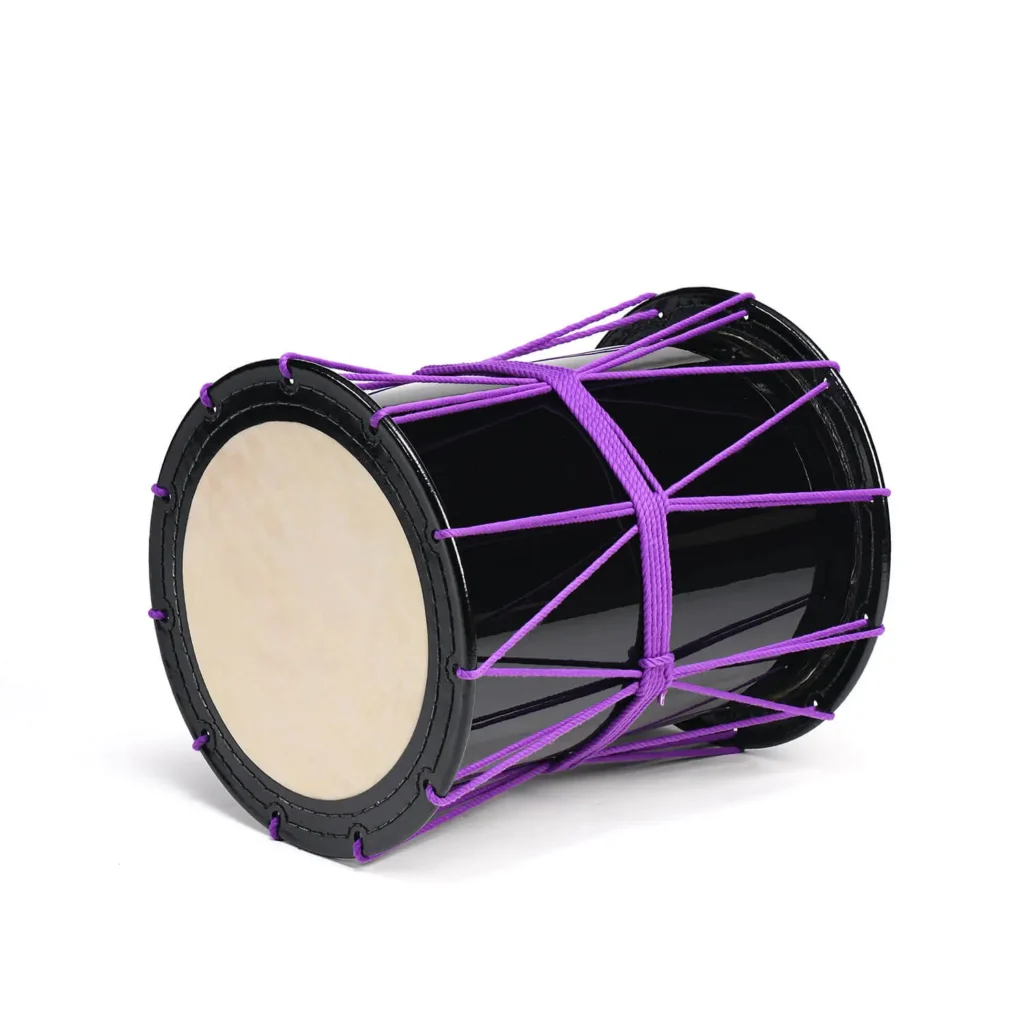
Oke Daiko—also written Okedo Daiko or Okedō-daiko—uses a tube-shaped body assembled from wooden staves. Each drumhead is attached to a hoop, and rope running between the two heads creates tension across the drum.
This construction reduces weight, especially when a light wood such as paulownia is used. Depending on the model, an Oke Daiko can sit horizontally or at an angle on a stand, hang in a frame, or support shoulder-carried performance.
Typical advantages include:
- Lower weight than many similarly sized Nagado drums
- Easier transport and faster stage changes
- Adjustable rope tension
- A responsive playing feel and clear attack
- Flexible stand and performance positions
- Custom rope colors and body finishes
Construction, Sound, and Playing Feel
The most important difference is structural, not decorative.
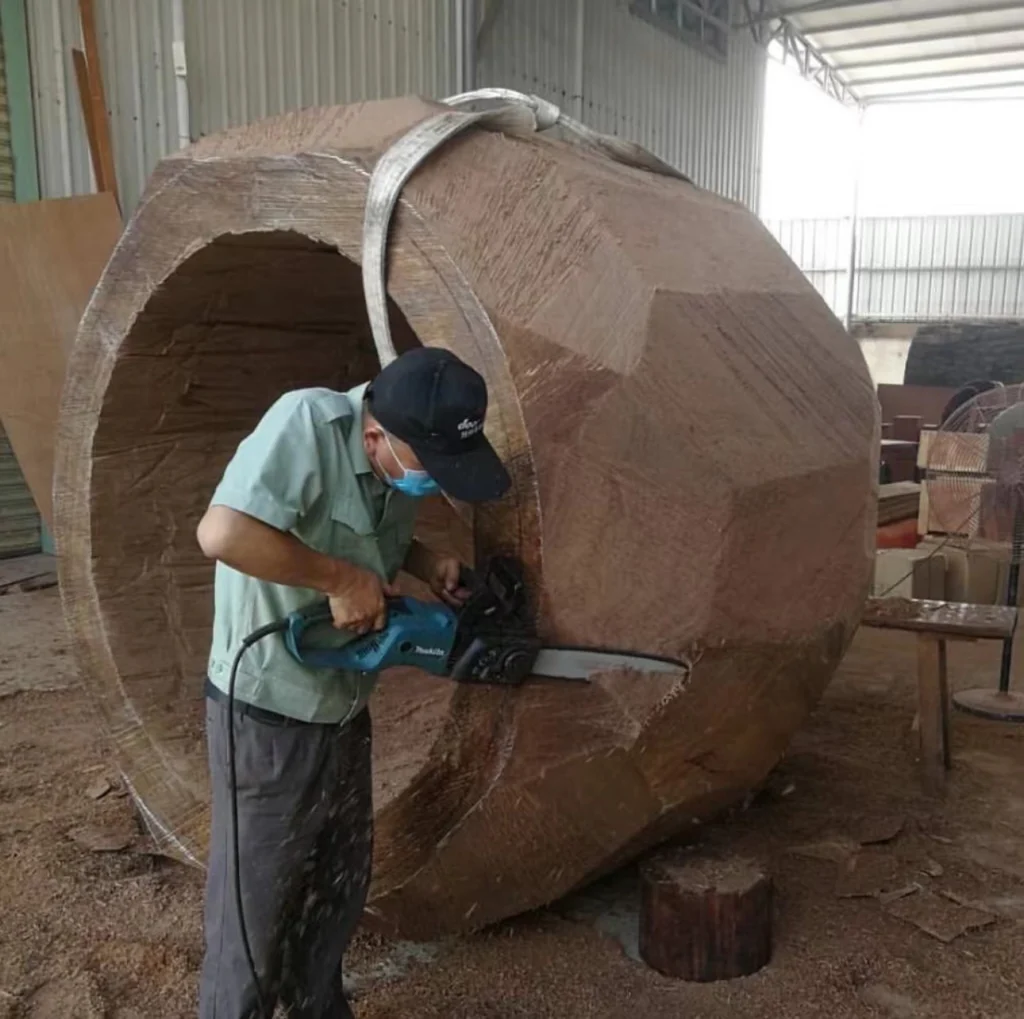
On a Nagado, the shell and tacked heads form a permanent unit. The maker determines the playing response through the shell dimensions, internal contour, wood, head thickness, drying process, and initial head tension. The result is normally consistent and immediately ready for use.
On an Oke Daiko, the rope is part of the tensioning system. Even, appropriate tension influences head firmness, rebound, pitch, attack, and sustain. This flexibility is useful, but one responsible person should understand how to inspect the rope, hoops, and tension balance. Excessive or uneven tightening can place unnecessary stress on the instrument.
In sound, Nagado drums are often selected for a rounded, integrated, and grounded voice. Oke drums often provide a clear, immediate attack and an open response. Neither description is absolute: a large Oke may sound deeper than a small Nagado, and room acoustics can change the result substantially.
For a meaningful comparison, listen to drums with a similar head diameter in the same room. Online recordings are helpful, but microphones, compression, speakers, and playing technique can hide the differences buyers need to hear.
Weight and Portability
For many organizations, portability matters more than a subtle tonal difference.
A medium or large Nagado may require two people to move safely, and its stand and case travel separately. This is manageable in a permanent dojo or music room but adds labor when equipment must cross a campus, climb stairs, or be packed after every class.
Oke Daiko are generally easier for one person to reposition. This makes them valuable for:
- University clubs with changing rehearsal rooms
- Schools that share a gym or multipurpose hall
- Touring ensembles
- Festivals and parades
- Outdoor performances
- Rapid stage changes
Always assess the complete playable unit. A light drum combined with a heavy stand and poorly fitted case may still be inconvenient.
Which Drum Is Easier for Beginners?
Both can work for beginners, but Nagado is usually the stronger core teaching instrument. Its mass and fixed tension create a stable surface for learning stance, contact, rebound, timing, and whole-body movement.
Oke Daiko is also beginner-friendly when secured on a suitable stand. Shoulder-carried playing adds strap adjustment, balance, spatial awareness, and movement control, so it should be introduced gradually after basic technique is reliable.
For mixed-age classes, stand height matters as much as drum type. Children and adults should not be forced into the same playing height if it causes stooping, overreaching, or unstable posture.
Starter Setups: Practical Group Buying Plans
The following configurations are starting points, not rigid packages. JINLEI can adjust drum sizes, stands, bachi, cases, finishes, and quantities according to player age, storage, repertoire, budget, and delivery schedule.
Small Beginner Group: 5–8 Players
- 2 medium Nagado Daiko with compatible stands
- 1 Oke Daiko with stand
- 1 Shime Daiko with stand
- 4–6 practice drums or tire drums for rotation
- 1 pair of bachi per active player, plus 2 spare pairs
- Soft cases for any drum that will be transported
Why it works: the Nagado drums establish the main technique and ensemble voice; the Oke introduces a lighter, more flexible part; the Shime supports timing and rhythmic definition.
School Program: 8–15 Students
- 3–4 medium Nagado Daiko with stable teaching stands
- 1–2 Oke Daiko with stands
- 1 Shime Daiko with stand
- Practice drums for rotation-based instruction
- Varied stand heights where children and adults share equipment
- Bachi sets, spare bachi, and labeled storage
- Cases for instruments moved between rooms or events
Why it works: students can rotate through different roles without requiring one full-size drum per person, while the inventory remains useful for performances.

University Club: 10–18 Members
- 3–4 medium Nagado Daiko
- 2–3 Oke Daiko
- 1 Shime Daiko
- Foldable or easily transported stands where appropriate
- Practice drums for sectional work
- Soft cases for all frequently moved drums
- One bachi pair per active player, plus spares
Why it works: Nagado supplies ensemble weight, while Oke reduces the burden of moving equipment across campus and supports mobile staging.
Touring or Festival Group
- 1–2 Nagado Daiko as stage anchors
- 3–5 Oke or Katsugi-style drums for mobile parts
- 1–2 Shime Daiko for rhythmic definition
- Compact or foldable stands
- Protective cases for every transported drum
- Spare rope, straps, bachi, and a small inspection kit
Why it works: the group preserves a grounded visual and sonic center without making the entire touring inventory heavy.
How JINLEI Helps Groups Build the Right System
JINLEI is not only a publisher explaining drum categories. We manufacture taiko drums and coordinate the parts that make an instrument usable in real group settings.
Our production and order-planning experience includes:
- Nagado, Oke, Shime, Katsugi, O-Daiko, and related taiko types
- Size and finish customization
- Rope-color options for Oke models
- Stands matched to drum size and playing position
- Bachi selected for the drum and intended technique
- Fitted soft cases for storage and transport
- Group-order planning for schools, clubs, dojos, and cultural organizations
- International shipping coordination and after-sales support
This matters because a drum purchased without the right stand, bachi, or case may be difficult to teach on, unsafe to move, or expensive to correct later. Our goal is to help buyers receive a coordinated setup rather than a collection of parts that do not work well together.
Explore complete JINLEI Taiko sets
What Else Should Be in the Budget?
The drum price is not the complete cost of a usable group setup.
Stands
The stand determines playing height, angle, stability, storage footprint, and stage presentation. Confirm that every stand matches the exact drum size and intended playing position.
See the JINLEI guide to Taiko stands
Bachi
Bachi length, diameter, weight, and wood affect comfort and response. Provide one pair per active player, keep spares, and avoid assuming that the same bachi is ideal for every drum.
Browse JINLEI Bachi and accessories
Soft Cases
Use fitted cases for instruments that move between buildings or venues. A proper case reduces scratches and minor impact while avoiding harmful pressure on heads, hoops, rope, or tacks.
Storage and Shipping
Plan a dry, secure storage area away from direct sunlight, heating vents, and damp floors. For international orders, allow time for production, freight, customs clearance, local delivery, unpacking, and inspection.
Read the JINLEI Shipping Policy
Final Recommendation
Buy Nagado Daiko first if your priority is beginner instruction, fixed tension, a grounded central sound, and regular use in one location.
Buy Oke Daiko first if your priority is lower weight, frequent transport, flexible staging, adjustable tension, or movement-based performance.
Build a mixed setup if your group teaches, performs, travels, and expects to grow. For most new institutional programs, several Nagado drums supported by one or two Oke drums and a Shime Daiko create a practical, expandable foundation.
To request a JINLEI recommendation, share:
- Number and age of active players
- Experience level
- Rehearsal-room size
- Storage arrangements
- Frequency of transport
- Main repertoire or performance style
- Approximate budget
- Required delivery date
With these details, JINLEI can recommend compatible drums, stands, bachi, and cases as one coordinated group setup.
FAQ
Is Nagado Daiko louder than Oke Daiko?
Not necessarily. Loudness depends on diameter, shell dimensions, head thickness, tension, bachi, playing force, and acoustics. Nagado often provides a grounded body, while Oke can offer a clear attack that projects well.
Can an Oke Daiko replace a Nagado Daiko?
It can play many similar rhythmic parts, but it does not duplicate the same playing response, resonance, weight, or stage presence. A portability-focused group may use Oke as its main instrument; a fixed teaching ensemble may still prefer Nagado as its foundation.
Does an Oke Daiko need tuning before every performance?
Usually not. A properly tensioned Oke can remain playable without constant adjustment. Inspect the rope and tension after transport or significant environmental changes.
Which drum is easier to transport?
Oke Daiko is generally easier because of its lighter stave-built body. The total transport burden also includes the stand, case, strap, vehicle, and number of people available.
Can Nagado and Oke Daiko use the same bachi?
Sometimes, but the best bachi depends on drum size, musical part, player, and desired response. A coordinated purchase should match bachi to the specific drums and repertoire.
Can JINLEI customize Oke Daiko rope colors?
Yes. JINLEI offers rope-color and body-finish options on selected Oke Daiko models, helping groups coordinate instruments with costumes, branding, or stage design.
Do all Nagado and Oke Daiko need stands?
Most stationary setups require compatible stands. Shoulder-carried Oke or Katsugi configurations use straps during performance, but stands may still be useful for rehearsal, storage, and non-carried pieces.