Introduction: Why the Right Stand Matters
Taiko drumming is as much about movement and expression as it is about sound. The stand you choose sets the stage for your performance, positioning the drum at the right height and angle and allowing your energy to flow through every strike. A sturdy stand also protects the drum’s skin and shell; for example, quality stands often include felt or leather pads at the contact points to prevent damage. Choosing the right stand ensures both comfort and longevity, whether you are practicing at home or performing on stage.
Understanding the Main Stand Styles
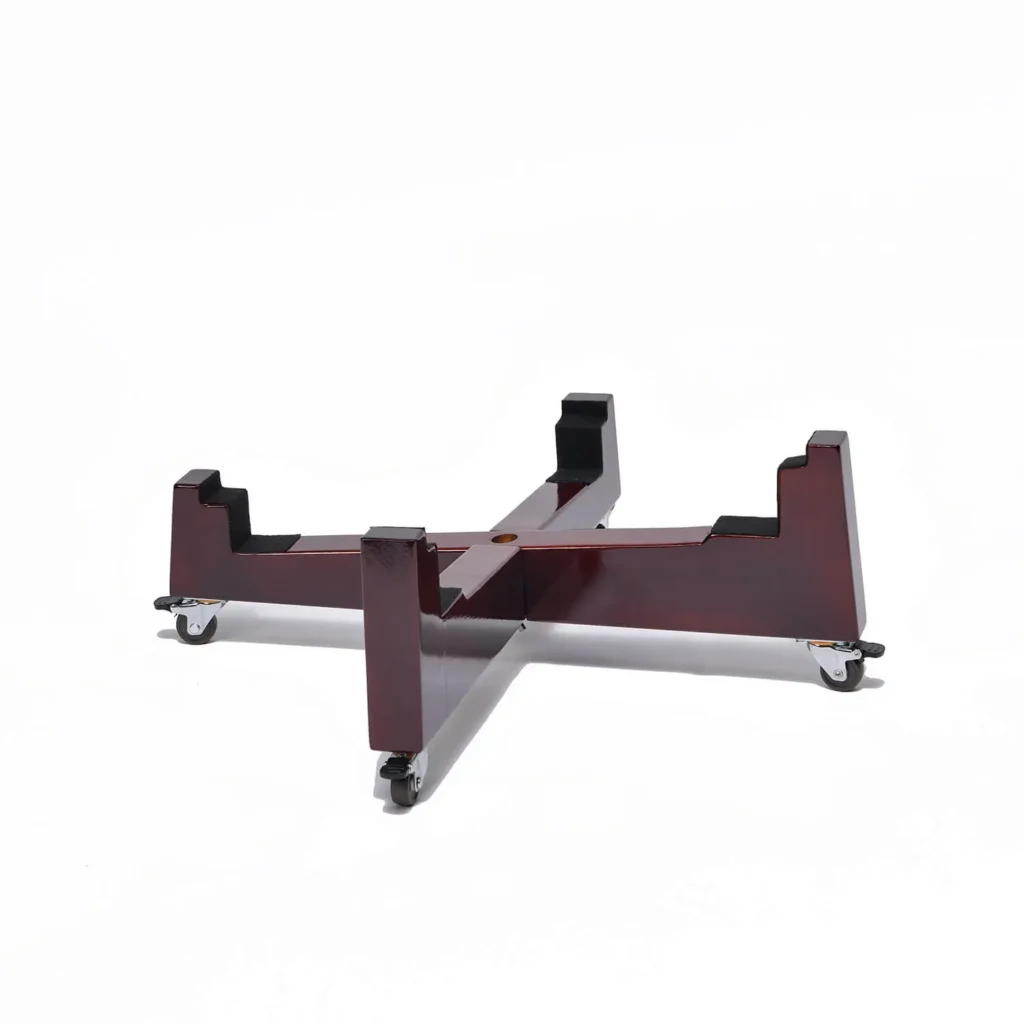
1. Beta (Horizontal/Down) Stands
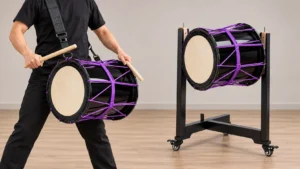
A Beta or down stand holds the drum horizontally so that the head faces upward. This setup is common for traditional festival music and ensemble pieces where players stand on either side. Good Beta stands often have a slightly higher front edge so the drum gently tilts toward the player. Many models include wheels and locking casters, making them easy to move around a stage or studio.
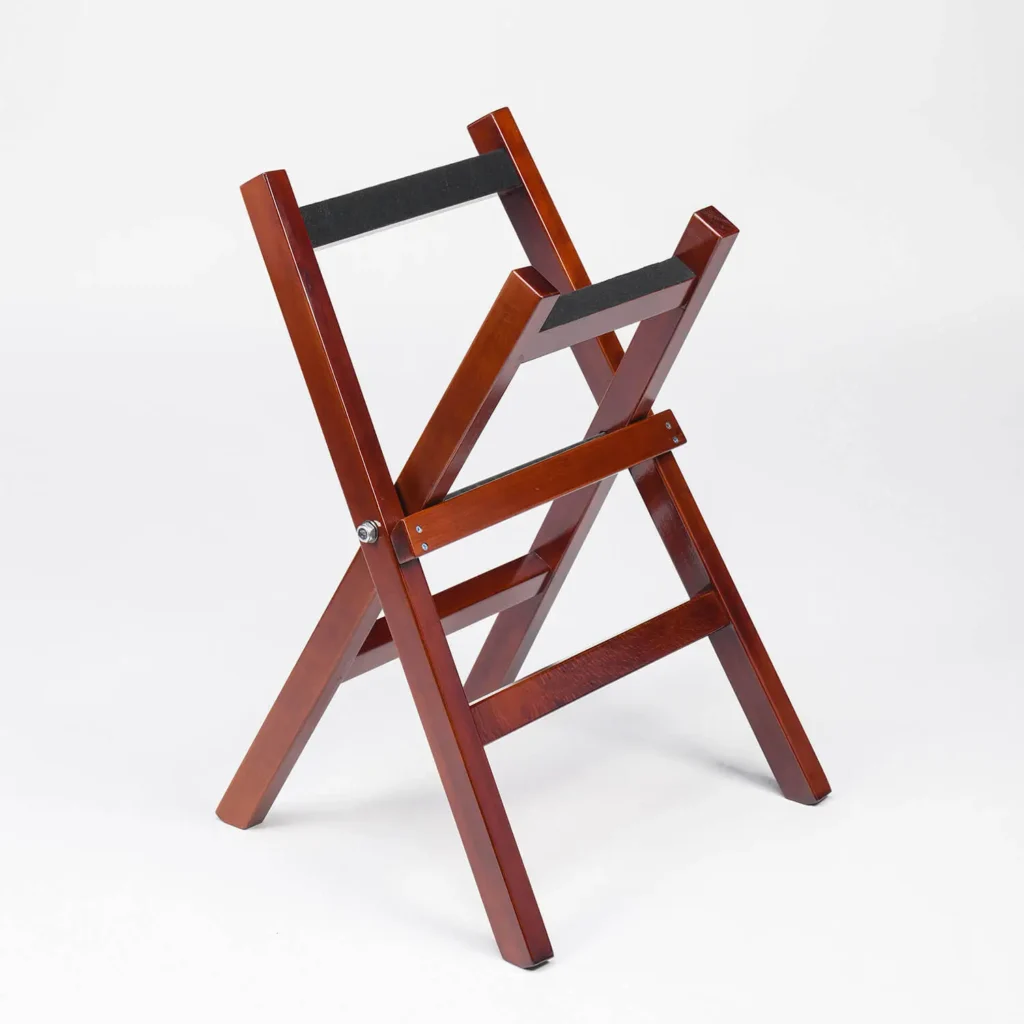
2. Naname (Slanted) Stands
Naname stands tilt the drum at an angle, creating a dynamic playing posture that encourages full‑body movement. High‑quality Naname stands combine strength with portability; some versions fold flat for storage and feature padded contact points to protect the drum. JINLEI’s own Naname Slant Stand uses a foldable Buna wood frame that is durable yet compact. The angle can be adjusted with bolts and ropes, accommodating both Bon Daiko and Sukeroku styles.
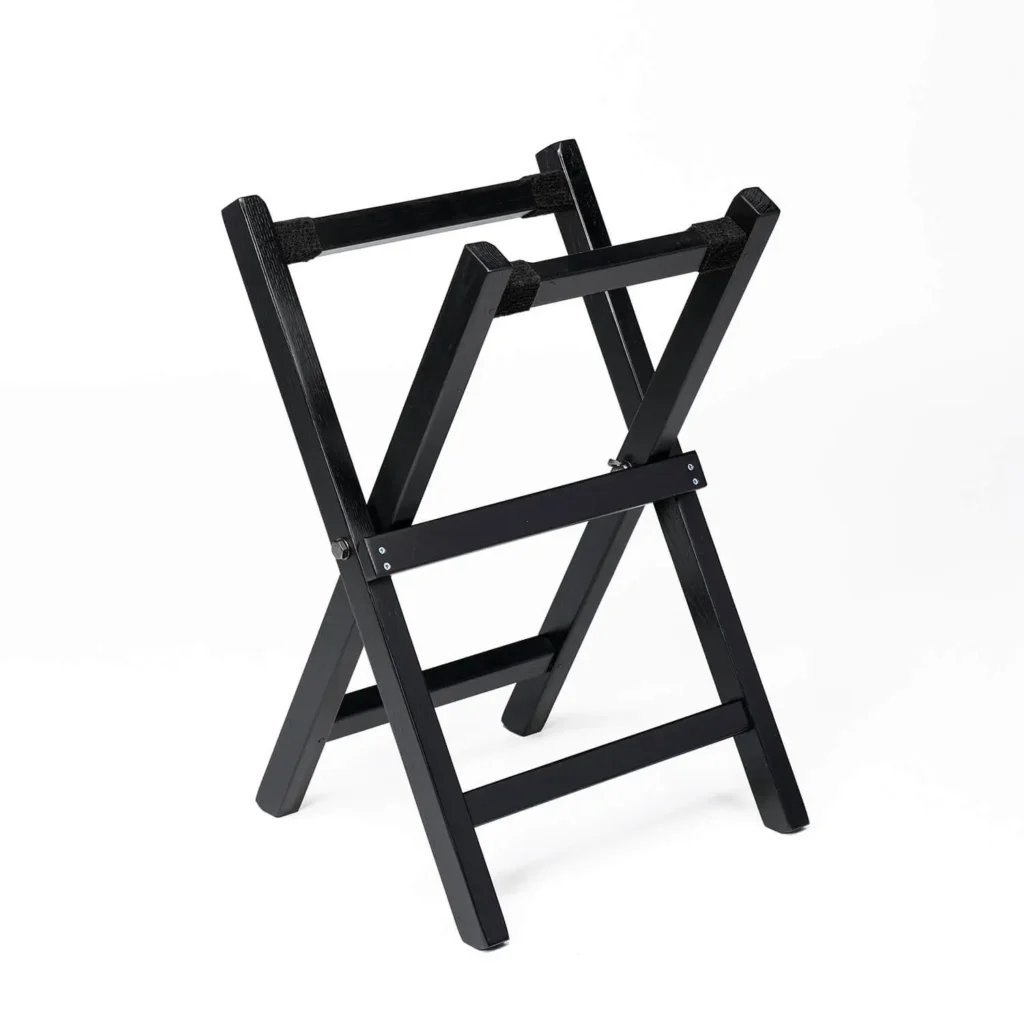
3. Miyake/Yatai Stands
Miyake and Yatai styles place the drum low to the ground and sometimes horizontal. A versatile stand for this style should allow quick changes between slanted and horizontal positions and provide padding to protect the drum. Multi‑use stands like the Miyake/Yatai combo stand make it easy to switch between the two playing styles.
4. Vertical and Shime Stands
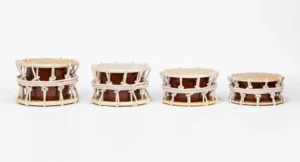
Upright stands are used for smaller drums such as shime daiko. They hold the drum at waist height so that players can perform while standing or sitting. Adjustable height is essential; a flexible stand should let you set the drum higher for standing performance or lower when sitting. Models made for shime daiko often separate into two pieces and can be collapsed for transport.
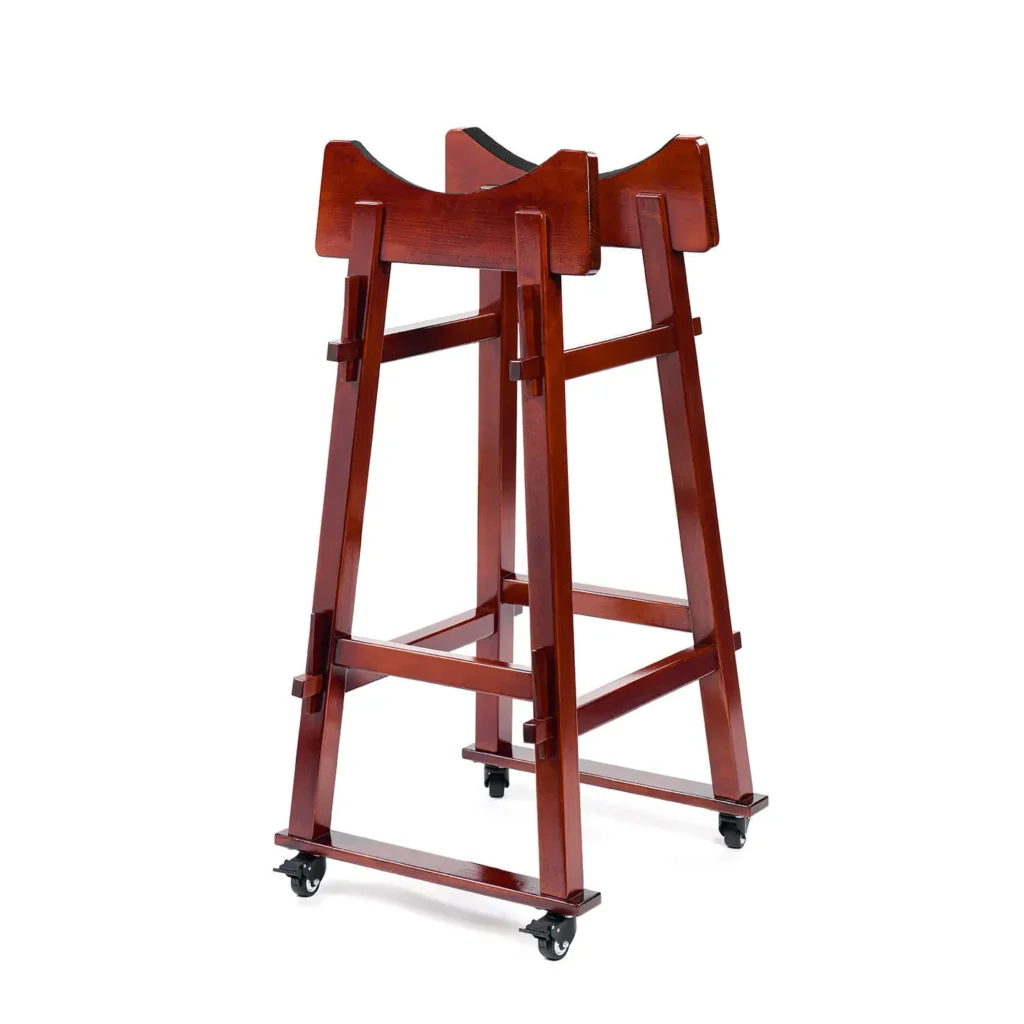
5. Okedo and Odaiko Stands
Larger drums such as okedo and odaiko require heavier stands. Premium okedo stands suspend the drum using leather straps, which double as height adjusters and keep the stand together when folded. Wheels on the front legs with rubber feet on the back provide stability and allow the heavy drum to be moved safely. Budget‑friendly options slot together in two pieces and pack flat for easy transport.
Key Features to Look For
When evaluating a Taiko stand, consider these factors to ensure it suits your drum, playing style and performance environment:
- Adjustability: Height and angle adjustments let you customize the stand for different drummers and techniques. Some stands use straps or bolts to fine‑tune the drum’s position.
- Portability: Foldable legs and flat‑pack designs make it easy to store the stand and transport it between rehearsals and gigs. Compact designs are especially valuable for groups that travel or perform outdoors.
- Durability: Stands constructed from dense hardwoods like Buna or Keyaki withstand the force of Taiko playing. Durable materials also ensure a long lifespan; JINLEI’s Buna wood Naname stand is praised for being hard and durable.
- Protection: Look for padded or felt contact points that prevent the drum’s skin and body from being scratched or dented.
- Mobility: For larger drums, wheels or casters make moving the instrument safer and easier, especially on stage.
- Customization: Ability to order custom sizes and finishes ensures the stand fits your drum perfectly and complements your stage aesthetic. Some manufacturers, including JINLEI MUSIC, offer custom colors and finishes; simply provide a sample with your order to get a perfect match.
Premium Taiko Stands from JINLEI MUSIC
JINLEI MUSIC crafts stands that combine traditional Japanese craftsmanship with modern needs. Here are some highlights from our range:
- Foldable Naname Slant Stand (Buna Wood) – This stand is popular worldwide for its simplicity and practicality. It’s made from high‑quality Buna wood, offering a hard, durable frame. The foldable design makes it easy to carry and store, and the adjustable angle suits both Bon Daiko and Sukeroku styles. Custom finishes are available upon request.
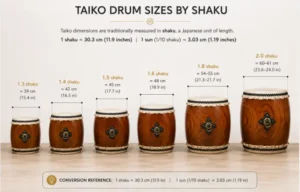
- Hira Daiko X Stand – Designed for Hira daiko ranging from 1.0 to 1.8 shaku, this X‑shaped stand keeps the drum stable while minimizing contact points. Its foldable construction makes setup and breakdown fast. (For more details, explore our product page.)
- Four-Pillar Stand – Designed for large O-Daiko, this heavy-duty stand is crafted from durable Buna wood and supports drums from 2.5 to 6 shaku. Integrated wheels allow easy repositioning, while the detachable design simplifies transportation and storage. Custom height and finish options are available upon request.
- Hira Daiko Hanging Stand – Popular for hanging and slant-style performances, this stand suspends the drum with straps to enhance resonance and projection. Made from sturdy Buna wood, it features adjustable height settings, a foldable design, and compatibility with Hira Daiko from 1.0 to 1.8 shaku. Custom finishes are available upon request.
Beyond stands, JINLEI offers a full range of Taiko drums, bachi (drumsticks), soft cases, and accessories. Pairing your drum with the right stand and protective case not only enhances your performance but also extends the life of your instruments.
Choosing the Right Stand for Your Needs
To select the best stand:
- Know your drum’s size and weight. Large Nagado or Odaiko drums need heavy‑duty stands with reinforced joints and wheels, while smaller Shime drums can use lighter, collapsible stands.
- Consider your playing style. Do you need a slanted stand for dynamic choreography, or a horizontal stand for ensemble work? If you switch styles, a multi‑purpose stand may be the most economical choice.
- Plan for portability. If you rehearse in multiple spaces or perform outdoors, choose a stand that folds flat and fits in a car trunk.
- Set a budget and prioritize features. Entry‑level MDF stands are affordable and lightweight, while premium hardwood stands offer better durability and aesthetics. Remember to factor in accessories like wheels or carrying straps.
Caring for Your Stand
Proper care extends the life of your stand and your drum:
- Inspect regularly for loose bolts or worn straps and tighten or replace them as needed.
- Clean wooden parts with a soft cloth and avoid excessive moisture.
- Store in a dry place and keep stands off the ground when not in use to prevent warping or rust.
- Use protective pads whenever you mount or remove the drum to avoid scratching the drum’s finish.
Conclusion: Elevate Your Performance
The stand is more than a simple support; it shapes your posture, influences your sound, and protects your instrument. Investing in a well‑designed stand tailored to your drum and playing style can make practice more comfortable and performances more compelling. JINLEI MUSIC combines traditional Japanese craftsmanship with modern convenience to deliver stands that are sturdy, portable and elegantly finished.
Ready to find the perfect stand? Explore our full collection of Taiko stands and accessories on JINLEI MUSIC, or contact us for a custom solution tailored to your ensemble. Your drum deserves a stand that supports your passion—choose quality, choose JINLEI.
FAQ About Taiko Stands
What type of Taiko stand should I choose for my drum?
The best stand depends on your drum size and playing style. Naname (slanted) stands are popular for dynamic performances and Sukeroku-style playing, while Beta (horizontal) stands are often used for festival and ensemble performances. Larger drums such as Odaiko require heavy-duty stands with reinforced structures, while smaller Shime Daiko drums work well with adjustable vertical stands.
Are foldable Taiko stands durable enough for regular performance use?
Yes. A well-designed foldable stand can be just as reliable as a fixed stand. Premium models made from hardwoods such as Buna wood are built to withstand the force of regular Taiko performance while offering the convenience of easy transportation and storage.
Why is adjustability important in a Taiko stand?
Adjustable stands allow you to customize the drum’s height and angle for different players, performance styles, and venues. Proper positioning improves comfort, reduces fatigue, and helps players maintain correct technique during long rehearsals or performances.
Can a Taiko stand affect sound quality?
Yes. The way a drum is supported can influence its resonance and projection. For example, hanging stands suspend the drum with straps, minimizing contact with the shell and allowing the drum to vibrate more freely, which can produce a fuller and more resonant sound.
Do I need wheels on my Taiko stand?
Wheels are highly recommended for larger drums such as Odaiko and Okedo Daiko. They make transportation safer and reduce the risk of injury or accidental damage when moving heavy instruments. Many professional stands combine wheels with locking mechanisms for added stability during performance.
Can I order a custom Taiko stand?
Yes. JINLEI MUSIC offers customization options for many stand models, including custom colors, finishes, and certain size specifications. If you have special requirements, simply contact us with your drum dimensions and preferred finish, and our team will help create a stand that fits your needs.
How do I maintain a wooden Taiko stand?
Regularly inspect bolts, straps, and contact points for wear. Clean wooden surfaces with a soft dry cloth, avoid prolonged exposure to moisture, and store the stand in a dry environment when not in use. Proper maintenance helps preserve both the stand and your drum.
Can one stand be used for multiple Taiko playing styles?
Some stands are designed for versatility and can support multiple playing styles. For example, certain Miyake/Yatai stands allow players to switch between horizontal and slanted positions. However, for the best performance experience, many players choose a stand specifically designed for their primary playing style.