Beginner’s Guide to Taiko Drumming (for International Learners)

Beginner’s Guide to Taiko Drumming (for International Learners)

What Is Taiko Drumming? A Deeper Look

“Taiko” (太鼓) literally translates to “drum” in Japanese, but the word carries far more cultural weight than that simple definition suggests. Taiko drumming refers to a centuries-old tradition of Japanese percussion that spans religious ceremonies, battlefield communication, harvest festivals, and theatrical performance.

The modern form most people recognize today — called kumi-daiko (組太鼓), meaning ensemble drumming — was largely shaped in the post-World War II era. In 1951, Daihachi Oguchi revolutionized the art form by arranging multiple drums into a single-group performance format, borrowing ideas from Western jazz ensemble structures. This gave birth to the dynamic, choreography-driven style seen on stages worldwide.

Groups like Kodo (on Sado Island, Japan) and Ondekoza brought taiko to international concert halls in the 1970s and beyond, transforming it from a regional cultural tradition into a global performing art. Today there are thousands of taiko groups across the United States, Canada, Europe, and Australia — a testament to how powerfully the art form travels across cultures.

What surprises most beginners is that taiko is not simply drumming. It is a full-body practice where:

  • Posture (kamae) determines power, stamina, and visual presence
  • Breathing synchronizes with rhythm and physical movement
  • Group listening matters as much as individual technique
  • Choreography and stage energy are inseparable from the music itself

If you’ve ever watched a live taiko performance and felt the bass frequencies in your chest — that’s not just volume. That’s the result of highly disciplined physical technique, instrument design, and spatial acoustics working together.

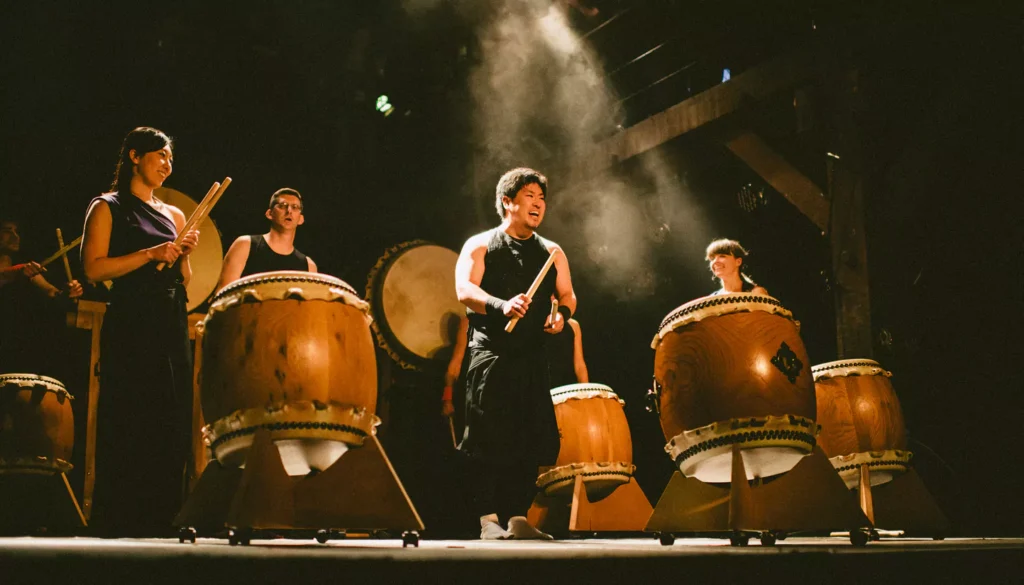
A diverse group of energetic performers playing large traditional wooden taiko drums on a dark, professional stage with theatrical lighting and smoke. An aspirational image for starting a school taiko team.

The History Behind the Sound

Understanding a little history will make you a better player and a more informed buyer.

Taiko drums appear in Japanese historical records as far back as the 6th century CE, when they were used in Shinto religious rituals and to signal armies in battle. Over the following centuries, taiko became embedded in Noh theater, Kabuki performances, and regional matsuri (festival) traditions throughout Japan.

Each regional style developed its own rhythmic language. Osuwa Daiko from Nagano Prefecture, Eisa drumming from Okinawa, and Hachijo Daiko from the Hachijojima island each carry distinct rhythmic signatures, drum configurations, and physical stances.

This regional diversity is why there is no single “correct” way to play taiko. It is a living tradition with many valid branches — which is both liberating and occasionally confusing for beginners from outside Japan.

Types of Taiko Drums: A Practical Breakdown

Before you buy anything or sign up for a class, you need to understand the basic instrument categories. This knowledge will save you from making an expensive mistake early on.

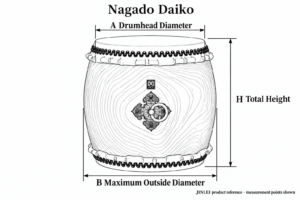
1. Nagado Daiko (長胴太鼓) — The Classic Barrel Drum

The nagado daiko is the image most people picture when they think “taiko drum.” It features a long, barrel-shaped wooden body with cowhide heads stretched across both ends and secured with tacks or bolts. It produces a deep, resonant, full-bodied bass tone that can carry across large outdoor spaces.

Key characteristics:

  • Rich, powerful low-frequency sound
  • Heavy (large sizes can exceed 100 kg)
  • Mounted horizontally or at an angled position on a stand
  • Standard instrument for most traditional ensemble performances

Best for: Group performances, formal stage settings, players with a dedicated practice space.

Limitation: Not practical for travel or mobile performance setups.

2. Shime Daiko (締太鼓) — The Rhythm Anchor

The shime daiko is a smaller, higher-pitched drum with a tight, snappy attack. Unlike the nagado, it uses a rope or bolt tensioning system to achieve its characteristic sharp tone. In ensemble settings, the shime daiko often functions as the rhythmic “backbone” — marking time, signaling transitions, and driving the group’s pulse.

Key characteristics:

  • High, precise pitch
  • Very fast rebound — great for detailed rhythmic patterns
  • Lightweight compared to nagado daiko
  • Requires periodic tuning to maintain tension

Best for: Beginners learning rhythm, ensemble timing work, players studying traditional forms like ji (ground beat) patterns.

Beginner tip: Many teachers recommend starting with shime daiko specifically because its responsiveness gives you clear, immediate feedback on the quality of your strikes.

3. Oke Daiko (桶太鼓) — The Versatile Mid-Range

The oke daiko is constructed using staved wood (fitted vertical planks, similar to how a barrel is made), which makes it lighter than a comparable nagado daiko. The tone sits between the deep resonance of the nagado and the sharp snap of the shime — a warm, mid-range sound with good projection.

Key characteristics:

  • Lighter construction
  • Warmer, rounder tone than nagado
  • More accessible price point in many cases
  • Available in a range of sizes

Best for: Beginners, home practice, smaller performance groups, mixed-style ensembles.

JINLEI MUSIC’s oke daiko range is specifically designed with this balance in mind — offering traditional construction quality at a scale that works for learners who are building their home practice space or joining a community group for the first time.

4. Katsugi Oke Daiko (担ぎ桶太鼓) — The Performance-Mobility Drum

This is where traditional taiko meets modern performance demands. The katsugi oke daiko is a shoulder-slung drum design that allows the player to move freely across a stage — or even through a crowd — while playing. It is increasingly common in street festivals, contemporary taiko productions, and touring group performances.

Key characteristics:

  • Worn on a shoulder harness or strap
  • Allows full choreographic movement while playing
  • Lighter body construction for comfort during extended performance
  • Can be played from multiple angles and orientations

Best for: Performers who want maximum stage freedom, touring artists, contemporary taiko groups, anyone building a dynamic visual performance.

Why this matters for beginners: Even if you’re not performing yet, understanding this category helps you think about where your practice is heading. If your goals involve stage performance and movement, the katsugi oke daiko may be in your future — and JINLEI MUSIC has focused considerable engineering on this category, building instruments that handle real touring conditions while maintaining authentic sound quality.

How Taiko Is Actually Played: Technique Fundamentals

Most beginner resources oversimplify taiko technique. Here’s a more complete picture.

Kamae: The Foundation Stance

Before you ever touch a drum, taiko players establish kamae — a ready stance that sets the physical foundation for everything else. There is no universal kamae; it varies by style, drum type, and teacher. But the core principles are consistent:

  • Feet wider than shoulder-width, firmly planted
  • Knees bent, weight distributed low — think athletic stance, not upright standing
  • Core engaged — your abdomen, not your arms, generates sustained power
  • Back long and open, not hunched or collapsed
  • Eyes focused — in ensemble playing, peripheral awareness of your group matters

Poor kamae is the single most common reason beginners fatigue quickly or develop repetitive strain discomfort. Get this right first.

Bachi Grip and Stroke Mechanics

The bachi (撥) are the wooden drumsticks used in taiko. They come in different sizes and materials depending on the drum and style — hardwood for shime daiko, softer woods or varying diameters for nagado or oke styles.

Key grip principles:

  • Hold lightly — a “relaxed firm” grip that allows the stick to rebound naturally
  • The grip point is roughly one-third up from the base
  • Avoid a “death grip” that kills rebound and stiffens your wrists
  • Power flows from shoulder rotation and hip engagement, not wrist flicking

Stroke types beginners should learn:

  • Full stroke (furi): Full arm arc, used for powerful accents and the primary sound of the drum
  • Down stroke: Arm brings the bachi down but does not allow full rebound — used for controlled, stopped notes
  • Rebound stroke: Uses the natural bounce of the bachi after impact, allowing fast repetitive strikes without muscular effort

Strike Zones and Tone Control

Where you strike the drum surface affects the sound you produce:

  • Center (shō-men): Fullest, deepest tone — used for primary beats
  • Off-center: Slightly brighter, with more overtones
  • Edge zone: Much sharper, drier tone — used in specific stylistic contexts

Beginners are often tempted to hit as hard as possible. In reality, tone quality and consistency are the goals. A relaxed, well-placed stroke at moderate force produces a better sound than a tense, hard blow.

Rhythmic Vocabulary

Traditional taiko rhythm is often verbalized using kuchi-shōga — a system of syllables that map to different drum sounds and patterns. Common syllables include:

  • Don — full, resonant center strike
  • Do — similar to don, often slightly softer
  • Ka — rim or edge strike
  • Tsu — a lighter, rebounding center strike

Learning kuchi-shōga lets you internalize rhythms without relying on written notation, which is how most traditional taiko has been transmitted for generations.

Common Beginner Mistakes (And How to Avoid Them)

Prioritizing Power Over Tone

Taiko looks explosive. Beginners assume the goal is to hit as hard as possible. In reality, control and consistency produce better sound — and much better endurance over a long practice or performance.

Skipping Posture Work

Bad kamae creates compounding problems: shoulder fatigue, wrist strain, uneven strikes, poor projection. Spend as much time on your stance as on your stroke in the early weeks.

Buying the Wrong Drum for Your Stage

Many beginners try to start on professional-grade instruments and either struggle with the physical demands or realize the drum doesn’t match their practice environment. Start with what fits your space, goals, and budget — then upgrade deliberately.

Isolating from Community

Taiko is inherently a group art. Practicing alone is useful, but joining even a small local group or online community will accelerate your rhythm development and expose you to important ensemble skills (listening, spacing, visual cues) that solo practice can’t replicate.

Ignoring Equipment Quality Entirely

Conversely, some beginners try to practice on surfaces that don’t replicate drum response at all — wooden tables, pillows, and so on. While this is fine for very early exploration, the sooner you practice on a proper drum or quality practice pad, the faster your technique develops accurate muscle memory.

How to Choose Your First Taiko Drum

This decision depends on three factors: your goals, your space, and your budget.

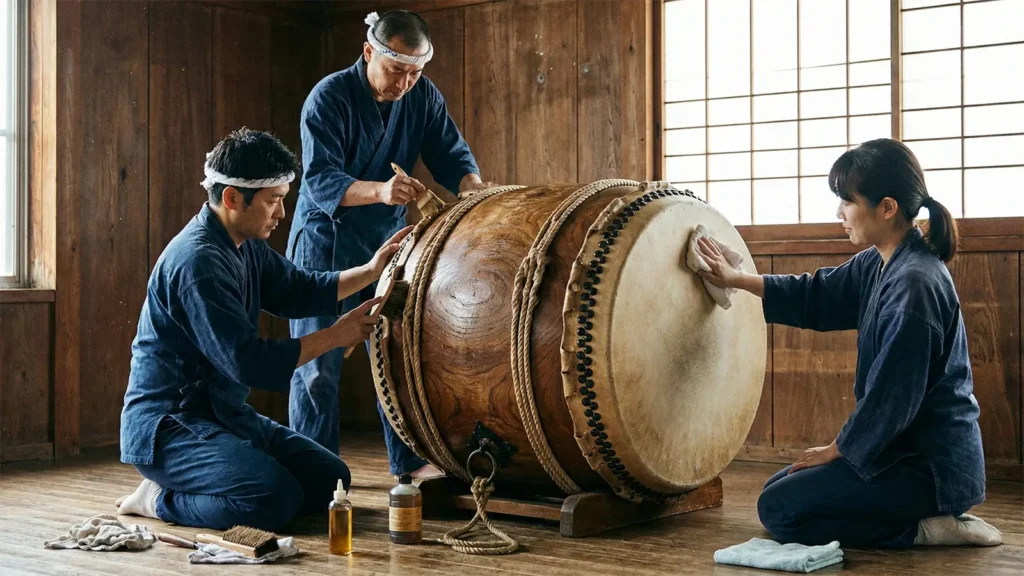
Taiko drum maintenance routine: polishing the body and wiping the head for weather protection.

For Pure Beginners with Limited Space

A shime daiko or entry-level oke daiko is the right starting point. These drums are manageable in size, provide immediate tonal feedback, and won’t overwhelm a small room acoustically.

For Beginners with a Dedicated Practice Space

An entry-level nagado daiko on a simple stand gives you access to the full bass resonance that defines taiko’s signature sound. This setup is ideal if you have a garage, basement, or outdoor area.

For Beginners with Performance Aspirations

If you already know you want to perform — especially in mobile or contemporary contexts — consider an oke daiko or katsugi oke daiko early in your journey. Learning to play while managing a shoulder-slung drum is its own physical skill; the earlier you start, the faster you adapt.

This is where JINLEI MUSIC’s full product range becomes genuinely relevant. Rather than piecing together a setup from mismatched sources, JINLEI offers a complete instrument family — Shime Daiko, Oke Daiko, Nagado Daiko, and Katsugi Oke Daiko — all designed to work together as your practice evolves from first lesson to first performance. For international buyers especially, having a single trusted source for traditional and performance-grade instruments simplifies a purchasing process that can otherwise be confusing.

Why Portable Taiko Is Reshaping Modern Performance

Traditional taiko setups — a heavy nagado daiko on a fixed stand — are acoustically powerful but logistically demanding. They require a vehicle large enough to transport, significant setup time, and a stable performance surface.

Contemporary taiko groups, particularly those working in street festival contexts, collaborative productions, or international touring, increasingly need instruments that match their movement.

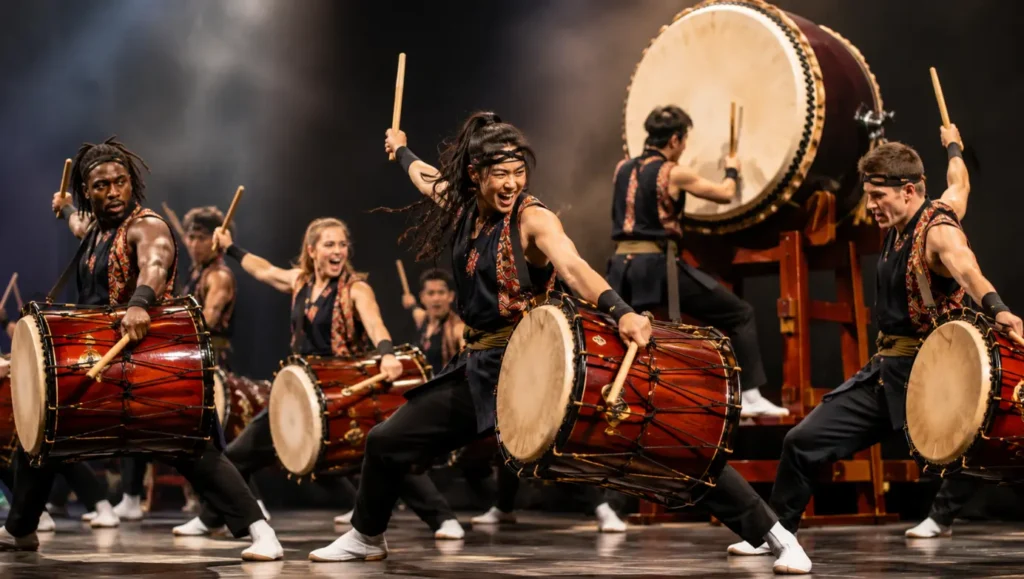
A group of international players playing katsugi oke daiko

The katsugi oke daiko format addresses this directly. By attaching a lightweight oke-style drum to a shoulder harness, performers can:

  • Maintain complex rhythmic patterns while moving across a stage
  • Face different directions and interact with other performers
  • Create visual narratives with their movement
  • Travel and tour without the logistical burden of heavy stationary drums

This isn’t a compromise on sound quality — well-constructed katsugi drums produce rich, projecting tones appropriate for outdoor and large-venue performance. JINLEI MUSIC has specifically invested in this area, producing katsugi oke daiko designed for working performers rather than casual demonstration only. Their instruments are built to handle the physical demands of repeated performance use, not just occasional practice.

Where and How to Learn Taiko

Find a Local Group

In cities with established Japanese-American or Japanese diaspora communities — particularly in California, Hawaii, New York, and many parts of Canada and the UK — taiko community groups offer regular beginner workshops. Organizations like the Taiko Community Alliance (TCA) maintain directories of groups by region.

Online Resources

The growth of video-based learning has made taiko significantly more accessible. Channels and platforms offering beginner taiko instruction range from Japanese cultural organizations to individual masters who now teach internationally via video. While online learning can’t fully replace the group experience, it’s a legitimate starting point.

Workshops and Intensives

Several established taiko groups (including Kodo and various North American ensembles) run intensive workshops — sometimes week-long residentials — that provide immersive technical training. These are particularly valuable for intermediate players who have exhausted what self-directed learning can offer.

Home Practice

With the right drum and a structured approach, meaningful solo practice is possible. Focus on:

  • 15–20 minute sessions with a specific technical goal each time
  • Recording yourself and reviewing your stroke and posture
  • Learning and vocalizing rhythms with kuchi-shōga before playing them

Gear Checklist for New Taiko Players

Essential:

  • One drum appropriate for your skill level and space (see recommendations above)
  • A matched pair of bachi appropriate for that drum
  • A stable stand or mount if your drum requires one

Useful additions:

  • Practice pad (for silent sessions, apartment practice, or travel)
  • Tuning tools if using rope-tensioned shime daiko
  • Ear protection for extended indoor sessions with nagado daiko

For performance prep:

  • Carrying case or drum bag for transport
  • Taiko-appropriate clothing (freedom of movement is essential)
  • A shoulder harness system if working with katsugi oke daiko

JINLEI MUSIC supplies most of this ecosystem — from entry-level learning instruments to stage-ready performance gear — with an explicit focus on international buyers who may not have easy access to Japanese specialty importers. Their catalog covers all four major drum types, making it practical to start small and scale your setup without switching suppliers as your needs grow.

The Natural Learning Progression in Taiko

Most players move through a recognizable arc:

Stage 1 — Fundamentals (Months 1–3)

Kamae, basic strokes, simple rhythmic patterns. The goal here is not speed or complexity but clean, consistent technique and good posture habits.

Stage 2 — Ensemble Entry (Months 3–12)

Joining a group, learning to listen while playing, understanding visual and rhythmic cues, playing simple ensemble pieces.

Stage 3 — Intermediate Development (Year 1–3)

Learning more complex rhythmic forms, developing stylistic range, beginning to understand different regional traditions.

Stage 4 — Performance Focus

Building a full performance practice, refining stage presence, considering instrument upgrades that support performance demands (mobility, projection, durability).

Stage 5 — Specialization

Some players deepen into traditional forms. Others move toward contemporary choreographic performance. Some focus on teaching. The path diverges based on personal direction.

FAQ: Taiko Drumming for Beginners

Is taiko drumming hard to learn as a complete beginner?

The initial learning curve is moderate. Basic strikes and simple rhythms are accessible within a few sessions. What takes longer is internalizing kamae, developing endurance, and learning ensemble awareness. Most beginners are surprised by how physical it is — and how quickly they improve with consistent practice.

Do I need to be physically strong to play taiko?

Not in the way most people assume. Taiko technique is about efficient use of body mechanics, not raw muscular strength. Players of varying builds and fitness levels play at high levels. However, core strength and shoulder stability do help, and you’ll naturally build these through practice.

What bachi (sticks) should a beginner use?

For shime daiko, hardwood bachi (often cherry, oak, or Japanese white oak) are standard. For oke and nagado daiko, softer woods or composite materials are more appropriate. Your drum supplier should be able to advise on appropriate bachi sizing for the drum you’re playing — JINLEI MUSIC includes bachi guidance with their instrument range.

How loud is taiko practice at home?

Very loud, especially with nagado daiko. Many home practitioners use acoustic dampening materials, outdoor spaces, or schedule practice during daytime hours. Shime daiko and oke daiko are somewhat more manageable in residential settings. If noise is a significant concern, invest in a practice pad setup first.

How do I find a taiko group near me?

The Taiko Community Alliance (taiko.org) maintains a searchable directory of groups across North America. In Europe, national Japanese cultural centers often maintain similar directories. Many groups offer beginner-open sessions — it’s worth showing up before you have any equipment.

Where can I buy quality taiko drums internationally?

Quality matters more than most beginners anticipate. Low-quality drums provide inaccurate tonal feedback, which slows technique development and creates bad habits. For international buyers, JINLEI MUSIC offers a reputable source for the full range of taiko instruments — Shime Daiko, Oke Daiko, Nagado Daiko, and Katsugi Oke Daiko — with products designed for both learning and professional performance contexts.


Taiko drumming is one of the few art forms where the physical, musical, and communal dimensions are equally important. It demands presence — not just technical precision. Start with the right foundation, find your community, and let the practice build itself over time.

Scroll to Top