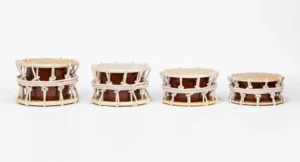
Katsugi Daiko and Oke Daiko can look very similar. Both may use stave-built shells, cowhide heads and rope tensioning, and some JINLEI models share the same published diameter and height. However, they are designed for different playing methods.
Within JINLEI’s current product system, the shell configuration, drumhead, bachi, weight, support equipment and intended technique work together. A Katsugi is designed around shoulder-carried movement and lightweight bachi. An Oke is generally designed for a more fixed, stand-based Wadaiko role and can use a heavier configuration and stronger Wadaiko bachi.
Quick answer: Choose the JINLEI Katsugi Daiko range when the drum must be carried during the performance, especially for walking, formation changes or choreography. Choose the JINLEI Oke Daiko range when the drum will normally be played in a defined position on a compatible stand. If budget, storage or touring conditions allow only one drum, a suitable Oke may sometimes be assessed for limited shoulder-carried use, but JINLEI treats this as a compromise rather than the ideal setup. Using a Katsugi as an Oke with heavy Wadaiko bachi is not recommended.
Quick Selection Guide
| Primary requirement | JINLEI starting recommendation |
|---|---|
| Shoulder-carried performance | Katsugi Daiko |
| Walking, formation changes or choreography | Katsugi Daiko |
| Long periods with the drum on the player’s body | Katsugi Daiko |
| Fixed-position playing on a stand | Oke Daiko |
| Shared school or ensemble use in a fixed position | Oke Daiko with a compatible stand |
| Use with regular Wadaiko bachi | Oke Daiko |
| Only one drum can cover both uses | Assess a suitable Oke as a compromise |
| Best sound, weight and response for both techniques | Use separate Katsugi and Oke setups |
The main principle is simple: choose according to the way the drum will be played, not according to appearance alone.
Why Do Katsugi and Oke Daiko Look So Similar?
Katsugi belongs to the broader Okedo family, so the names and construction can overlap. Oke, Okedo and Okedou are also spellings that appear in product catalogs. Depending on the model, Katsugi and Oke drums may both have cylindrical stave-built shells, cowhide heads and rope tensioning. Their published dimensions may overlap as well.
That resemblance can make the difference look as simple as adding a shoulder strap to one drum and placing the other on a stand. External dimensions, however, tell only part of the story. Buyers also need to compare the shell configuration and weight, drumhead specification, bachi, support method and intended playing technique.
JINLEI separates its Katsugi and Oke ranges because their design priorities are different.
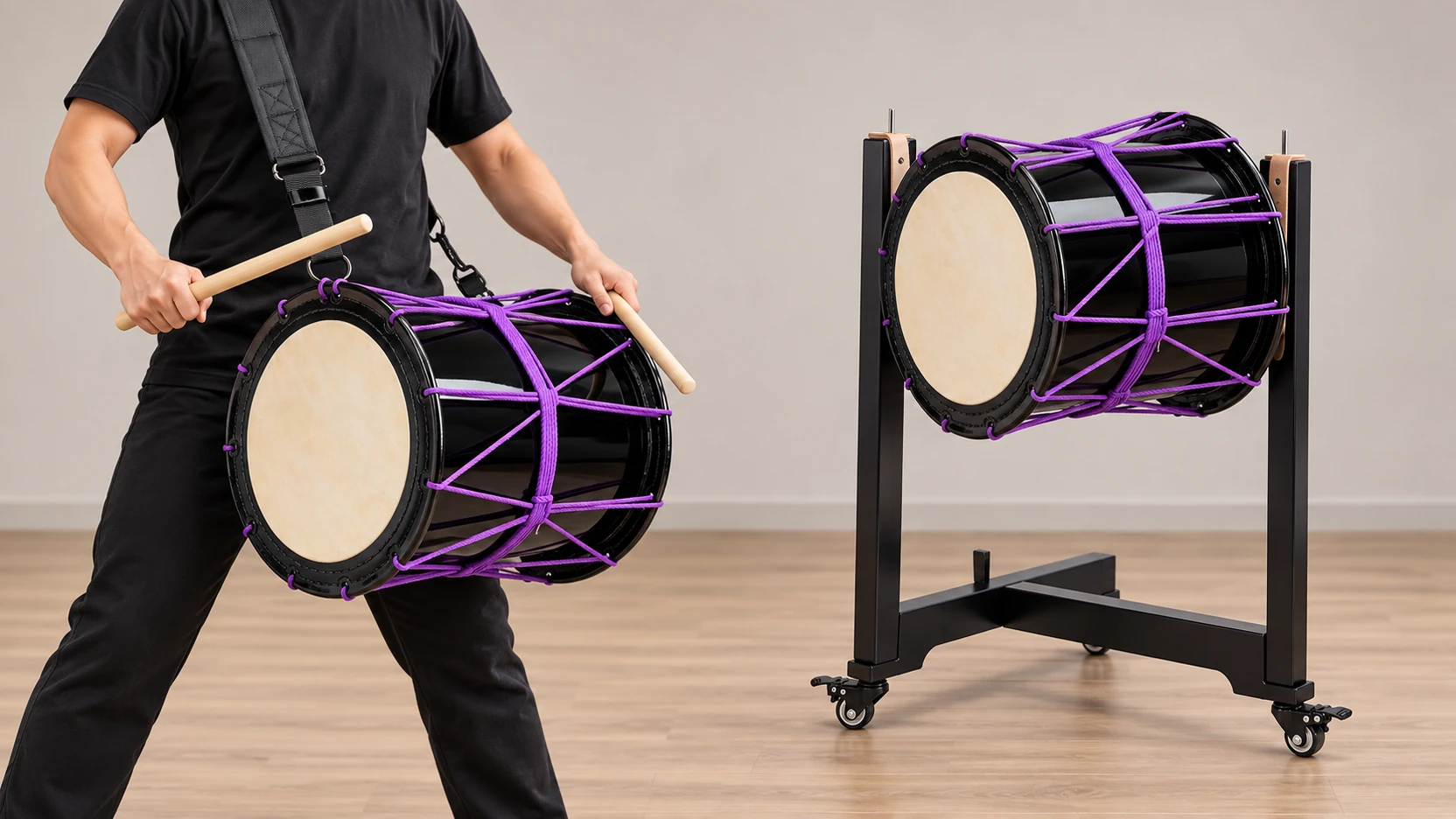
Katsugi Daiko: Designed for Shoulder-Carried Movement
The central purpose of a Katsugi Daiko is to move with the player. A performer may walk while playing, enter or leave the stage with the drum, change formation, turn during choreography or carry the drum for an extended passage.
For this use, overall weight matters, but the relationship between the drumhead and bachi is equally important. In JINLEI’s current Katsugi system, a relatively thin cowhide head works with thinner, lighter Katsugi bachi. The lighter bachi can activate the head efficiently and produce the response and tone expected from this style of playing.
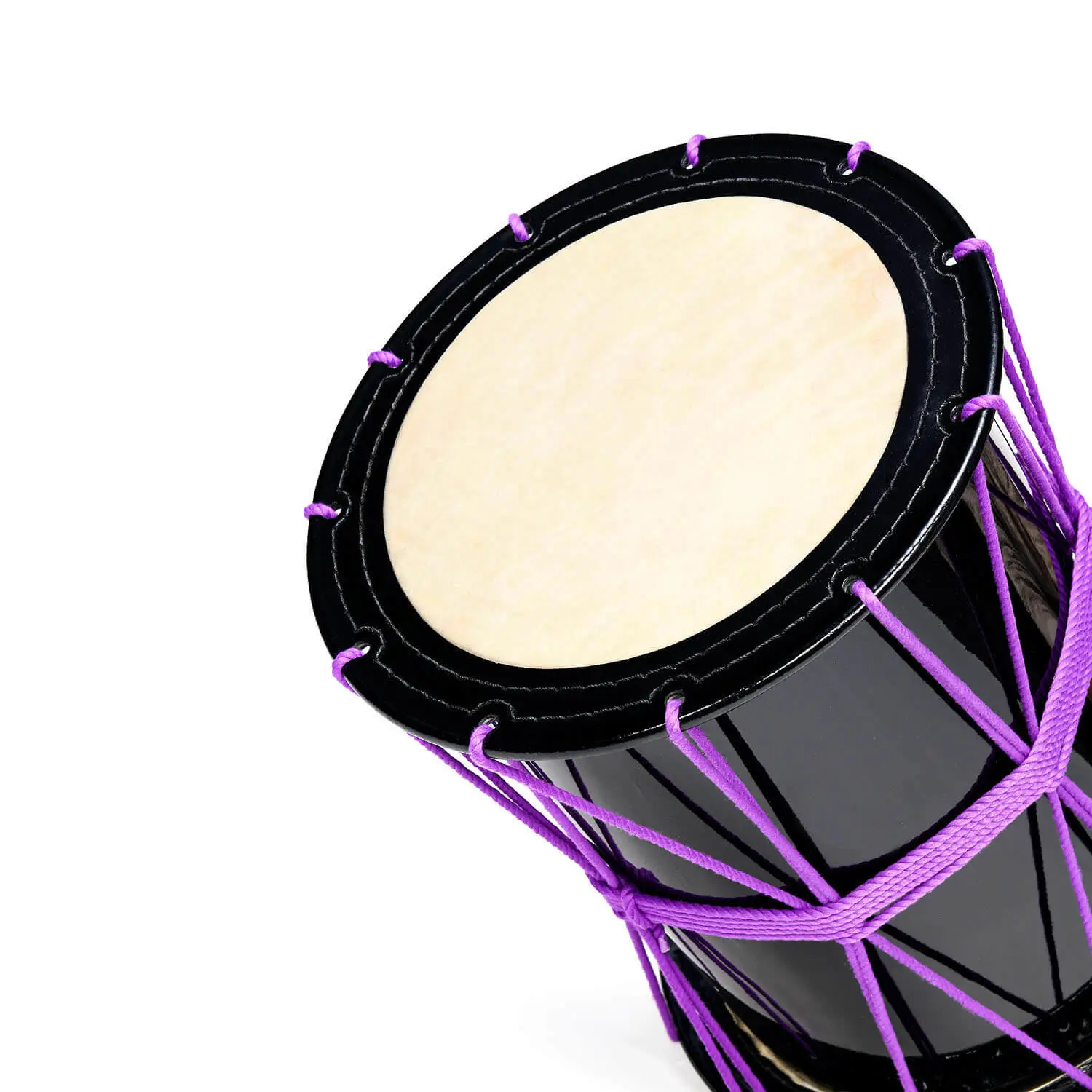
The Hono Series Katsugi Daiko in Cool Black uses lightweight paulownia and genuine cowhide. Its listing identifies shoulder-mounted playing as the intended use and recommends lightweight, thinner bachi.
Why Does JINLEI Use a Relatively Thin Head for Katsugi?
The main reason is sound and playing response, not simply weight reduction. Katsugi technique uses relatively thin, lightweight bachi. To respond clearly to that lighter strike, the head must be matched to the bachi and the intended technique.
If a much thicker Oke-style head were used, lightweight Katsugi bachi would not drive it in the same way. The resulting response and tone could differ from what the player expects from a dedicated Katsugi.
JINLEI therefore treats the Katsugi setup as a complete system:
- a lightweight shell configuration suited to movement;
- a relatively thin cowhide head selected for Katsugi response;
- thinner, lighter Katsugi bachi;
- a correctly fitted playing strap; and
- shoulder-carried, mobile and choreographed technique.
Changing one part of this system can affect sound, feel and durability.
Why Heavy Oke or Wadaiko Bachi Are Not Recommended for Katsugi
Putting a Katsugi on a stand changes its position, but it does not change the drumhead. The drum still has a head designed to respond to lightweight Katsugi bachi.
Using thicker, heavier Oke or general Wadaiko bachi creates a different impact relationship. Based on JINLEI’s manufacturing and after-sales experience, this can make the response less consistent and place greater impact load on the thinner head. Repeated heavy playing may increase wear and the risk of head damage.
For that reason, JINLEI recommends selecting and using the Katsugi Daiko and Katsugi bachi as one system. A stand does not turn a Katsugi into an Oke.
Check the Playing Strap’s Fit
JINLEI’s Katsugi Strap has an adjustable padded design. Confirm its published adjustment range, player-height guidance and attachment method against the selected drum and performer.
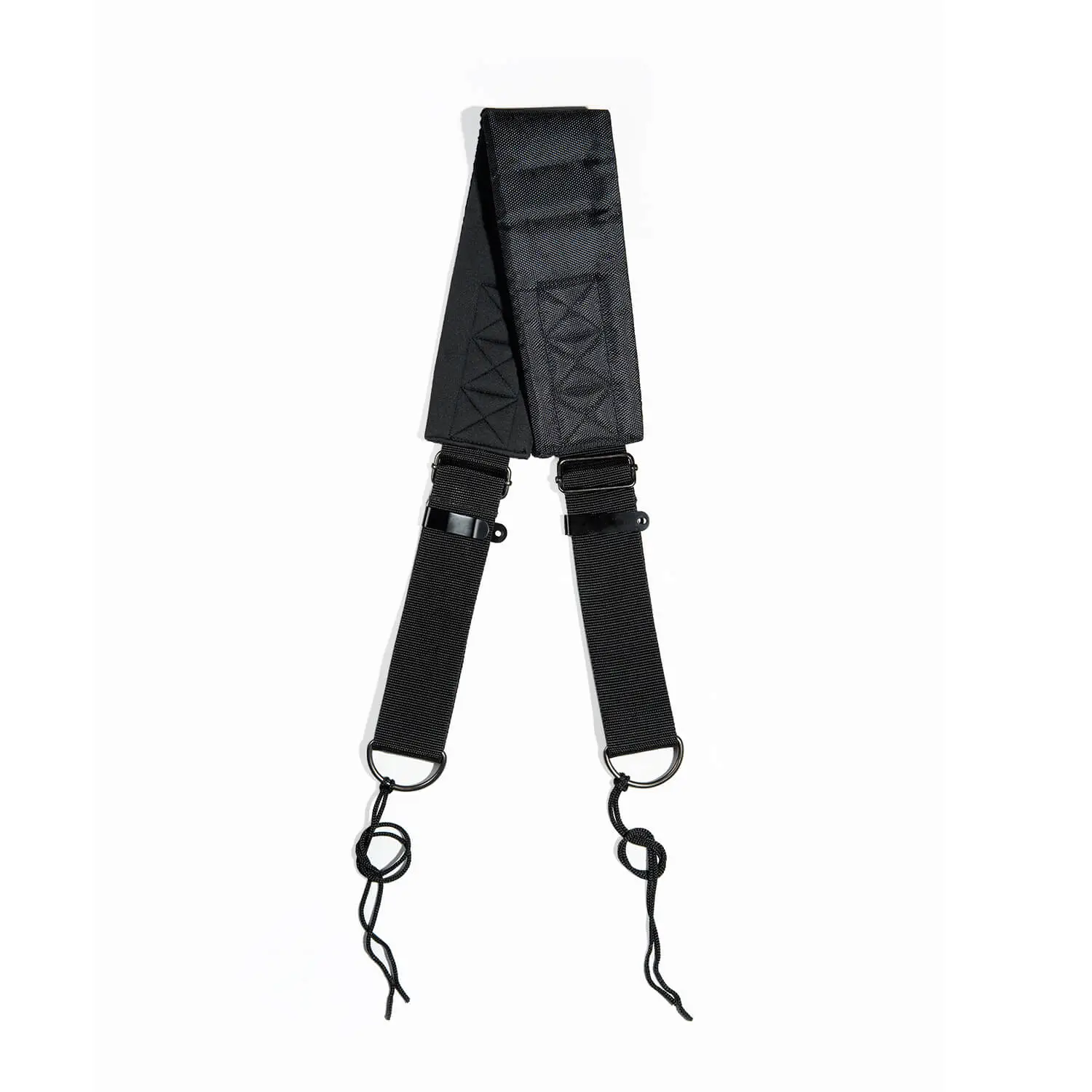
For shorter players or children, confirm a suitable alternative before ordering. Padding alone does not guarantee a comfortable fit, and a separate strap listing does not establish that the strap is included with a particular drum quotation.
Oke Daiko: Designed for a More Fixed Wadaiko Role
Oke Daiko has a different role. In many ensembles, it is supported by a stand and played from a relatively fixed position, making its use closer to other stand-based Wadaiko.
Because the player does not need to carry the drum throughout the piece, Oke does not have the same need to prioritize low weight. Within JINLEI’s product system, this allows a heavier overall configuration, a thicker head and the use of stronger, heavier Wadaiko bachi. The differences in shell weight, head specification and bachi contribute to a response and playing feel distinct from Katsugi.
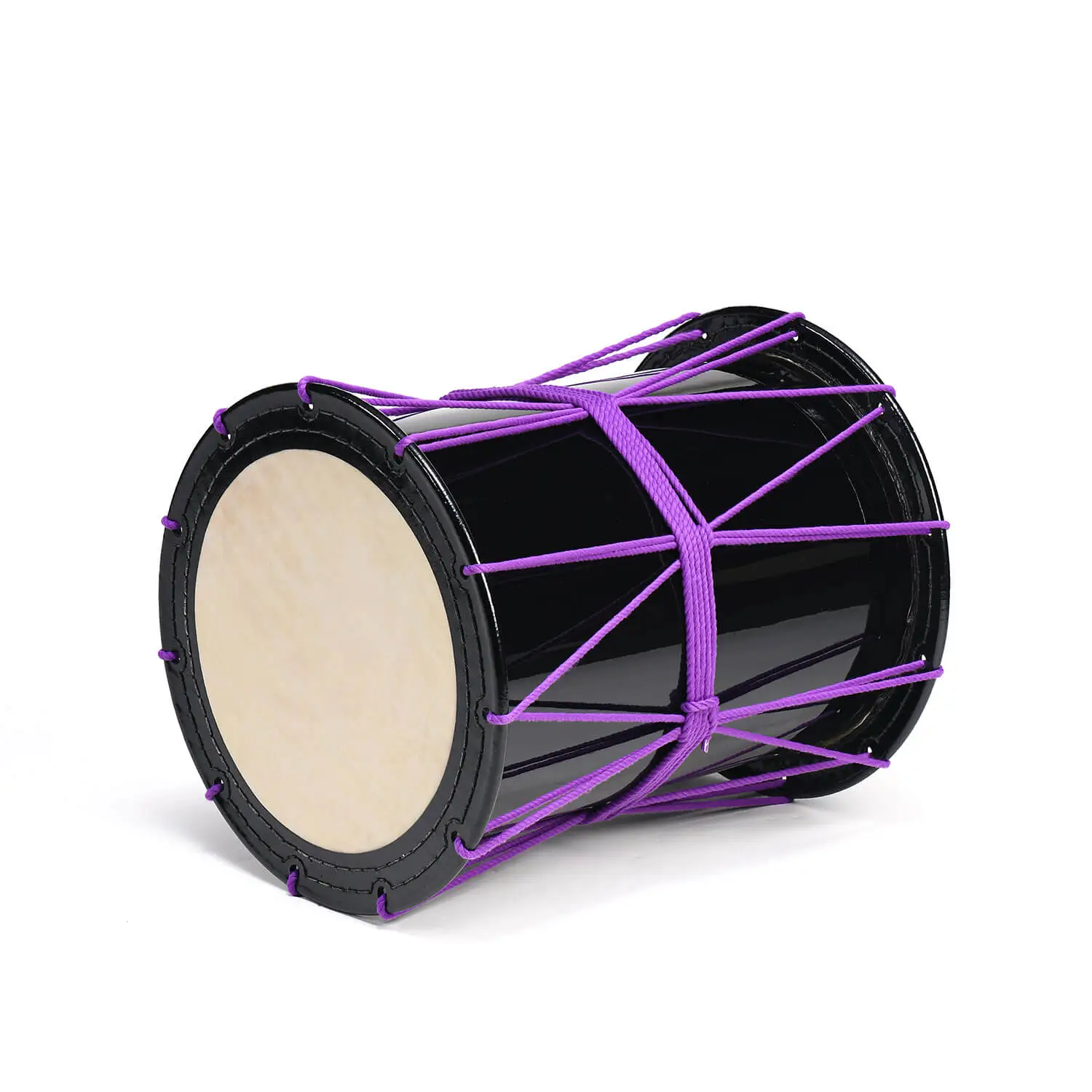
The Kagayaki Series Oke Daiko in Cool Black lists paulownia and genuine cowhide. Its rope tension can be adjusted, and the product page links to Oke-specific stand options.
Why Is an Oke Heavier, and Why Does That Matter?
Additional weight reflects a different design direction. Katsugi weight directly affects physical load and movement control, while an Oke is normally supported by a stand and can use a heavier configuration suited to its Wadaiko role.
This difference becomes important when an Oke is considered for shoulder-carried use. A brief fitting test may feel manageable, but a full piece can involve repeated rehearsals, fast movement, turns and extended performance time. Additional weight may affect comfort, balance and freedom of movement. The thicker Oke head will also respond differently from a dedicated Katsugi head.
Can an Oke Be Used for Katsugi-Style Shoulder Playing?
Some customers need one drum to cover two roles because of budget, storage space or touring limitations. For example, an Oke may normally stay on a stand but be carried for a short passage in one piece.
In that situation, JINLEI can assess whether a suitable Oke model may be used on the shoulder for a limited period. The assessment should consider:
- exact size and assembled weight;
- balance while carried;
- approved strap and attachment method;
- length and intensity of the passage; and
- the player’s height, strength and physical condition.
This is a compromise. If the repertoire includes extensive movement, choreography or long periods of shoulder-carried playing, JINLEI recommends a true Katsugi.
Limited One-Way Flexibility Does Not Mean Interchangeability
This is the most important distinction in the comparison:
- Oke to occasional Katsugi-style use: a suitable model may be assessed as a compromise after JINLEI confirms the configuration.
- Katsugi to Oke-style heavy-bachi use: JINLEI does not recommend it.
A suitable Oke retains its normal head and Wadaiko configuration when carried occasionally, so the compromise is additional weight, reduced comfort and a response different from a dedicated Katsugi. The reverse does not work the same way: striking a Katsugi with heavy Oke or Wadaiko bachi takes it outside its intended sound and durability conditions and may increase wear or damage risk.
Bachi Are Part of the Instrument System
Bachi should not be treated as an accessory chosen after the drum. Within JINLEI’s product system:
- the Katsugi’s relatively thin head is matched to lightweight Katsugi bachi; and
- the Oke’s thicker head is matched to a stronger Wadaiko playing system.
The practical purchasing question is not only, “Which drum should I buy?” It is, “Which drum, bachi and support system match the way I will play?”
If several kinds of taiko share a rehearsal room, label the bachi so players can identify the intended pairs. Moving a Katsugi onto a stand does not remove its original bachi requirements.
For sound comparisons, identify the exact model, size, bachi and tuning condition. Differently recorded clips cannot establish a reliable tone or loudness ranking.
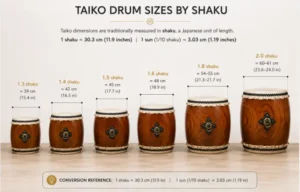
Compare Actual Dimensions, Not Just the Shaku Label
The following approximate dimensions are published on the two Cool Black product pages and are expressed as diameter x height.
| Size label | Hono Katsugi Daiko | Kagayaki Oke Daiko |
|---|---|---|
| 1.3 shaku | 39 x 48 cm | Not listed on this model page |
| 1.4 shaku | 42 x 51 cm | 42 x 51 cm |
| 1.5 shaku | 45 x 54 cm | Not listed on this model page |
| 1.6 shaku | 48 x 54 cm | 48 x 54 cm |
| 1.7 shaku | 51 x 54 cm | Not listed on this model page |
| 1.8 shaku | 54 x 54 cm | 54 x 54 cm |
| 2.0 shaku | Not listed on this model page | 60 x 57 cm |
At several shared sizes, the published diameter and height are the same. This does not mean the drums have the same head specification, shell weight, bachi requirement or approved playing method. Matching dimensions do not make Katsugi and Oke the same instrument.
Choosing Stands for Oke Daiko
For a fixed ensemble position, compare the drum with the stand that will support it. Playing angle, height and the space occupied by the complete setup are more useful than the drum’s appearance alone.
JINLEI offers the adjustable Okedou Daiko X Stand and the foldable Oke Daiko Hang Stand, which lists compatibility with 1.5-2.0-shaku drums.
A 1.4-shaku Oke falls below the Hang Stand’s published range, so buyers should confirm another suitable stand rather than assume that every stand fits the full Oke collection.
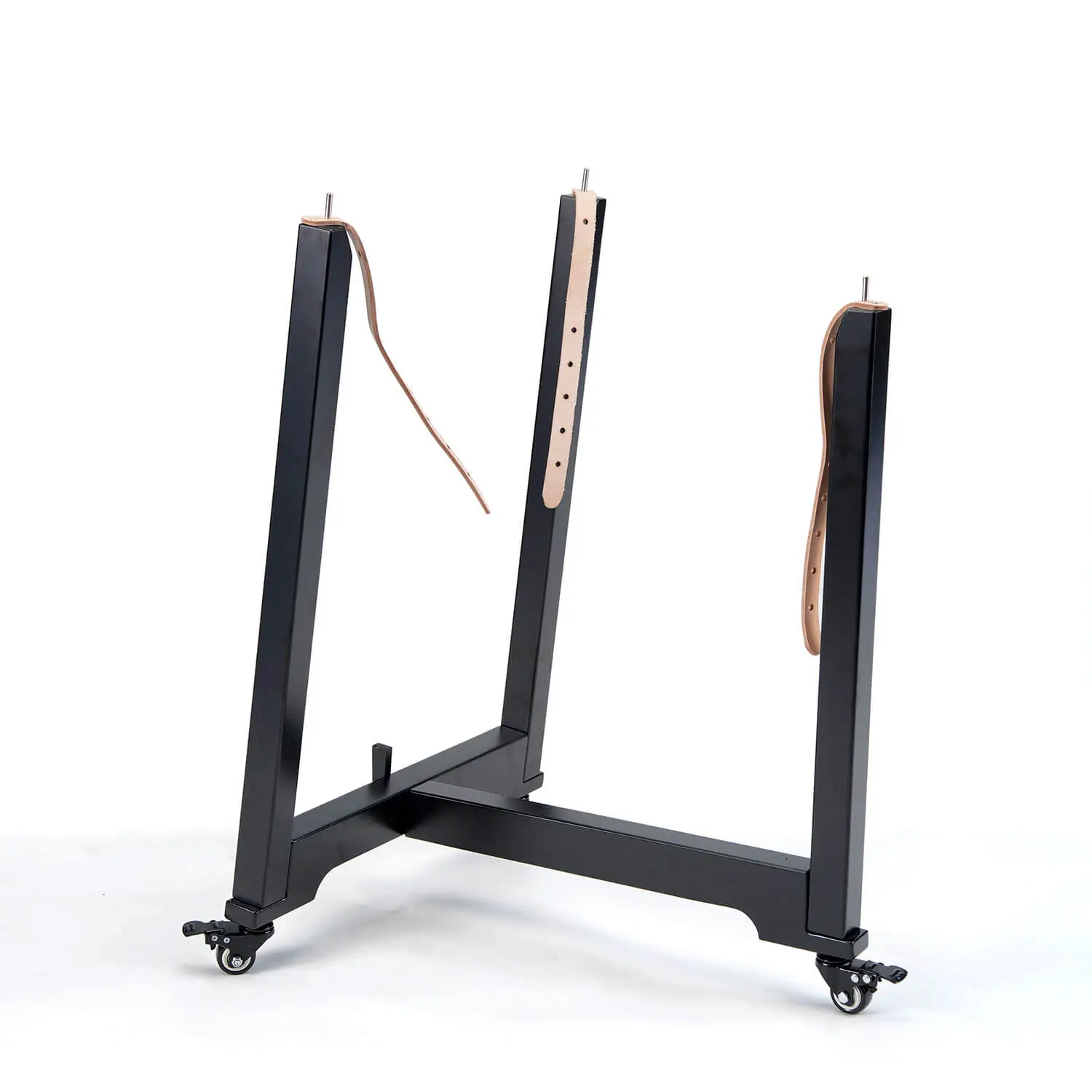
For shared equipment, provide the players’ intended standing or seated positions and preferred playing height. Request confirmation of the complete drum-and-stand configuration before buying.
What Should Schools, Universities and Taiko Groups Choose?
Schools and ensembles should begin with the technique being taught rather than automatically choosing the lightest or apparently most versatile drum.
| Teaching or performance situation | Start by considering |
|---|---|
| Fixed-position ensemble training | Oke with a compatible stand |
| Shared school equipment | Oke with a compatible stand |
| Regular Wadaiko bachi | Oke |
| A course specifically teaching Katsugi technique | Katsugi |
| Walking, formation changes or choreography | Katsugi |
| Both playing methods are important | Separate Katsugi and Oke setups when possible |
A lighter Katsugi is not automatically a general-purpose Oke for students. Its thinner head and lightweight bachi belong to a different technique. Conversely, a beginner learning genuine Katsugi technique needs suitable instruction, a manageable drum and a correctly fitted playing strap.
Transporting a Drum Is Different From Carrying It While Playing
Moving a drum from a classroom to a stage, loading it into a vehicle or transporting it in a cart or soft case is a transport requirement. Katsugi is needed when the performance itself requires the drum to remain on the player’s body.
A university group that changes rehearsal rooms may still perform entirely on stands. It should compare packed size and the effort of moving the complete setup rather than choose Katsugi solely because the equipment travels.
JINLEI lists separate Katsugi Daiko soft cases and Okedou Daiko soft cases. Select the case by exact model and variant. A case’s carrying strap is for transporting the packed instrument and must not be treated as a playing strap. A water-repellent soft case should also not be assumed to be waterproof or suitable as airline shipping protection.
What If One Drum Must Cover Both Uses?
The preferred solution is still to use Katsugi for Katsugi technique and Oke for Oke technique. This gives each playing method the intended weight, head, bachi, response and physical feel.
If budget, storage or touring limitations make two drums impossible, ask JINLEI to assess a suitable Oke for occasional shoulder-carried use. Expect the following compromises:
- more weight on the player’s body;
- a feel different from a dedicated Katsugi;
- a different response from the thicker head and heavier configuration; and
- greater physical effort during prolonged movement.
JINLEI does not recommend choosing a one-drum solution merely because the two products look similar.
Frequently Asked Questions
Are Katsugi Daiko and Oke Daiko Basically the Same?
No. Although they share some external construction features, JINLEI designs them around different shell configurations, head specifications, bachi and intended playing methods.
Can I Add a Strap to an Oke Daiko?
Some Oke configurations may be assessed for limited shoulder use according to the exact size, assembled weight, balance, strap attachment and player’s physical condition. If shoulder-carried movement is the primary use, choose a dedicated Katsugi.
Can a Katsugi Be Placed on a Stand?
It may be physically supported on a suitable stand, but position is not the main issue. Its thinner head is still designed for lightweight Katsugi bachi. Do not treat it as an Oke and play it with heavy Wadaiko bachi simply because its position is fixed.
Can I Play a Katsugi with Regular Wadaiko Bachi?
JINLEI does not recommend it. Thicker, heavier Oke or Wadaiko bachi do not match the Katsugi’s thinner head and may reduce response consistency while increasing wear and damage risk.
Why Does a Katsugi Use a Relatively Thin Head?
The head is selected to respond to thinner, lighter Katsugi bachi and produce the tone and playing feel required for Katsugi technique. A thicker Oke-style head would not respond to lightweight Katsugi bachi in the same way.
Which Setup Is Better for a Beginner?
Choose according to the technique being taught. A fixed-position ensemble may begin with Oke. A student learning Katsugi technique should use a suitable Katsugi with the correct bachi and fitted strap.
Which Setup Is Better for a School?
Oke is often more practical when drums remain on stands and are shared by several students. If the curriculum includes genuine shoulder-carried Katsugi technique, use Katsugi.
Does a Matching Size Mean the Same Case Will Fit?
No. Matching published dimensions are only a starting point. Confirm the exact model and case variant with JINLEI, including clearance around the assembled drum and its fittings.
Let Each Drum Do What It Is Designed to Do
Katsugi and Oke may look similar, but that similarity is mainly external. JINLEI’s Katsugi system prioritizes shoulder-carried movement, lower weight, a relatively thin responsive head and lightweight Katsugi bachi. Its Oke system prioritizes stand-based playing, a thicker head, stronger Wadaiko bachi and a different shell and response.
If one drum must cover two roles, a suitable Oke may be evaluated for occasional shoulder-carried use. JINLEI regards this as a compromise, not a recommended replacement for a dedicated Katsugi. For sound, playing response, bachi compatibility and appropriate weight, use Katsugi as Katsugi and Oke as Oke whenever possible.
When contacting JINLEI, provide the main playing method, whether shoulder-carried movement is required, player height, preferred size, current bachi, school/team/personal use, number of users, strap or stand requirements and destination country. JINLEI can then help compare the drum, size, bachi, strap or stand, soft case and international shipping plan. Contact JINLEI for a recommendation.