Choosing a Shime Daiko involves more than looking at the labels Namitsuke, 2-Chougake, 3-Chougake and 4-Chougake. These grades should not be understood only as progressively thicker drumheads. Within JINLEI’s standard Shime Daiko range, each grade is a matched product specification.
As the grade increases, head thickness and strength, head diameter, shell height, required working tension, metal-hardware strength, overall weight, pitch and projection change together. After choosing a grade, there is a second decision: rope tensioning or a metal system such as bolts or turnbuckles.
Neither system is automatically more advanced. Rope and metal systems make different trade-offs between sound and resonance on one side and tuning efficiency and maintenance convenience on the other. This guide compares the JINLEI Shime Daiko range and helps schools, clubs and ensembles choose a complete setup.
What Changes From Namitsuke to 4-Chougake?
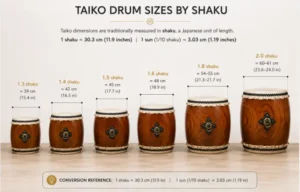
| Grade | Head diameter | Shell height | Head specification | General sound direction |
|---|---|---|---|---|
| Namitsuke – Bu Series | 35 cm | 15 cm | Thinnest of the four grades | Most compact; lower working tension |
| 2-Chougake – Bu Series | 36 cm | 18 cm | Thicker and stronger than Namitsuke | Higher tension, pitch and projection |
| 3-Chougake – Bu Series | 37 cm | 21 cm | Further increased thickness and strength | Higher pitch and stronger projection |
| 4-Chougake – Bu Series | 38 cm | 24 cm | Thickest and strongest of the four grades | High tension, high pitch and strong projection |
These figures describe JINLEI’s standard product system. Another maker’s grades should not be assumed to use the same dimensions, construction or working tension. The JINLEI Shime Daiko page provides a real-product comparison, Rope, Bolt and Turnbuckle configurations, and related heads, stands and cases.
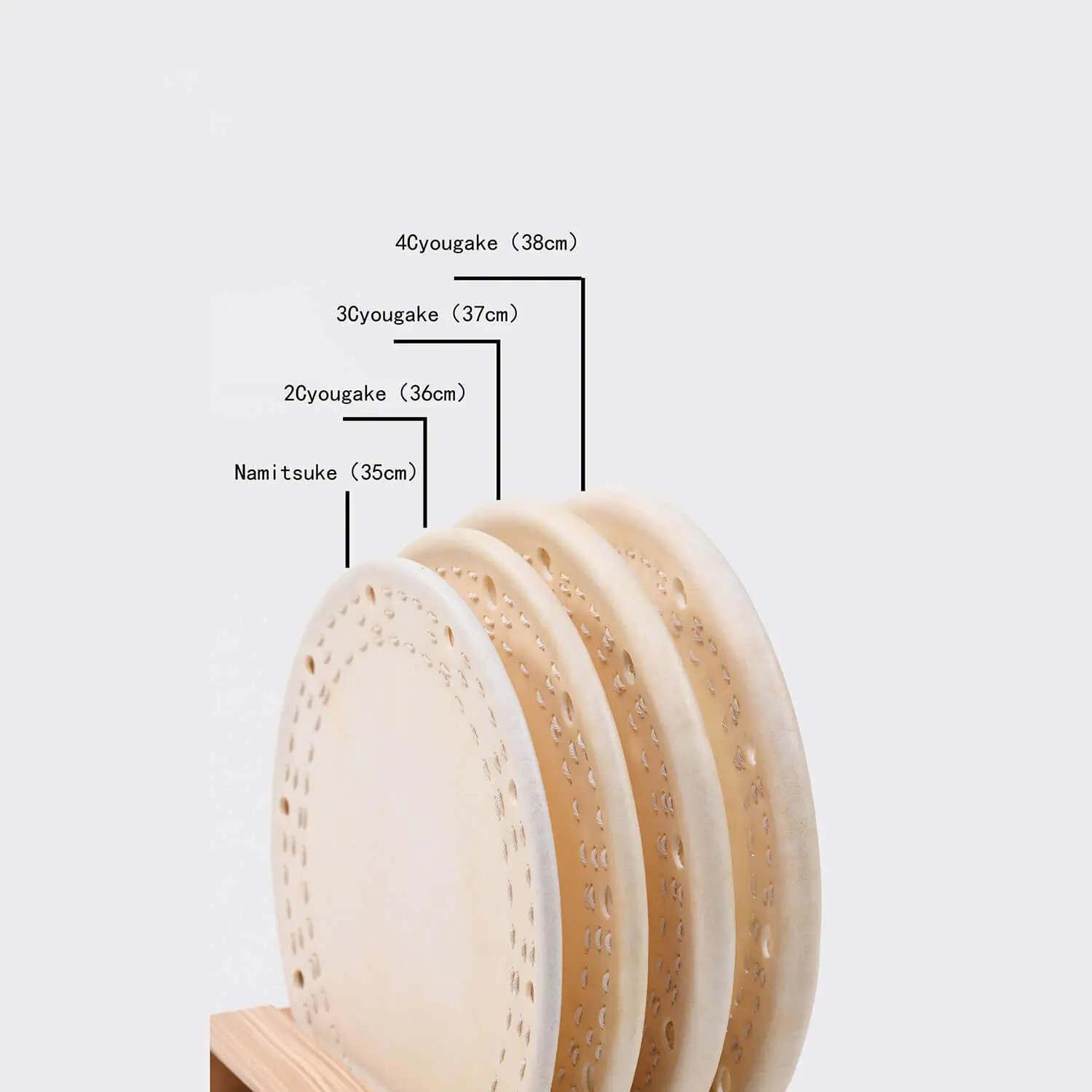
The Grade Changes the Complete Drum
JINLEI’s standard models use stave-built wooden shells. From Namitsuke to 4-Chougake, head diameter, shell height, cowhide thickness and strength, required working tension, hardware strength, overall weight, pitch, projection and playing response change as a coordinated system.
A 2-Chougake is therefore not simply a Namitsuke with a thicker head. The same applies to 3- and 4-Chougake. The grade represents a matched combination of head specification, diameter, shell height, working tension, hardware and tuning condition.
Why Do Higher Grades Produce Higher Pitch and Projection?
Within JINLEI’s system, higher grades use thicker, stronger cowhide. When installed with the corresponding shell and rope or metal hardware, the stronger head can work at greater tension. Correct tensioning contributes to higher pitch, a clearer attack and stronger projection through an ensemble.
Head thickness alone does not determine the sound. The result also depends on head strength, actual tension, diameter, shell height, tensioning system and tuning condition. Moving from Namitsuke to 4-Chougake is a complete sound-design change.
Why Must the Hardware Match the Grade?
Thicker heads require more force to reach their intended working tension, so bolts, nuts, turnbuckles and other components must match the grade. For example, Namitsuke bolts may not provide the force required to tension a 2-Chougake head correctly. Even if two parts have similar dimensions, the original system may not support the new head’s working tension.
When replacing a head or hardware, confirm the original grade, head diameter, shell specification, replacement-head grade, Rope/Bolt/Turnbuckle type and metal-hardware specification. Diameter alone is not proof of compatibility.
Which Grade Should You Choose?
Namitsuke: Compact and Relatively Light
Namitsuke measures about 35 x 15 cm. It is the smallest standard grade, with a relatively thinner head and lower working tension. Consider it when compact size and lower weight matter, when very high pitch and projection are unnecessary, or when the ensemble already uses Namitsuke. It is not automatically a beginner’s drum; its musical role should determine the choice.
2-Chougake: Worth Comparing for Schools and General Teams
The standard 2-Chougake measures about 36 x 18 cm. Compared with Namitsuke, it has a larger head, taller shell, thicker and stronger cowhide, greater working tension, and increased pitch and projection. It is especially worth comparing for schools, university Taiko clubs, training organizations and general ensembles. At this grade, buyers should also consider carefully whether Rope, Bolt or Turnbuckle best suits their maintenance needs.
3-Chougake: Higher Pitch and Stronger Presence
The standard 3-Chougake measures about 37 x 21 cm. Its larger, stronger components support greater working tension. When correctly tuned, it produces higher pitch and stronger projection than 2-Chougake. It is worth considering for larger ensembles or when the Shime part must remain clear through other taiko.
4-Chougake: High Tension and Strong Projection
The standard 4-Chougake measures about 38 x 24 cm. It has the largest head, tallest shell, thickest and strongest cowhide, and greatest required working tension in this four-grade range. Correctly configured and tuned, it provides high pitch and strong projection. It is not automatically better than 3-Chougake; the grade should follow the musical requirement.
Rope, Bolt or Turnbuckle?
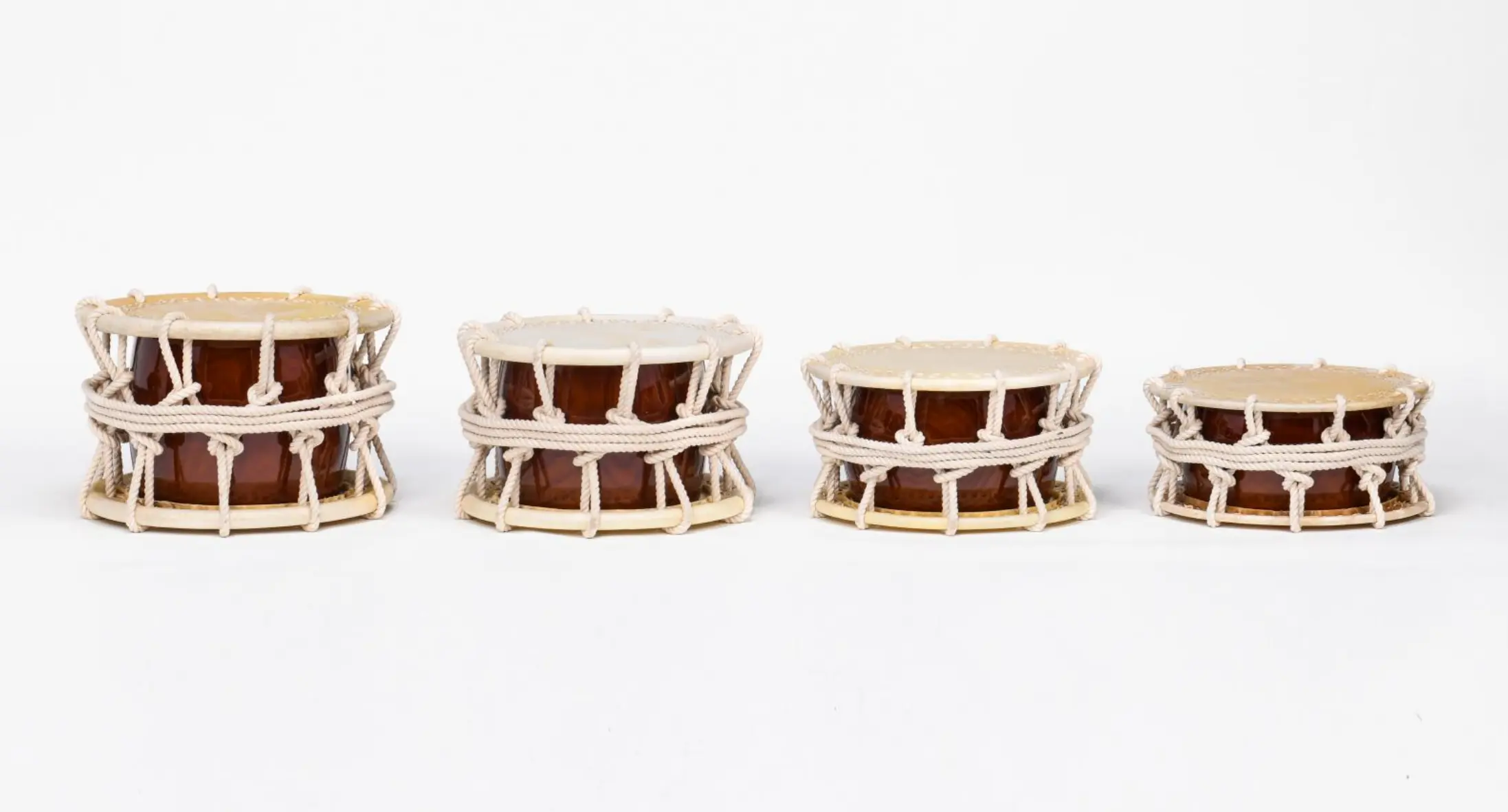
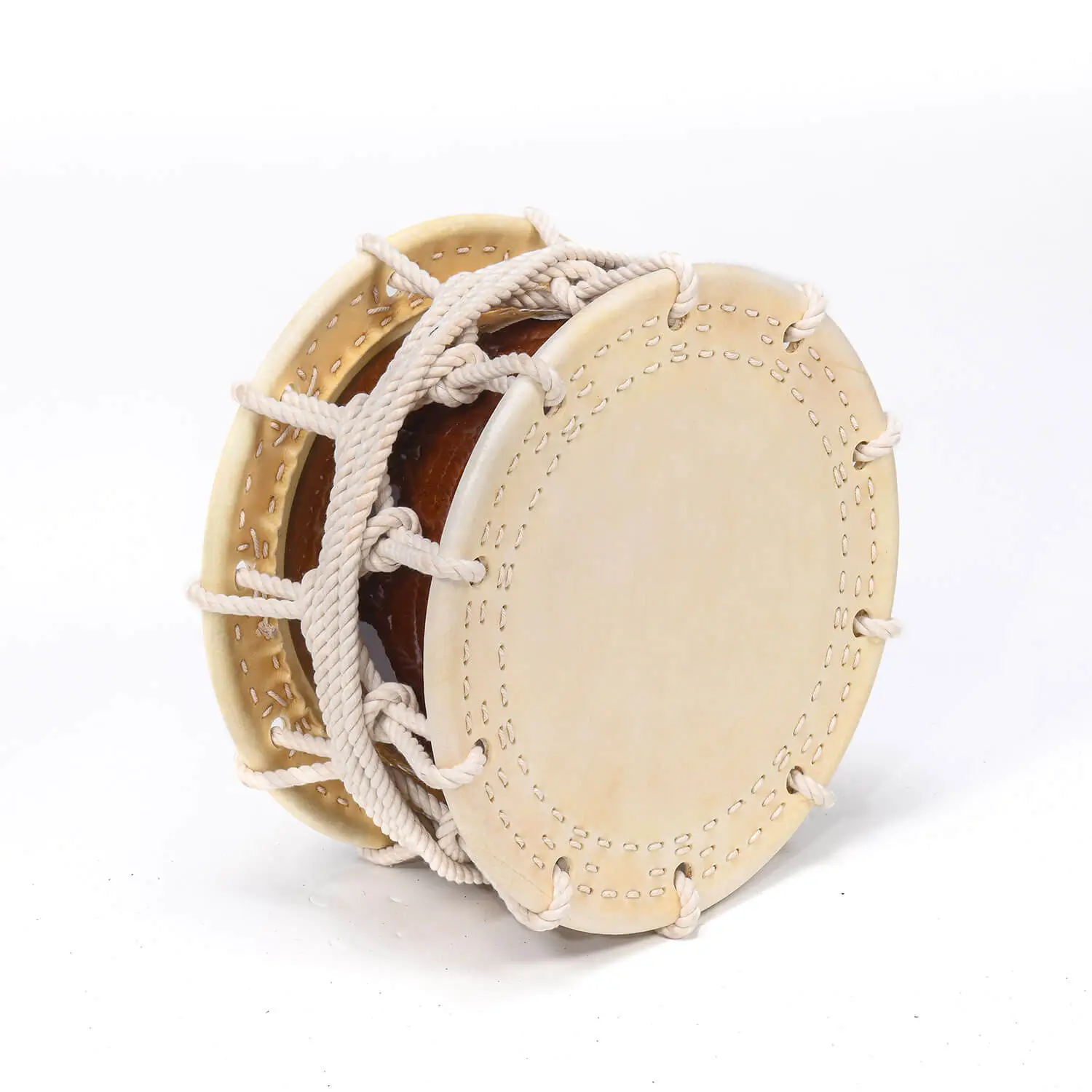
- Rope: prioritizes lower weight, free vibration, natural resonance and sound quality.
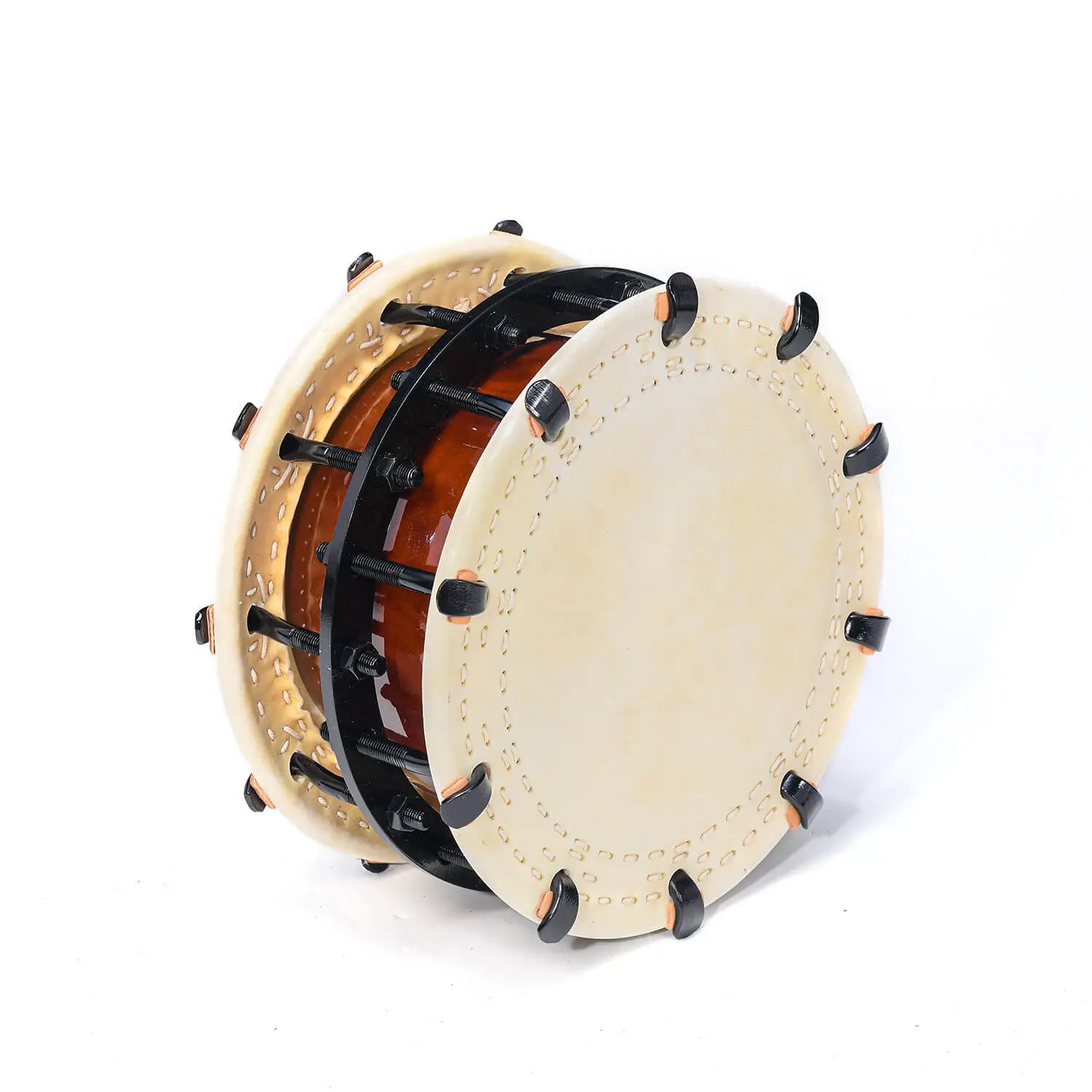
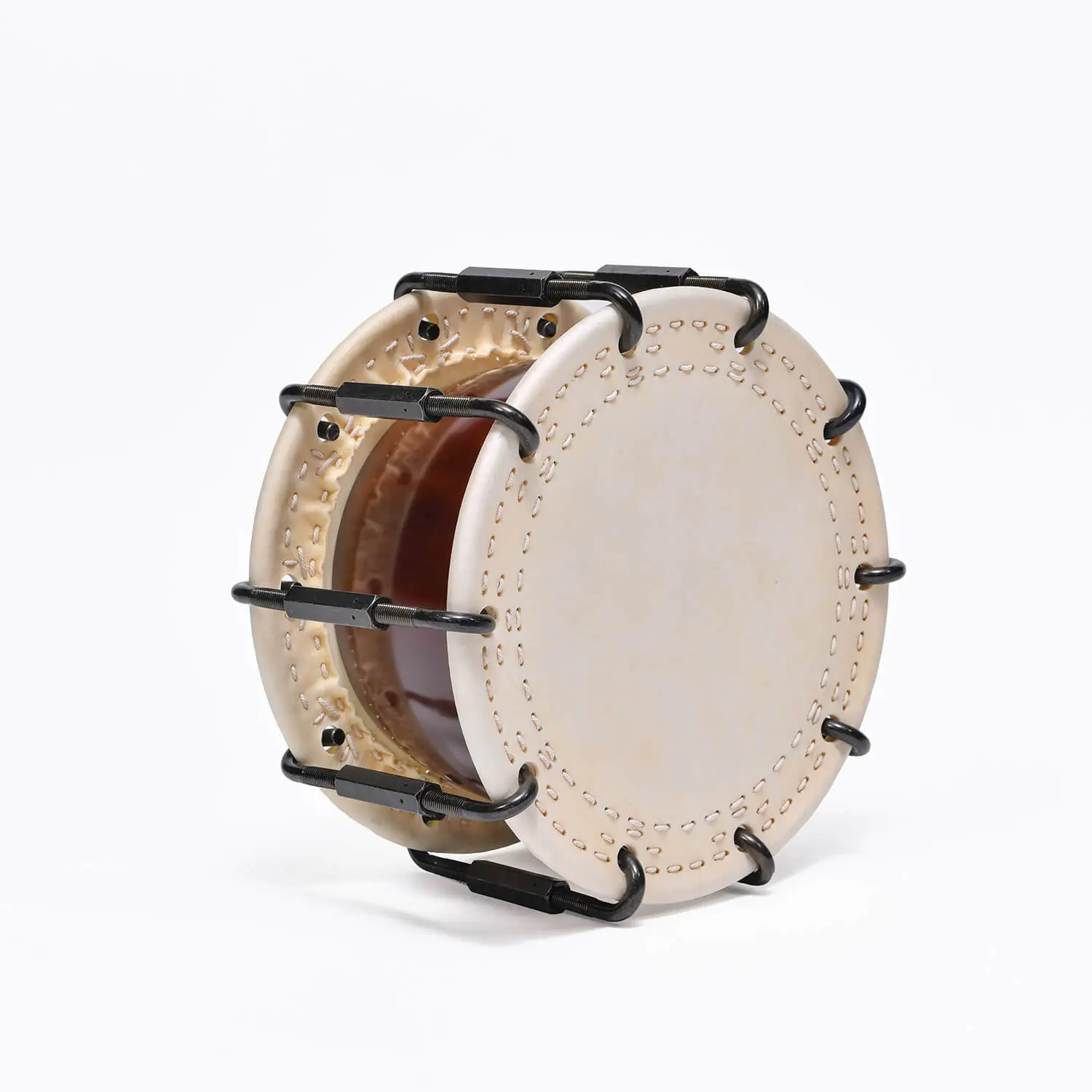
- Bolt or Turnbuckle: prioritizes tuning speed, precise adjustment and maintenance convenience.
The choice depends on who will tune the instrument, how frequently it travels or is readjusted, and whether sound and low weight or operating efficiency is the greater priority.
Rope: Resonance and Low Weight
Based on JINLEI’s long-term manufacturing, tuning and use experience, a correctly tensioned Rope Shime Daiko generally vibrates more freely, offers fuller natural resonance and a purer sound, and weighs less. Rope adds far less mass around the drum than a complete set of bolts, nuts or turnbuckles.
The trade-off is tuning time and skill. A high-tension head needs even force in every direction, requiring repeated adjustment of the rope path and tension points. In JINLEI’s experience, bringing a 2- or 3-Chougake Rope drum to a good playing condition commonly requires two experienced people and several hours. Actual time varies with starting condition, experience and target tension.
Rope is best suited to experienced teams with trained tuning personnel, infrequent retuning, and a strong priority on resonance and low weight.
Metal Systems: Faster One-Person Tuning
Bolt and Turnbuckle systems allow every tension point to be adjusted independently. One person can usually complete the work more quickly and correct individual positions more precisely.
According to JINLEI’s tuning experience, a 2- or 3-Chougake drum that may require two people and several hours with Rope can often be brought to a good playing condition by one experienced person in about 30 minutes with a metal system. Time still depends on the starting condition and target tension.
This is practical for schools, university clubs, training organizations, shared equipment, touring groups, frequently transported drums and organizations without a Rope-tuning specialist.
The trade-off is weight and resonance. In comparable configurations, JINLEI’s product experience indicates that a Bolt or Turnbuckle drum commonly weighs about 1.5 to 2 times as much as the Rope version. The extra metal mass can reduce some free vibration, natural resonance and purity of tone. In return, the system offers fast tuning, one-person operation, precision and convenient maintenance.
Rope and Metal Systems at a Glance
| Comparison | Rope | Bolt / Turnbuckle |
|---|---|---|
| Sound purity and natural resonance | Generally better | Usually slightly reduced |
| Overall weight | Lighter | Commonly about 1.5-2 times heavier |
| Tuning speed | Slow | Fast |
| People for high-tension tuning | Two experienced people commonly preferable | Usually one person |
| Typical 2-/3-Chougake time | May require several hours | Often around 30 minutes |
| Skill and maintenance | Higher skill; more involved | Relatively easy and convenient |
| Best fit | Sound, resonance and low weight | Efficiency, shared use and maintenance |
These time and weight comparisons are practical references from JINLEI’s manufacturing, product and tuning experience. They do not mean every brand, model or starting condition will produce exactly the same result.
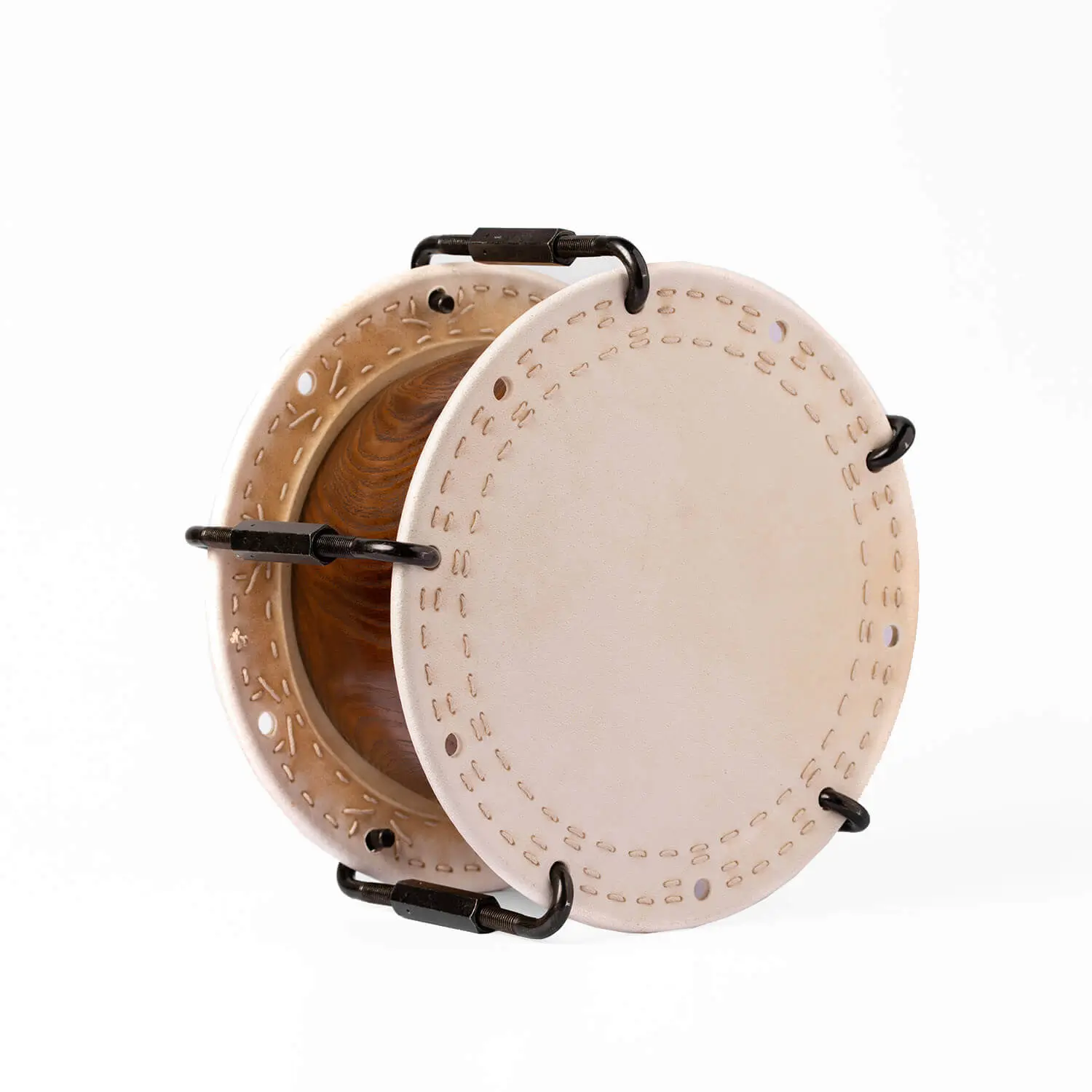
The Hikari 2-Chougake Turnbuckle Special
The Hikari Series 2-Chougake Turnbuckle Special uses a hollowed solid Manchurian ash shell, cowhide heads, a Suri Urushi finish and five turnbuckles. Its listed size is 35 x 18 cm, compared with 36 x 18 cm for the standard Bu Series 2-Chougake Turnbuckle. Confirm the exact model when requesting a head or fitted case.
Quick Selection Guide
| Primary requirement | Start by comparing |
|---|---|
| Compact dimensions and lower weight | Namitsuke |
| School, university club or general ensemble | 2-Chougake |
| Higher pitch and stronger projection | 3-Chougake |
| High tension and this range’s strongest projection | 4-Chougake |
| Natural resonance and low weight | Rope |
| Fast tuning and convenient maintenance | Bolt / Turnbuckle |
The final choice should also reflect the teacher’s preference, instruments already used by the group, desired pitch and projection, musical role, tuning experience, transport frequency and whether the equipment is shared.
What Schools and Ensembles Should Confirm
Schools, university clubs, dojos, cultural centers and professional ensembles should confirm how many people share the drums, who tunes them, whether anyone knows Rope tuning, how often adjustment and transport are required, whether multiple drums should use the same grade and tensioning system, and which stands, bachi, cases and spare heads are needed.
Maintenance convenience may matter more than maximum resonance in a school or multi-user environment. For an experienced professional team, Rope’s lower weight and sound advantages may justify the additional tuning time.
Complete the Setup Before Ordering
- Stand: Specify seated or standing playing, the exact drum and preferred playing height. See the JINLEI taiko stand guide.
- Bachi: Compare bachi for Shime Daiko with the teacher’s recommendation.
- Case: Confirm maximum assembled dimensions, including the hardware.
- Replacement head: Confirm grade, diameter, shell, attachment method and hardware compatibility.
- Delivery: Request availability, production time, packed dimensions, packed weight and shipping information. A production estimate is not an arrival date.
Replacing a Head: Do Not Check Diameter Alone
JINLEI offers standard replacement heads from 35 to 38 cm, but similar diameter does not establish interchangeability. Confirm the original drum and head grades, tensioning system, shell dimensions and whether the existing hardware can provide the required working tension. Contact JINLEI with the exact model before ordering.
Compare JINLEI Models
The JINLEI Shime Daiko page brings together the four grades, tensioning options, replacement heads, stands and cases. Use this guide to understand the differences and the product page to compare current models.
Not Sure Which One to Choose?
Before contacting JINLEI, prepare the player count, current Shime models, teacher or team preference, desired pitch and projection, preference for Rope resonance or metal-system convenience, playing position, budget range and destination country.
JINLEI can help compare the complete setup: grade, Rope/Bolt/Turnbuckle system, stand, bachi, soft case, replacement head and international shipping plan. Contact JINLEI for a recommendation.
Frequently Asked Questions
Does 3-Chougake Mean Three Bolts?
No. Chougake is the Shime Daiko grade, not the number of bolts, ropes or turnbuckles.
Are the Grades Only Different Head Thicknesses?
No. In JINLEI’s standard range, diameter, shell height, head thickness and strength, working tension, hardware strength, weight, pitch and projection change together.
Why Does a Higher Grade Produce a Higher Pitch?
Higher grades use thicker, stronger cowhide that can work at greater tension with the matched shell and tensioning system. When correctly tensioned, greater working tension contributes to higher pitch. Diameter, shell height and tuning condition also influence the sound.
Can I Install a 2-Chougake Head on a Namitsuke?
Do not assume so. A 2-Chougake head needs greater working tension, and Namitsuke hardware may not provide the required force. Confirm the exact model and grade.
Is Rope Always Better Than Bolt?
No. Rope favors sound, resonance and low weight. Bolt or Turnbuckle favors fast tuning, easy maintenance, one-person adjustment and shared use.
Does Rope Tuning Really Take Several Hours?
In JINLEI’s experience, a high-tension 2- or 3-Chougake Rope drum commonly needs two experienced people and several hours to reach a good playing state. A metal-tension model can often be adjusted by one experienced person in about 30 minutes. Actual time varies.
Are Metal-Tension Models Much Heavier?
Yes. In the same grade and a comparable configuration, JINLEI’s experience indicates that a Bolt or Turnbuckle model commonly weighs about 1.5 to 2 times as much as the Rope version because of its metal components.