Start With the Class, Not a Shopping List
A school taiko kit should support a timetable, a teaching method and a safe room setup—not simply fill a catalogue order. Before choosing drum types or quantities, involve the music teacher, an experienced taiko instructor, facilities staff and the person responsible for purchasing. Together, define who will use the instruments, how lessons will run and where the equipment will be stored.
There is no universal “best” school kit. A primary-school enrichment class, a secondary-school ensemble and a university club may need very different instruments. The right first purchase is the smallest workable system that meets your learning goals and can expand without making the original equipment obsolete.
1. Define the Teaching Model
Write a one-page brief before requesting quotations. It should answer:
- Which age or year groups will participate?
- What is the maximum class size?
- Will taiko be taught in regular music lessons, an after-school club or a performance ensemble?
- How many students will play at once, and how often will they rotate through stations?
- Will the drums stay in one room or move between classrooms and venues?
- What skills should students demonstrate by the end of the term?
Rotation is normal in introductory teaching. One station can focus on a drum, another on body movement and sticking patterns, and another on listening or spoken rhythm. This means a class does not automatically need one full-size drum per student. Ask the instructor to design the lesson flow first; then calculate the number of simultaneous playing positions.
2. Match Instruments to Learning Activities
| Instrument | Possible classroom role | Questions to resolve |
|---|---|---|
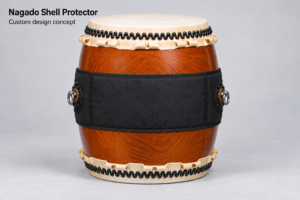
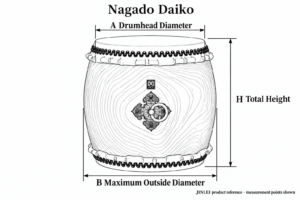
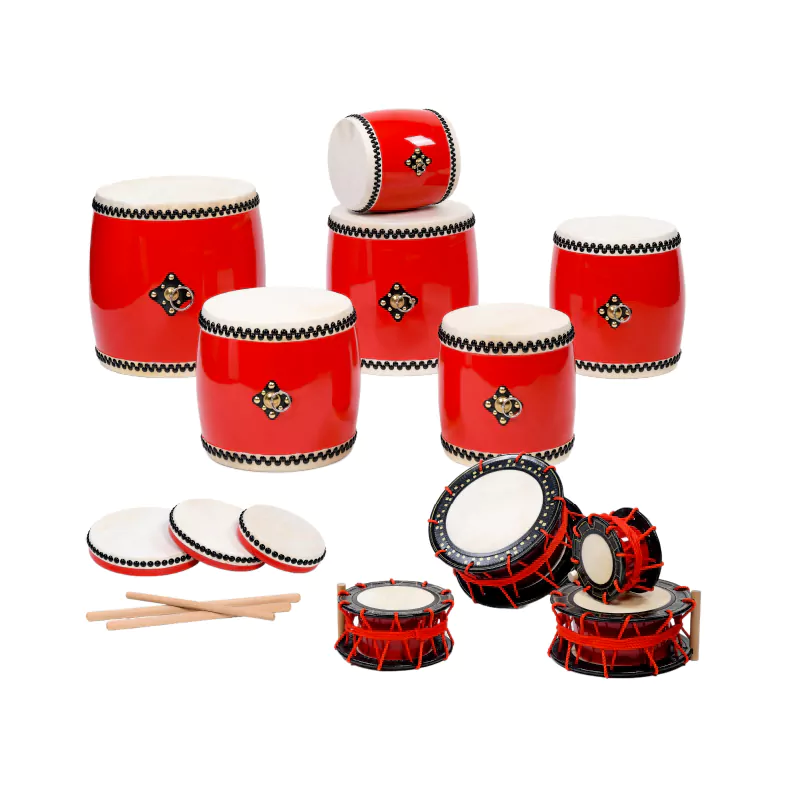
| Nagado daiko | Core ensemble playing and foundational stance | Can students reach a suitable playing height? Can staff move and store it safely? |
| Shime daiko | Timekeeping, subdivisions and ensemble leadership | Who will tune or maintain it, and how will it be stored? |
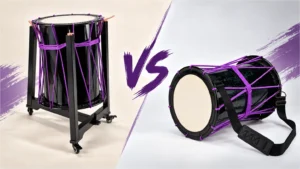
| Oke daiko | Portable practice, contrasting tone and flexible staging | Which stand or playing position is intended? |
| Katsugi-style setup | Movement-based repertoire | Is the instructor trained to teach strap fit, movement and safe spacing? |
| Practice alternatives | Quiet rhythm stations and larger classes | Do they provide the rebound and height needed for the planned exercise? |
Do not buy a mixed set merely to create visual variety. Every drum should have a defined role in the curriculum. For a first program, consistency can make instruction, setup and maintenance easier; tonal variety can be added when the repertoire requires it.
3. Run a Pilot Before the Main Order
If possible, test a sample lesson with borrowed or demonstration equipment. Record the usable floor area, setup time, student reach, sound level, movement routes and storage footprint. A pilot often reveals more than a product specification sheet.
Ask the instructor to confirm drum diameter, playing height, stand angle and bachi dimensions for the actual students. “Children’s size” is not precise enough: students of the same age can differ greatly in height, strength and motor control. The final specification should be instructor-led and reviewed after hands-on testing.
4. Plan the Room and Sound
Taiko produces strong acoustic energy. Check adjacent classrooms, offices and community spaces before scheduling regular sessions. Facilities staff may recommend a suitable room, permitted hours, door or window treatment, floor protection, or an acoustic assessment. Hearing protection and exposure procedures should follow the school’s local policy and professional advice; do not rely on a universal decibel or time limit.
Keep clear walking routes around drums and stands. Mark playing positions when this helps students maintain safe spacing. Stands must be stable on the actual floor surface and suitable for the intended drum and playing style. A dedicated stand for every drum is not always necessary if instruments are deliberately rotated, but every active playing position needs a compatible, stable support.
5. Build Accessibility and Safeguarding Into the Program
Plan for seated and standing options, varied striking ranges, rest breaks and alternative roles such as cueing, chanting or keeping pulse. Avoid treating one posture or stick weight as correct for every learner. The school’s inclusion lead and instructor can adapt activities for individual mobility, sensory or fatigue needs.
Normal school safeguarding rules still apply. Define supervision, staff-to-student responsibilities, changing or costume arrangements, photo and video permissions, and procedures for off-site performances. These operational details belong in the program plan even though they are not part of the equipment order.
6. Specify Bachi by Use, Not Age Label
Bachi should suit the drum, technique and player. Length, diameter, wood species, taper, finish and weight all influence control and impact. Lighter is not automatically safer, and a heavy hardwood pair is not automatically more professional. Ask the instructor and drum supplier to recommend options for the planned instruments, then test them with representative students.
Order enough pairs for simultaneous players plus clearly labelled spares. Inspect them regularly and remove cracked, splintered or damaged sticks from service. See our beginner’s guide to choosing taiko bachi for the factors to compare.
7. Check Storage and Handling Before Buying
Measure doors, lifts, corridors, shelves and the storage room—not just the music classroom. Record the assembled and packed dimensions and weights of each drum and stand. Decide who is permitted to move larger items and whether trolleys, two-person handling or removable stands are required.
Storage should keep instruments dry, stable and protected from impacts. Avoid leaning drums or stands where they can fall. Cases are useful for frequent transport, but they are not a substitute for a secure storage plan and may not be necessary for every instrument that remains on campus. For practical routines, read How to Store and Protect Taiko Drums in a School or Group.
8. Prepare a School Procurement Checklist
Request an itemised quotation that identifies exactly what is included. A useful school RFQ asks for:
- Drum model, materials, dimensions and weight
- Compatible stand model, playing position and assembled dimensions
- Bachi specifications and quantity
- Cases, straps, tools or replacement parts included
- Production lead time and how changes will be communicated
- Packing method, shipment dimensions and gross weight
- Delivery terms, freight responsibility, taxes and import duties
- Warranty scope, exclusions and claim procedure
- Procedure and deadline for reporting shipping damage
- Availability of replacement heads, ropes, hardware or other service parts
For international orders, timing varies with production, route, customs and local delivery. Ask for a written schedule with milestones and contingency time; do not plan a launch around a generic three- or six-month promise. Your finance team or customs broker should confirm the landed-cost treatment in your country.
9. Compare Total Cost of Ownership
The drum price is only one line in the budget. Include stands, bachi, cases where justified, freight, duties and taxes, room preparation, staff training, storage equipment, insurance requirements, maintenance and replacement parts. Also consider staff time for setup and the cost of moving equipment to performances.
A phased purchase can reduce risk:
- Pilot phase: validate teaching method, room and equipment sizes.
- Core phase: buy enough compatible playing positions for the regular class model.
- Expansion phase: add instruments only when enrollment, repertoire or performance needs justify them.
This approach is often more defensible than buying an oversized “complete kit” before the school has taught its first term.
10. Create an Operating Plan
Assign responsibility before delivery. Keep an asset register with model, serial or internal asset number, purchase date, condition and storage location. Use a simple pre-use check for drumheads, ropes or fittings, stand stability and bachi condition. Record faults and quarantine equipment that may be unsafe.
Document how the room is set up, where each item is stored and who can approve loans or off-site use. Teacher training matters as much as the hardware: plan for instructor induction, safe handling, basic care and continuity when the usual teacher is absent.
A Practical Starter Configuration Process
Instead of copying a fixed quantity table, build the configuration from three numbers: maximum simultaneous players, number of instructional stations and available storage positions. Then select instrument types that match the curriculum. For example, a ten-student class might use several active drum positions while other students rotate through rhythm, movement and listening tasks—but the exact count should come from the instructor’s lesson design.
When comparing proposals, ask each supplier to explain how every item supports your brief. If a supplier recommends more drums, different sizes or additional accessories, request the teaching or operational reason. This makes competing quotations easier for educators and procurement staff to evaluate.
Common Mistakes to Avoid
- Choosing quantities from class size alone.
- Ordering before an instructor has approved sizes and playing heights.
- Assuming every drum type is needed in the first phase.
- Ignoring storage dimensions, handling routes or room acoustics.
- Buying stands without confirming compatibility and stability.
- Using age labels as the only basis for bachi selection.
- Comparing product prices without freight, duties, training and maintenance.
- Scheduling a launch before the delivery plan has contingency time.
Questions to Send a Taiko Supplier
Share the students’ age range, maximum class size, simultaneous playing positions, room and storage constraints, instructor preferences, destination country, target date and budget range. Include photographs or measurements when access routes are tight. A clear brief helps a supplier propose a coordinated system instead of a generic bundle.
JINLEI MUSIC can prepare an itemised school quotation covering taiko drums, compatible stands, bachi and transport protection. Contact JINLEI MUSIC with your teaching brief and delivery destination to discuss a phased configuration.
FAQ
Does every student need a taiko drum?
No. Many classes use planned rotation, but the appropriate number depends on the instructor’s lesson design, session length and learning outcomes. Count simultaneous playing positions rather than total enrollment.
What is the best first drum for a school?
There is no single answer. A drum must fit the student group, repertoire, room, storage and teaching position. Test representative equipment and have the instructor approve the specification.
Does every drum need its own stand?
Every drum being played needs a stable, compatible setup. Schools that rotate instruments may not need every stored drum mounted at the same time. Confirm the plan with the instructor and supplier.
Should a school buy soft cases?
Cases are most valuable when instruments move regularly or need extra protection in shared storage. Compare the transport plan, storage risks, case dimensions and cost before ordering one for every drum.
How far ahead should an international order be placed?
Ask the supplier for a current written production and shipping schedule, then add contingency for customs and local delivery. Lead times vary by product, quantity, route and season, so a fixed universal timeframe is unreliable.
What should be inspected when the order arrives?
Check the shipment against the packing list, photograph the packaging, inspect drums and accessories for damage, confirm stand compatibility and report any problems within the carrier’s and supplier’s stated claim windows.
Can a school expand the kit later?
Yes. Use compatible stands and documented specifications, and ask about replacement parts and future availability. A phased plan lets the school add capacity after real teaching experience.