The right bachi should match the drum, the music, your technique, and your body. A pair that is too heavy can make fast passages harder to control, while a pair that is too light or soft may not give the sound or durability you need. There is no single wood or size that is best for every player.

Quick answer: beginners should start with the size recommended by their teacher or ensemble. If that is not available, compare a few pairs on the drum you actually play and choose the lightest pair that still produces the required sound without forcing your grip or stroke.
What Changes How Bachi Feel?
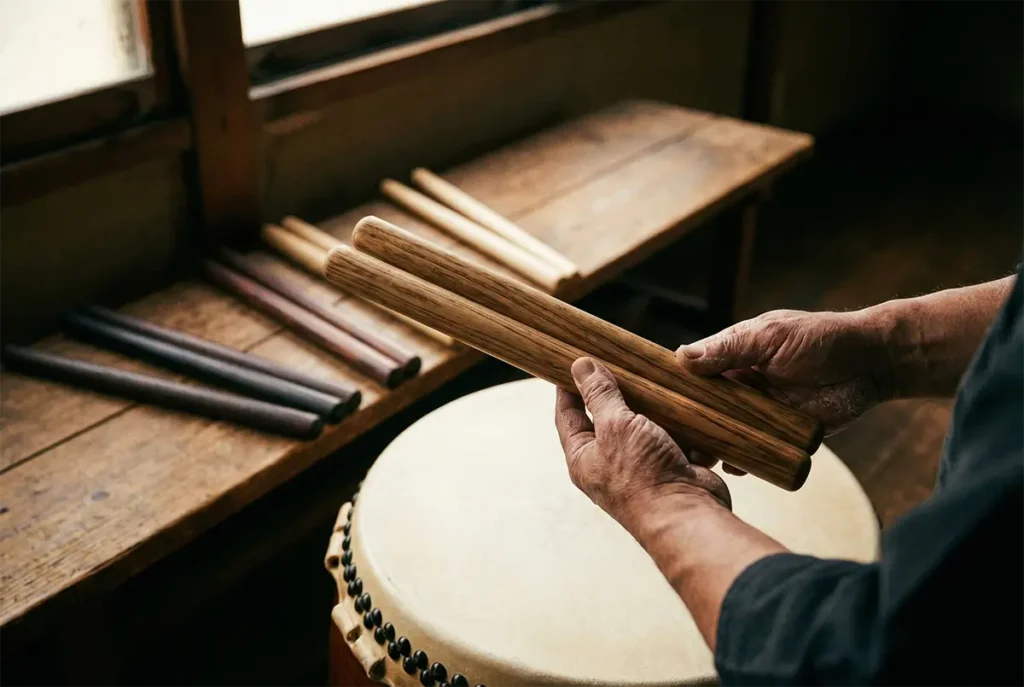
Four factors matter most: length, diameter, weight, and wood. Shape also matters. Some bachi are straight cylinders, while others are tapered for particular drums or playing styles. The Taiko Center bachi guide notes that appropriate dimensions and shapes vary with the type of taiko, the piece, the player’s strength, and the playing style.
- Length: Longer bachi can increase reach and leverage, but may feel slower or harder to control.
- Diameter: Thicker sticks provide more mass and a fuller grip; thinner sticks can support faster, more precise playing.
- Weight: Heavier is not automatically louder or better. Technique, drum type, repertoire, and endurance all matter.
- Wood: Species and individual pieces vary in density, hardness, grain, moisture, and weight. Compare the actual pair whenever possible.
How Bachi Woods Compare
Wood names alone do not guarantee a particular weight or sound. Two pairs of the same species can feel different because natural wood varies. The descriptions below are practical tendencies, not universal rules.
Maple
Maple bachi are generally hard and durable, but they are not always the lightest option. A thinner maple pair may work well for shime-daiko or articulate playing, while a thicker pair can feel substantially heavier. Choose by the dimensions and actual pair weight, not the species name alone.
Oak
Oak is commonly used for durable, heavier bachi. It can suit players and repertoire that call for a firm feel and strong attack, but it is not automatically the best choice for every performance. Heavy sticks can make quick passages more tiring and may be inappropriate for some drums or techniques.
Beech
Beech can provide a balanced feel and good durability, but it is not a mandatory beginner material. JINLEI offers beech and other wooden bachi; compare the listed length, diameter, weight, and intended drum before choosing.
Magnolia and Cypress
Magnolia and cypress bachi are often selected when a lighter, softer stick is preferred. They may feel comfortable for extended practice or faster passages, but softer wood can wear sooner. The best choice still depends on the drumhead, repertoire, and instructor guidance.

Choose a Size for the Drum and Playing Style
Drumhead diameter is only one clue. Shell depth, drumhead tension, playing position, repertoire, and the player’s technique also affect the choice. Use the following dimensions only as starting references, then follow the specifications from your teacher, ensemble, or drum maker.
- Shime-daiko and katsugi okedo: thin, relatively light bachi are common for speed and articulation; some styles use tapered sticks.
- Medium nagado-daiko: many adult players use bachi around 40 cm long, but diameter and wood vary widely.
- O-daiko: longer, thicker bachi are common, yet the correct dimensions depend on the instrument, stance, and repertoire. Do not choose an oversized pair simply because the drum is large.
For one published reference, TaikoSource’s practice-bachi chart lists examples ranging from approximately 32–36 cm × 1.5 cm for shime or katsugi-okedo to about 51 cm × 3.4–3.8 cm for o-daiko. These are examples rather than universal standards.
Check Fit, Balance and Control
Hold the bachi with a relaxed playing grip rather than squeezing it. Your fingers should be able to wrap around the stick comfortably, and your wrist should move without strain. A grip that feels natural at rest can still feel different after several minutes of playing, so test repeated strokes and simple patterns when possible.
- Compare both sticks for similar weight and balance.
- Check that the shafts are straight and the grain is reasonably consistent.
- Test slow controlled strikes before fast or powerful passages.
- Stop if you feel sharp pain, numbness, or loss of control; ask an instructor to check your grip and technique.
Beginner Buying Checklist
- Ask your teacher or group which dimensions and wood they use for the relevant drum and repertoire.
- Choose for the drum you play most often instead of trying to use one pair for every instrument.
- Buy from a maker that states length, diameter, material, and intended use.
- Consider a matched backup pair for rehearsals and performances.
- Inspect the tips and shafts regularly; retire sticks that are split, badly chipped, or unsafe to use.

Bachi Care
Keep bachi dry, allow them to air after use, and store them where they will not bend or experience extreme heat or humidity. Wipe away sweat with a dry cloth. Do not sand, oil, tape, or otherwise modify a finished pair unless the maker or your instructor confirms that the treatment is appropriate for that wood, finish, drumhead, and playing style.
Minor surface roughness may sometimes be smoothed carefully, but deep cracks, splinters, or significant chips are reasons to stop using the pair. Damaged sticks can affect control and may mark a drumhead or practice surface.
How to Choose Your First Pair
Start with the recommendation of your teacher or ensemble. If you are choosing independently, select a moderate pair intended for your main drum, then compare lighter and heavier options after you have developed consistent technique. Browse the JINLEI bachi collection and check each product’s dimensions and intended use before ordering.
Frequently Asked Questions
Can I use drum-set sticks for taiko?
Do not assume that a drum-set stick is suitable for every taiko. Some taiko techniques and drums use different dimensions, shapes, and wood hardness. Follow the drum maker’s guidance or ask your instructor. Electronic pads may have their own approved-stick requirements.
What should I do if bachi slip in my hands?
First check whether you are gripping too tightly or using a pair that is too heavy. Wipe sweat from your hands and the sticks, and ask an instructor to review your grip. Do not sand or add grip material unless the maker or instructor confirms it is suitable.
Why do bachi split or break?
Wear, cross-sticking, rim contact, wood grain, moisture changes, and repeated off-angle impacts can all contribute. Inspect the pair regularly and replace damaged sticks. Technique should be reviewed before simply moving to a heavier wood.
Do bachi need oil?
Not necessarily. Care depends on the wood and finish. Keep the pair clean and dry, and follow the maker’s instructions. Applying an unsuitable oil can change the grip or finish, so do not treat the wood automatically.