Opening a new taiko dojo is exciting, but it also comes with a long list of practical decisions. One of the first questions almost every instructor, school, or community organization asks is surprisingly simple:
“How many taiko drums do we actually need?”
The answer is rarely a single number.
A dojo with eight beginners meeting once a week has very different equipment needs from a performance ensemble preparing for festivals, or a cultural center offering classes for children and adults every day. Budget, available space, class size, teaching style, and long-term goals all influence what the ideal setup looks like.
The good news is that most new dojos don’t need to purchase every type of taiko drum from the beginning. A carefully planned collection of instruments can support effective teaching, engaging rehearsals, and even public performances while leaving room to grow as your program expands.
In this guide, we’ll look beyond simply counting drums. We’ll discuss how to choose the right mix of instruments, how many students can comfortably share each drum, which accessories are worth purchasing from day one, and how to build a setup that can evolve with your dojo over time.
Whether you’re starting a community taiko group, opening a dedicated dojo, planning a school percussion program, or expanding an existing ensemble, this guide will help you invest wisely and avoid costly purchasing mistakes.
Start by Defining Your Dojo’s Goals
Before deciding how many drums to purchase, it’s worth taking a step back and asking a more important question:
What is your dojo trying to achieve over the next three to five years?
Many first-time buyers focus almost entirely on the number of students they expect to teach. While class size certainly matters, it is only one part of the equation. Two dojos with the same number of students may require completely different equipment because their teaching methods and performance goals are different.
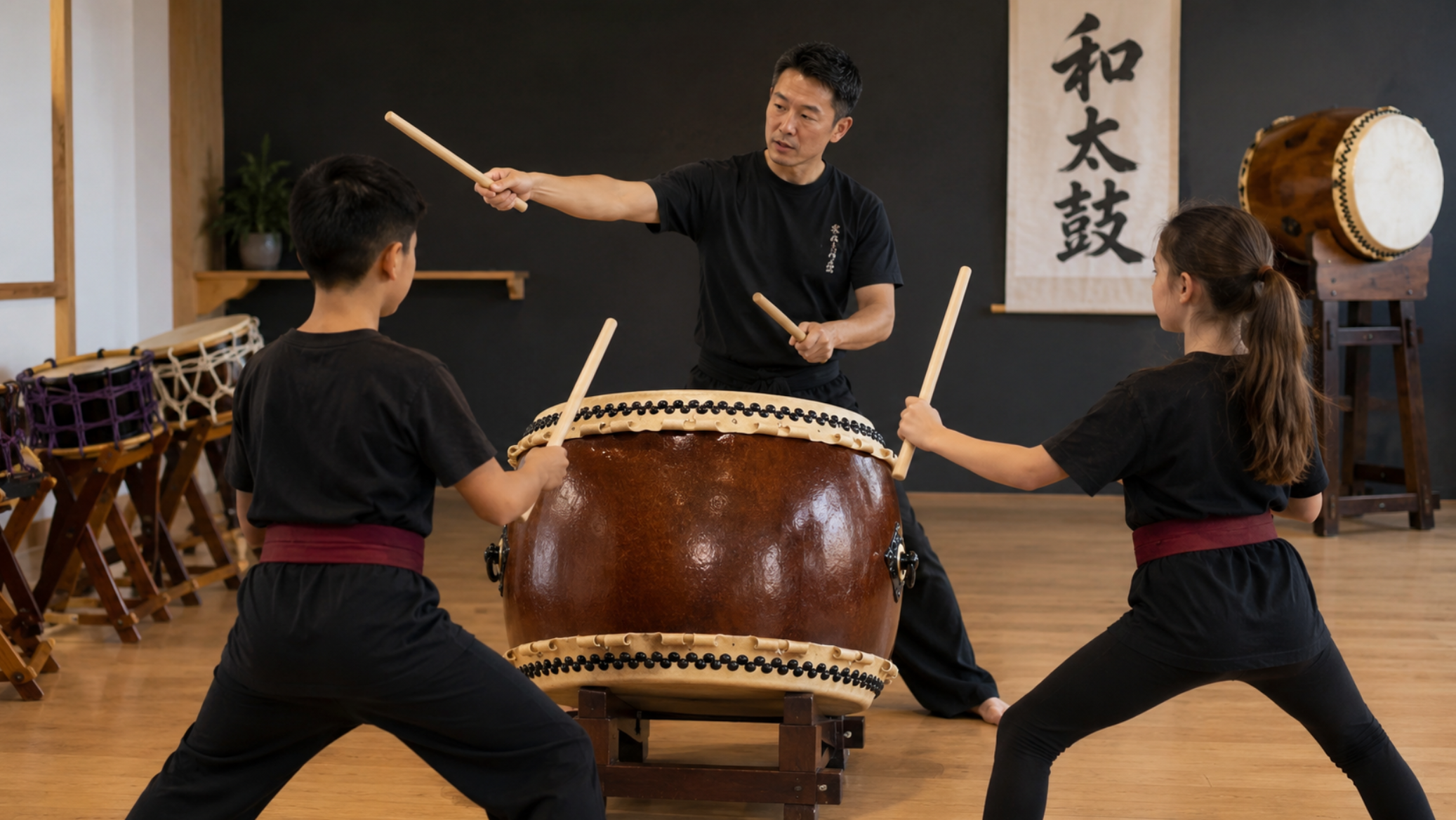
For example, a small community dojo that introduces beginners to taiko once a week can operate successfully with a relatively modest collection of drums. Students often rotate between instruments, practice rhythms together, and spend part of each lesson working on movement, posture, and technique away from the drum itself.
A performance-focused ensemble, on the other hand, typically needs a wider variety of drums. Multiple Nagado Daiko may be required for the main rhythmic parts, while Shime Daiko establishes tempo and communication within the group. As the ensemble develops, specialty instruments such as Oke Daiko, Hira Daiko, or O-Daiko may be added to create greater musical contrast and a more dynamic stage presence.
Youth programs introduce another set of considerations. Children often benefit from lighter drums and appropriately sized bachi, while adjustable stands help accommodate different heights as students grow. Choosing equipment that works for both younger players and adult instructors can make a program more flexible and cost-effective over time.
The same principle applies to schools and cultural centers. If your space is shared with other activities, portability and storage become just as important as sound quality. Lightweight rope-tension drums, folding stands, and protective soft cases may provide greater day-to-day convenience than investing immediately in large performance instruments.
Different Goals Lead to Different Equipment Priorities
| Dojo Type | Primary Goal | Equipment Priority |
| Beginner Dojo | Teach fundamentals and build confidence | Nagado Daiko, Shime Daiko, basic stands, durable bachi |
| Community Program | Encourage participation and regular practice | Portable drums, versatile accessories, easy storage |
| School Music Program | Serve students of different ages and skill levels | Mixed drum sizes, adjustable stands, extra bachi |
| Performance Ensemble | Stage performances and festivals | Larger variety of drums, performance stands, transport equipment |
| Professional Dojo | Long-term training and advanced repertoire | Full range of taiko drums, premium accessories, replacement equipment |
One mistake many new organizations make is planning only for today’s needs. A dojo that begins with eight students may have fifteen or twenty within a year if classes become popular. Purchasing equipment with future growth in mind often reduces costs over time and avoids the disruption of replacing an entire setup later.
Rather than asking “How many drums do we need today?”, a better question is:
“What equipment will support our teaching, rehearsals, and performances over the next several years?”
Starting with that perspective makes every purchasing decision easier—and often more economical.

How Many Students Can Share One Taiko Drum?
The biggest misconception many first-time dojo organizers have is that every student needs their own drum.
In reality, that is rarely how taiko classes are taught.
Unlike a piano lesson, where each student usually requires an individual instrument, taiko training combines drumming with body movement, rhythm exercises, choreography, listening skills, and ensemble coordination. Throughout a typical class, students frequently rotate between playing, observing, practicing footwork, and rehearsing group movements. This means a well-organized dojo can teach more students than the number of drums it owns.
For most beginner and intermediate programs, one drum for every two students provides a comfortable balance between hands-on practice and overall equipment cost. In some introductory workshops or community events, three students may share one drum without significantly affecting the learning experience, especially during shorter sessions.
As students become more advanced and begin preparing for performances, however, sharing becomes less practical. Advanced players spend more time refining timing, dynamics, and ensemble precision, making additional instruments a worthwhile investment.
The goal is not to maximize the number of students per drum—it is to create an environment where every participant receives enough playing time while keeping the equipment budget sustainable.
Recommended Student-to-Drum Ratio
The table below provides a practical starting point for planning a new dojo. These recommendations assume a balanced curriculum that includes playing, movement practice, rhythm exercises, and ensemble rehearsal.
| Number of Students | Recommended Drums | Typical Setup |
| 5 | 3–4 | 2–3 Nagado Daiko + 1 Shime Daiko |
| 10 | 5–6 | 4–5 Nagado Daiko + 1 Shime Daiko |
| 15 | 7–9 | 6–7 Nagado Daiko + 1–2 Shime Daiko |
| 20 | 10–12 | 8–9 Nagado Daiko + 2 Shime Daiko + 1 Oke Daiko |
| 30 | 15–18 | 12–14 Nagado Daiko + 2–3 Shime Daiko + 2–3 Oke Daiko + optional O-Daiko |
These figures are intended as planning guidelines rather than strict rules. Every dojo teaches differently, and factors such as lesson length, rehearsal format, and available space may influence the ideal setup.
For example, a dojo focused primarily on children’s classes may choose slightly fewer drums because younger students often spend more time learning movement, posture, and rhythm away from the instrument. A performance-oriented ensemble, on the other hand, may invest in additional drums to minimize sharing during rehearsals.
Why Sharing Drums Actually Works
At first glance, sharing drums may seem like a compromise. In practice, it is often one of the strengths of taiko education.
Watching another player perform gives students an opportunity to study striking technique, body posture, and timing from a different perspective. While one student is playing, another can focus on counting rhythms, observing movement, or preparing for the next exercise. This constant cycle of playing and observing helps reinforce learning without requiring every participant to strike the drum continuously.
Sharing also encourages communication and teamwork—two essential elements of ensemble performance. Students naturally learn to coordinate transitions, listen carefully to one another, and develop a stronger sense of collective rhythm. These skills are difficult to build through individual practice alone.
For instructors, a moderate student-to-drum ratio also makes classes easier to manage. Rather than supervising twenty people playing simultaneously, teachers can spend more time correcting technique, demonstrating movements, and providing individual feedback.
In other words, purchasing more drums does not automatically lead to a better learning experience. The quality of instruction, lesson design, and rehearsal structure often have a much greater impact on student progress.
When Does a Dojo Need More Drums?
As your dojo grows, there will come a point when adding more instruments becomes beneficial rather than optional.
Several signs usually indicate that it is time to expand your collection:
- Students spend more time waiting than playing during regular classes.
- Multiple classes need to run on the same day.
- The dojo begins rehearsing for public performances or competitions.
- Advanced students require dedicated instruments for sectional practice.
- Larger ensemble pieces demand multiple drum parts performed simultaneously.
Growth doesn’t necessarily mean buying another complete set of equipment overnight. Many successful dojos expand gradually, adding one or two instruments each year as enrollment increases and new performance opportunities arise.
This phased approach allows organizations to spread costs over time while ensuring that every new purchase serves an immediate purpose.
Plan for Growth, Not Just Opening Day
One of the most common purchasing mistakes is designing a dojo solely around the first group of students.
Imagine opening with eight students and purchasing only four drums because that is all you need on day one. Six months later, enrollment doubles, another instructor joins the program, and weekend workshops begin. Suddenly, the original setup feels restrictive, and every new class requires constant rearranging of equipment.
Instead, think of your instrument collection as something that grows alongside your community.
A well-planned dojo doesn’t need to purchase every drum immediately, but it should have a clear expansion path. Choosing drum models, stands, and accessories that can easily integrate into future purchases helps maintain consistency in sound, appearance, and teaching methods.
For organizations purchasing internationally, planning ahead can also reduce shipping costs by combining future equipment into larger, more efficient orders whenever possible.
The Essential Taiko Drums Every Dojo Should Own
Once you have estimated how many drums your dojo needs, the next question is even more important:
Which types of taiko drums should you purchase first?
A common mistake for new dojos is focusing only on drum quantity. However, owning ten drums of the same type does not always create the most effective learning environment. A well-balanced taiko setup combines different instruments that serve different musical roles.
Some drums form the foundation of daily training, while others add variety, performance impact, or advanced learning opportunities as your dojo grows.
For most new organizations, the goal should be to build a flexible collection that supports:
- beginner instruction
- group rehearsals
- rhythm training
- public performances
- future expansion
Essential vs. Optional Taiko Drums for a Dojo
The following table provides a practical purchasing priority for most new taiko programs.
| Taiko Drum Type | Priority | Primary Role | Best For |
| Nagado Daiko | Essential | Main ensemble drum and foundation instrument | Beginner classes, regular practice, performances |
| Shime Daiko | Essential | Rhythm control and musical leadership | Teaching timing, advanced ensemble work |
| Oke Daiko | Recommended | Portable and versatile performance drum | Workshops, outdoor events, mobile groups |
| Hira Daiko | Optional | Different tonal color and playing style | Expanding musical arrangements |
| O-Daiko | Long-term Investment | Powerful visual and sonic centerpiece | Festivals, concerts, major performances |
For most new dojos, Nagado Daiko and Shime Daiko should be the starting point. These two instruments provide the foundation needed to teach basic techniques, develop ensemble skills, and perform a wide range of traditional and contemporary taiko pieces.
Nagado Daiko: The Foundation of Most Dojo Setups
Among all taiko drums, Nagado Daiko is usually the first instrument a new dojo should consider purchasing.
Its balanced shape, versatile sound, and comfortable playing position make it suitable for a wide range of situations. From beginner lessons to advanced ensemble performances, Nagado Daiko can support many different playing styles.
For teaching environments, Nagado Daiko works especially well because students can learn fundamental skills that transfer easily to other drum types:
- proper striking technique
- stance and body movement
- rhythm patterns
- group coordination
- dynamic control
A typical beginner dojo will often build its first equipment collection around multiple Nagado Daiko, then add other drums as the program develops.
For example:
A small dojo with 10 students may start with:
- 4–5 Nagado Daiko
- 1 Shime Daiko
- matching bachi and stands
This setup provides enough flexibility for regular classes while keeping the initial investment manageable.
Shime Daiko: The Rhythm Leader of the Ensemble
While Nagado Daiko provides the foundation, Shime Daiko plays a very different role.
With its higher pitch and tighter tension, Shime Daiko is often used to establish tempo, guide transitions, and communicate rhythmic changes within an ensemble.
For instructors, Shime Daiko is valuable because it helps students understand one of the most important concepts in taiko:
Listening and responding as a group.
A dojo without any Shime Daiko may still teach basic drumming skills, but adding one or more Shime Daiko creates a more complete ensemble environment.
For most beginner or intermediate programs:
- Small dojo: 1 Shime Daiko
- Growing dojo: 2 Shime Daiko
- Performance ensemble: Multiple Shime Daiko depending on repertoire
Because Shime Daiko often plays a leadership role, it is usually worth purchasing earlier than larger specialty drums.
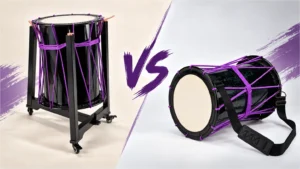
Oke Daiko: Flexible, Portable, and Performance-Friendly
Oke Daiko is often added when a dojo begins performing outside the classroom.
Compared with many traditional taiko drums, Oke Daiko is known for its lighter construction and portability. This makes it especially useful for:
- outdoor festivals
- community events
- parades
- workshops
- traveling performances
For a dojo that frequently transports equipment, portability becomes a major consideration.
A drum that sounds excellent but is difficult to move, store, or protect may create unnecessary challenges for instructors and performers.
Many growing groups choose to add Oke Daiko after establishing their core Nagado and Shime collection because it expands performance possibilities without requiring the same level of space or transportation planning as larger drums.
Hira Daiko: Adding Musical Variety
Hira Daiko has a lower-profile body design and offers a different playing experience from standard long-body drums.
While it may not be the first purchase for a new dojo, Hira Daiko can become a valuable addition as students progress and the ensemble explores more diverse arrangements.
It can provide:
- different tonal character
- alternative playing positions
- additional visual variety on stage
- expanded repertoire options
For established groups, adding Hira Daiko allows instructors to introduce students to more advanced musical concepts and performance styles.
O-Daiko: The Long-Term Performance Goal
The large O-Daiko is often the drum audiences immediately associate with powerful taiko performances.
Its deep sound and impressive stage presence make it a memorable centerpiece for festivals, concerts, and special events.
However, for most new dojos, O-Daiko should not be the first purchase.
Why?
Because an O-Daiko requires more than just the drum itself. Organizations also need to consider:
- storage space
- transportation
- appropriate stands
- performance environment
- experienced players
A dojo with five well-used Nagado Daiko and a strong teaching program will usually benefit more than a new group purchasing one large O-Daiko before establishing its foundation.
O-Daiko is best viewed as a milestone purchase—a symbol that your ensemble has grown and is ready for larger performances.
A Balanced Starter Setup for Most New Dojos
If a new dojo asks:
“What should we buy first?”
A practical starting point would be:
| Equipment | Quantity | Purpose |
| Nagado Daiko | 4–6 | Main teaching drums |
| Shime Daiko | 1 | Rhythm leadership |
| Bachi | 1–2 pairs per player | Different playing styles and backups |
| Drum Stands | Match drum quantity | Safe and comfortable positioning |
| Soft Cases | Recommended | Storage and transportation protection |
This type of setup can support a small to medium beginner program while leaving room for future expansion.
As enrollment grows, the dojo can gradually add:
- additional Nagado Daiko
- more Shime Daiko
- Oke Daiko for portability
- specialty drums for performances
Building a Complete Dojo Setup Is a Long-Term Process
A successful taiko dojo is not defined by how many drums it owns on the first day.
The strongest programs usually grow their equipment collection gradually, adding instruments that match their teaching needs, student numbers, and performance goals.
The most important first step is not buying the biggest drum or the largest quantity.
It is building a foundation that allows students to learn, instructors to teach effectively, and the ensemble to grow.
Sample Taiko Dojo Equipment Plans
There is no universal taiko setup that works for every dojo. A newly established community group, a growing teaching program, and a professional performance ensemble all have different requirements.
The best approach is to build your equipment collection in stages:
- Start with the instruments needed for effective teaching.
- Add more drums as student numbers increase.
- Expand your collection when performances and events become part of your program.
The following examples provide practical starting points for different dojo sizes.
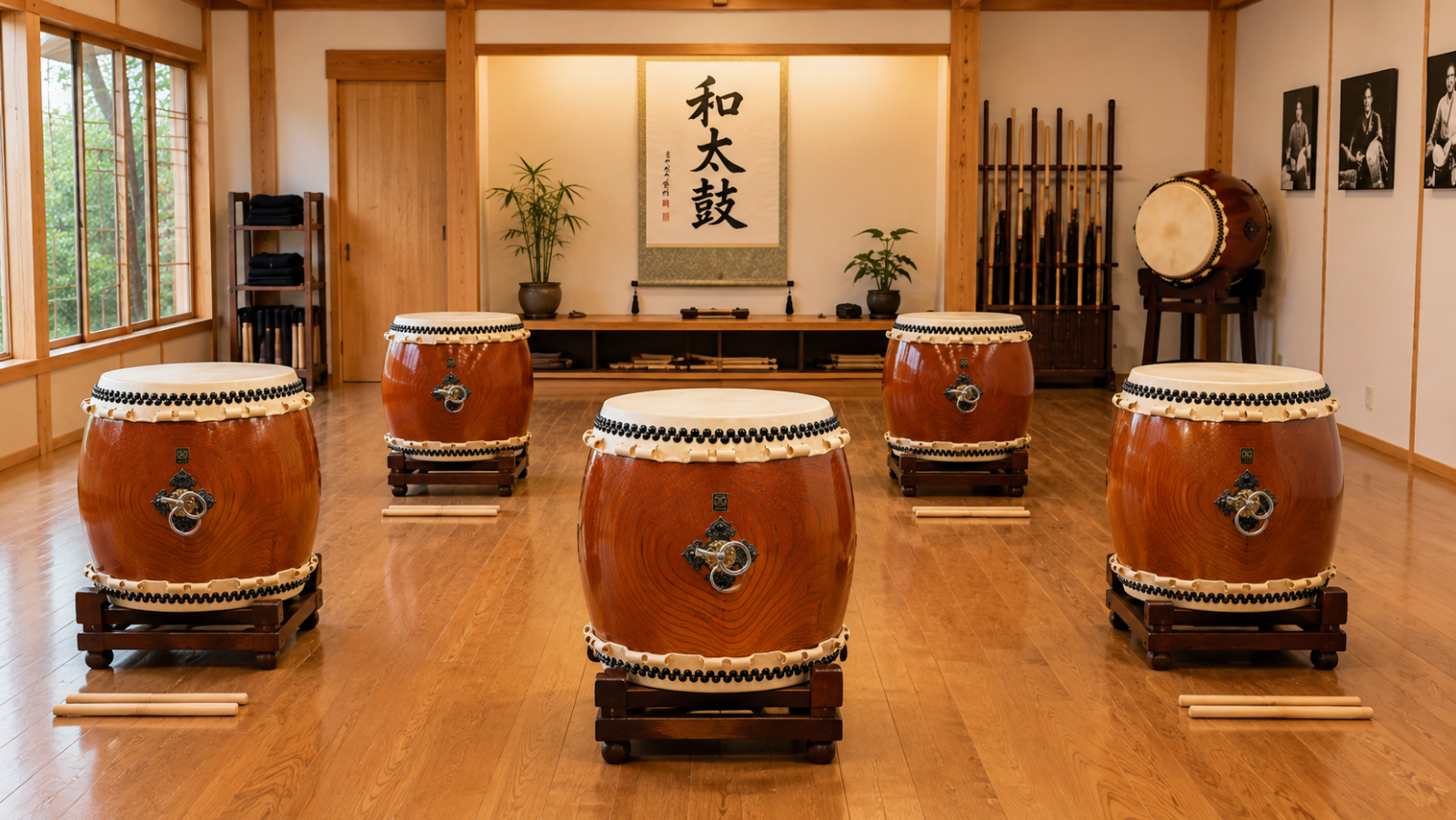
Small Dojo Setup: 5–10 Students
A small dojo usually focuses on beginner instruction, weekly classes, and building a strong foundation.
At this stage, the priority is not having every type of taiko drum. Instead, the goal is to create enough instruments for students to practice essential techniques while maintaining a manageable budget and storage requirement.
Recommended Starter Setup
| Equipment | Recommended Quantity | Purpose |
| Nagado Daiko | 4–5 | Main practice and ensemble drums |
| Shime Daiko | 1 | Rhythm guidance and timing exercises |
| Bachi | 8–12 pairs | Allow students to practice comfortably |
| Drum Stands | 5–6 | Safe playing position and storage |
| Soft Cases | Recommended | Protection during storage and transport |
This setup works well for:
- new community dojos
- beginner programs
- small cultural groups
- after-school programs
Students can rotate between instruments while learning fundamentals such as:
- basic striking techniques
- rhythm patterns
- body movement
- ensemble awareness
At this stage, purchasing a large O-Daiko or several specialty drums is usually unnecessary. The foundation instruments will provide far more value during the early learning process.
Growing Dojo Setup: 10–20 Students
As enrollment increases, equipment needs change.
A growing dojo typically has multiple skill levels. While beginners are learning fundamentals, experienced students may need more opportunities for ensemble practice and performance preparation.
At this stage, adding more drums improves class efficiency and reduces waiting time.
Recommended Growing Setup
| Equipment | Recommended Quantity | Purpose |
| Nagado Daiko | 6–8 | Main ensemble foundation |
| Shime Daiko | 1–2 | Rhythm leadership and advanced practice |
| Oke Daiko | 1–2 | Performance flexibility and portability |
| Bachi | 15–25 pairs | Support multiple students |
| Drum Stands | Match drum quantity | Consistent practice setup |
| Soft Cases | Recommended | Easier transportation |
This setup allows instructors to divide students into smaller groups.
For example:
- Beginner students can practice basic rhythms on Nagado Daiko.
- Advanced students can work with Shime Daiko on timing.
- Performance groups can incorporate Oke Daiko for movement-based pieces.
For many community-based dojos, this is the stage where the equipment collection begins to feel like a complete ensemble rather than simply a classroom setup.
Medium Dojo Setup: 20–30 Students
A medium-sized dojo often balances regular classes with public performances.
At this level, the equipment should support:
- multiple instructors
- different ability levels
- ensemble arrangements
- workshops
- community events
Recommended Medium Setup
| Equipment | Recommended Quantity | Purpose |
| Nagado Daiko | 10–12 | Core ensemble sound |
| Shime Daiko | 2–3 | Multiple rhythm sections |
| Oke Daiko | 2–3 | Portable performance options |
| Hira Daiko | 1–2 | Additional tonal variety |
| O-Daiko | Optional | Featured performances |
| Bachi | 30+ pairs | Full group participation |
| Stands & Cases | Full set | Professional organization |
At this size, purchasing decisions become less about simply having enough drums and more about creating a balanced ensemble.
Different drum voices allow instructors to arrange more complex pieces and provide students with opportunities to learn different roles.
For example:
- Nagado Daiko creates the foundation.
- Shime Daiko controls rhythm and transitions.
- Oke Daiko adds movement and visual energy.
- Hira Daiko expands the tonal palette.
- O-Daiko creates a powerful performance centerpiece.
Large Dojo or Performance Ensemble Setup: 30+ Student
Large organizations, cultural centers, and established performance groups usually need a more comprehensive equipment strategy.
The goal is no longer only education—it is creating a reliable performance system.
Large ensembles often need:
- multiple drum sizes
- dedicated performance equipment
- transportation solutions
- backup instruments
- storage planning
Recommended Performance Setup
| Equipment | Recommended Quantity | Purpose |
| Nagado Daiko | 15+ | Main ensemble foundation |
| Shime Daiko | 3+ | Rhythm sections and leadership |
| Oke Daiko | 3+ | Mobile performances |
| Hira Daiko | Several | Musical variety |
| O-Daiko | 1–3 | Major stage impact |
| Bachi | Multiple sets | Different playing styles |
| Heavy-duty Stands | Full set | Performance safety |
| Soft Cases | Full protection | Transportation and storage |
Large groups should also consider purchasing consistency.
Using drums from the same maker can help maintain:
- similar sound characteristics
- consistent appearance
- easier maintenance
- simpler accessory matching
For organizations managing many instruments, this consistency becomes increasingly valuable over time.
A Three-Stage Growth Plan for New Dojos
Instead of purchasing everything immediately, many successful dojos expand in phases.
Phase 1: Build the Teaching Foundation
Focus on:
- Nagado Daiko
- Shime Daiko
- Bachi
- Stands
Goal:
Create a reliable environment for beginner and intermediate instruction.
Phase 2: Expand Musical Possibilities
Add:
- more Nagado Daiko
- additional Shime Daiko
- Oke Daiko
- better transportation solutions
Goal:
Support larger classes and community performances.
Phase 3: Develop a Performance-Level Ensemble
Add:
- O-Daiko
- Hira Daiko
- specialty drums
- professional storage solutions
Goal:
Create a complete stage-ready taiko program.
Don’t Forget that Accessories are Part of the Setup
A common purchasing mistake is budgeting only for drums.
In reality, a functional dojo setup requires much more than instruments alone.
A drum without the correct stand may be uncomfortable to play. A drum without protection may be damaged during transportation. A group without enough bachi may struggle during classes.
A complete taiko setup should consider:
- drums
- bachi
- stands
- soft cases
- storage
- transportation needs
Planning these items together creates a smoother experience and prevents unexpected additional costs later.
Build a Complete Dojo, Not Just a Collection of Drums
It’s easy to focus on the drums themselves when planning a new dojo.
After all, they’re the heart of every rehearsal and performance.
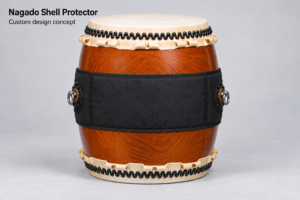
However, many new organizations discover after placing their first order that the drums are only part of the investment. Without the right accessories, even the highest-quality instruments can be difficult to use, transport, or maintain.
Thinking about your dojo as a complete system—not just a collection of drums—will save time, reduce unexpected expenses, and create a better experience for both instructors and students.
The four supporting items below are often overlooked during the first purchase, yet they quickly become essential as classes become more regular.
Bachi: More Than “One Pair Per Student”
Bachi are sometimes treated as a simple accessory, but they play a significant role in both technique and comfort.
A beginner class may only require one pair per student, but experienced instructors usually recommend keeping additional pairs available.
Extra bachi are useful because:
- beginners occasionally drop or damage them
- different pieces may call for different weights or wood species
- guest workshops often bring participants who don’t own their own bachi
- spare pairs prevent a class from stopping because of a broken stick
A practical guideline is to keep 20–30% more bachi than your expected class size.
For example:
| Class Size | Minimum Bachi Pairs | Recommended Bachi Pairs |
| 10 students | 10 | 12–14 |
| 20 students | 20 | 24–26 |
| 30 students | 30 | 36–40 |
If your dojo teaches both children and adults, consider stocking different lengths and weights so students can learn with equipment that matches their age, strength, and playing style.
Every Drum Deserves a Proper Stand
A common way to reduce costs is to postpone purchasing drum stands.
While this may seem practical at first, it often creates more problems than it solves.
Playing on a drum placed directly on the floor can encourage poor posture and limit movement. Students may develop habits that become difficult to correct later, and instructors often spend valuable class time adjusting equipment instead of teaching.
The right stand also improves safety. A stable drum is less likely to shift during energetic performances, helping students play with greater confidence while reducing the risk of accidental damage.
Different drums require different stand designs:
| Drum Type | Recommended Stand |
| Nagado Daiko | Beta Stand or Slant Stand |
| Shime Daiko | Dedicated Shime Stand |
| Oke Daiko | Oke Stand |
| Hira Daiko | Hira Stand |
| O-Daiko | Heavy-duty O-Daiko Stand |
Whenever possible, plan for one stand per drum. It saves setup time before classes and helps maintain a consistent teaching environment.
Soft Cases: An Investment in Protection
Soft cases are sometimes viewed as optional, especially when a dojo first opens.
If the drums will remain in a permanent rehearsal space and are rarely moved, purchasing cases can certainly wait until a later stage.
However, once your program begins participating in festivals, workshops, school visits, or community performances, protective cases quickly become one of the most valuable accessories you own.
Quality soft cases help protect drums from:
- scratches during transportation
- accidental impacts while loading equipment
- dust and moisture during storage
- wear caused by frequent travel
For organizations that regularly transport instruments, replacing a damaged drumhead or repairing a lacquer finish is usually far more expensive than purchasing proper protection from the beginning.
Rather than thinking of soft cases as an extra expense, think of them as insurance for the investment you’ve already made.
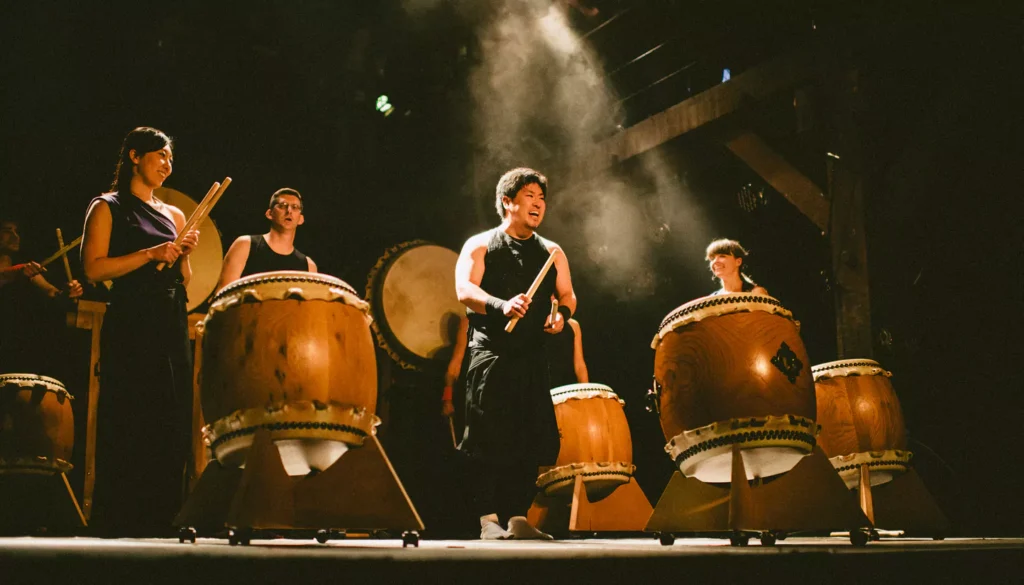
Storage Should Be Part of the Plan
As your instrument collection grows, storage becomes just as important as purchasing.
A dojo with six drums has relatively simple storage needs.
A dojo with twenty drums, several stands, dozens of bachi, and performance equipment requires a much more organized system.
Good storage helps:
- protect drumheads from accidental damage
- extend the lifespan of wooden shells
- speed up class setup and cleanup
- make transportation more efficient
If possible, leave enough space around each drum to avoid stacking instruments directly against one another. Wooden taiko drums are built to last for many years, but like any finely crafted instrument, they benefit from careful handling and a stable storage environment.
Budget Planning: Buy for the Next Three Years, Not Just Today
One of the smartest decisions a new dojo can make is to think beyond opening day.
Many organizations start with a limited budget, which is completely understandable. The challenge is deciding where to invest first.
Rather than purchasing every available drum immediately, prioritize the equipment that will support regular teaching. As student enrollment grows, additional instruments can be added based on real needs rather than assumptions.
The following approach works well for many schools, community groups, and independent dojos.
| Phase | Investment Focus | Why It Matters |
| Phase 1 | Core teaching equipment | Begin classes with confidence and establish good teaching habits. |
| Phase 2 | Expand capacity | Add drums and accessories as enrollment and rehearsal frequency increase. |
| Phase 3 | Performance equipment | Invest in specialty drums and transport solutions for concerts and festivals. |
This phased approach offers two advantages.
First, it spreads costs over time, making it easier to manage budgets or secure funding.
Second, every purchase is based on actual growth rather than optimistic forecasts.
Consider the Total Cost of Ownership
When comparing suppliers, it’s natural to focus on the price of each drum.
However, the total cost of ownership often has a greater impact over the life of your equipment.
Questions worth asking include:
- Are matching stands available?
- Can replacement parts be ordered in the future?
- Are protective cases designed specifically for the drum models?
- Is international shipping available?
- Can additional drums be purchased later without changing the appearance of the ensemble?
Thinking about these factors before placing your first order can save significant time and expense as your dojo grows.
Why Many Dojos Purchase Complete Equipment Packages
As programs expand, many organizations find it easier to purchase coordinated equipment packages rather than sourcing drums and accessories from multiple suppliers.
A complete package offers several practical advantages:
- Instruments are designed to work together.
- Matching stands improve consistency across the rehearsal space.
- Protective cases fit each drum correctly.
- Accessories arrive ready for immediate use.
- Shipping can often be consolidated into a single order.
For international buyers, this approach also simplifies logistics by reducing the number of separate shipments and helping ensure compatibility between different pieces of equipment.
Rather than assembling a setup one item at a time, many schools and community groups prefer to start with a well-planned package and expand it gradually as their programs develop.
Funding and Planning for Long-Term Growth
Launching a dojo is a significant investment, but it doesn’t have to happen all at once.
Many successful taiko programs have been built gradually, expanding their equipment collection as student enrollment increased and new performance opportunities became available.
If your dojo is part of a school, university, cultural center, or nonprofit organization, it may also be worth exploring funding opportunities before making your first purchase. Community arts grants, cultural exchange programs, music education budgets, and local sponsorships often provide financial support for percussion programs and traditional arts initiatives.
Even when external funding isn’t available, creating a phased purchasing plan makes budgeting much easier. Instead of trying to buy every drum immediately, prioritize the equipment that will have the greatest impact on teaching. As your program grows, additional instruments and accessories can be added based on actual demand.
Planning this way not only reduces financial pressure but also helps ensure that every purchase continues to support your long-term goals.
New Dojo Equipment Checklist
Before placing an order, review the following checklist to make sure you’ve considered every essential part of your setup.
Drums
- □ Nagado Daiko for daily teaching and ensemble practice
- □ Shime Daiko for rhythm leadership
- □ Oke Daiko if portability is important
- □ Hira Daiko for expanded repertoire (optional)
- □ O-Daiko for large performances (long-term investment)
Accessories
- □ Appropriate drum stands for every drum
- □ Enough bachi for all students plus spare pairs
- □ Soft cases for transportation and storage
- □ Replacement ropes or hardware if applicable
Facility Planning
- □ Adequate storage space
- □ Safe transportation plan
- □ Practice area with sufficient spacing
- □ Future expansion plan for additional students
A checklist like this may seem simple, but it can prevent expensive oversights and make your first purchasing experience much smoother.
Common Mistakes New Dojos Make
Even experienced musicians can make costly purchasing decisions when establishing a new taiko program.
Here are some of the most common mistakes—and how to avoid them.
1. Buying Too Many Specialty Drums Too Early
Large performance drums naturally attract attention, but they are rarely the best starting point for a new dojo.
A balanced collection of Nagado Daiko and Shime Daiko will support far more teaching hours than investing the same budget in one showcase instrument.
2. Underestimating Accessory Costs
Drums are only one part of a functional dojo.
Stands, bachi, protective cases, and storage solutions should be included in the initial budget rather than treated as optional extras.
3. Planning Only for Current Enrollment
If your first class has eight students today, it may have fifteen next year.
Leaving room for gradual expansion helps avoid replacing equipment prematurely and makes it easier to maintain a consistent collection.
4. Ignoring Transportation Requirements
Many organizations eventually perform outside their regular rehearsal space.
Thinking about transportation early—especially if your program includes festivals, demonstrations, or school events—can influence which drum styles and accessories make the most sense.
5. Choosing Equipment from Multiple Unrelated Sources
Purchasing individual items wherever they appear cheapest may seem economical at first.
Over time, however, mismatched equipment can create challenges with appearance, compatibility, replacement parts, and maintenance.
Whenever possible, choosing drums and accessories designed to work together helps create a more consistent and professional setup.
Final Thoughts
There is no magic number that determines how many taiko drums a dojo should own.
The right answer depends on your students, your teaching style, your available space, your performance goals, and how you expect your program to grow over the coming years.
For many new dojos, a thoughtful collection of Nagado Daiko, supported by one or two Shime Daiko, quality bachi, reliable stands, and protective soft cases, provides everything needed to begin teaching with confidence.
As your community grows, your equipment can grow alongside it—adding portable drums for workshops, specialty instruments for new repertoire, and larger performance drums when the time is right.
Rather than asking, “How many drums should we buy?”, consider asking:
“What kind of dojo are we trying to build?”
That question leads to better purchasing decisions, more effective teaching, and a stronger foundation for the future.
Planning Your Dojo Setup with JINLEI
Every dojo is different.
Some organizations begin with a small weekly class of six students. Others are preparing to launch a community program, expand a university ensemble, or equip a professional performance group. The right equipment plan depends on your teaching goals, available space, performance schedule, and budget.
At JINLEI, we work with schools, cultural centers, community groups, distributors, and professional ensembles around the world to build complete taiko setups—not just individual drum orders.
Whether you’re purchasing your very first Nagado Daiko or planning a full performance ensemble, we can help you:
- Recommend a practical drum configuration based on your student numbers.
- Match each drum with compatible stands, bachi, and protective soft cases.
- Plan phased purchases that support future growth.
- Prepare quotations for schools, nonprofits, cultural organizations, and distributors.
- Coordinate international shipping for complete equipment packages.
A well-planned dojo doesn’t need to own every drum on day one. It simply needs the right equipment to support meaningful teaching today while leaving room to grow tomorrow.
If you’re planning a new dojo or expanding an existing program, we’d be happy to help you design a setup that fits your goals.
FAQ
How many taiko drums does a beginner dojo need?
Most beginner dojos can successfully start with four to six Nagado Daiko and one Shime Daiko for a class of around ten students. Because students naturally rotate between playing, observing, and practicing movement, not everyone needs a drum at the same time. As enrollment grows, you can gradually expand the collection rather than purchasing everything upfront.
Does every student need their own taiko drum?
No. In most teaching environments, two students can comfortably share one drum during regular classes. This approach keeps students engaged through observation, rhythm exercises, and partner work while making equipment costs much more manageable for new programs.
Which taiko drum should a new dojo buy first?
Nagado Daiko is usually the best starting point because it forms the foundation of most taiko training. Adding a Shime Daiko alongside it creates a more complete learning environment by helping students develop timing and ensemble awareness.
Should we buy O-Daiko immediately?
Usually not. While O-Daiko creates a dramatic visual and musical impact, it is generally better suited to established performance groups. Most new dojos benefit more from investing in additional teaching drums and accessories before purchasing a showcase instrument.
How many pairs of bachi should we order?
Plan for at least one pair per student, plus 20–30% extra for guest participants, workshops, and replacements. If your dojo teaches both children and adults, it’s also worth keeping different sizes and wood types available to suit different ages and playing styles.
Does every drum need its own stand?
Ideally, yes. Dedicated stands improve playing posture, make rehearsals more efficient, and reduce setup time before classes. They also help protect the drums by providing stable, purpose-built support.
Are soft cases necessary?
If your drums will remain in a permanent rehearsal space, soft cases can be added later. However, if you plan to travel to performances, festivals, or workshops, protective cases are highly recommended to help prevent damage during transportation and storage.
Can children and adults use the same drums?
Yes. Many dojos successfully teach mixed-age groups using the same drums. The key is to choose appropriately sized bachi and, where possible, adjustable stands so that players of different heights can perform comfortably and safely.
How long does it take to receive a complete dojo order?
Production times vary depending on the drum models, level of customization, and order size. Because different products may have different lead times, it’s a good idea to review the shipping policy and begin planning well before your intended opening date or performance schedule.
Can JINLEI help design a complete dojo package?
Yes. Rather than simply supplying individual products, JINLEI MUSIC can recommend a complete equipment plan based on your student numbers, teaching goals, available space, and budget. This helps ensure that your drums, stands, bachi, and protective cases work together as a coordinated system.