Introduction
Buying a marimba is a significant investment. Whether you’re equipping a music classroom, expanding a university percussion program, or purchasing an instrument for concert performance, the right choice should continue to serve your needs for many years—not just the next semester or performance season.
At first glance, many marimbas appear remarkably similar. Most feature rows of beautifully crafted wooden tone bars, aluminum resonators, and a wheeled frame. It’s easy to assume that the biggest difference is simply the number of octaves. In reality, choosing the right marimba involves much more than comparing specifications.
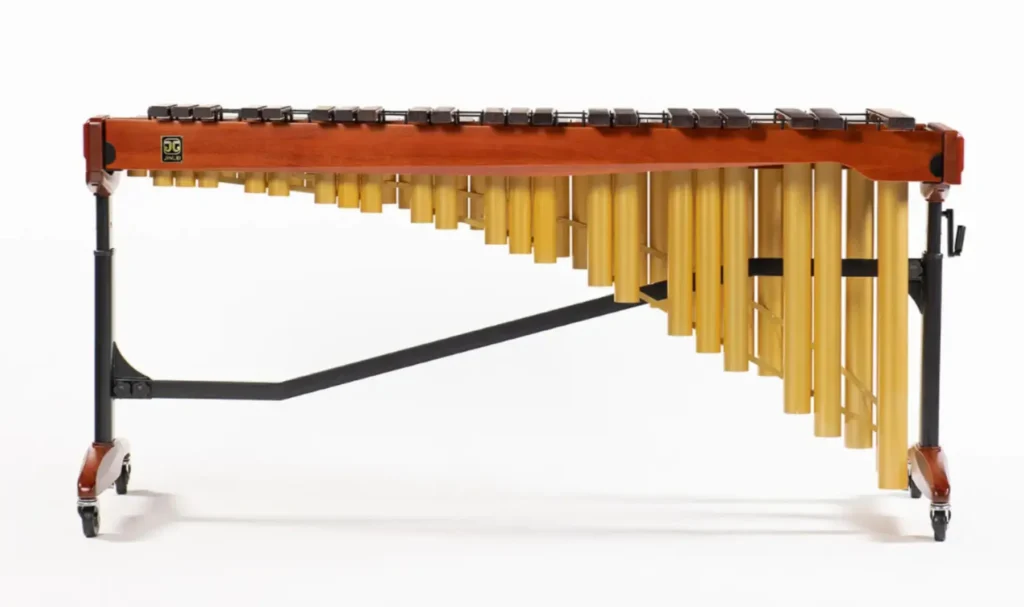
The octave range determines what music you can perform, but it also affects the instrument’s size, weight, and overall investment. The tone bar material influences both the instrument’s character and its maintenance requirements. Frame construction affects stability, while height adjustment can make a noticeable difference in playing comfort—especially when an instrument is shared by multiple musicians.
These decisions become even more important because marimbas are rarely impulse purchases. Unlike smaller percussion instruments, they require careful planning for transportation, assembly, storage, and long-term use. A model that works perfectly in a conservatory practice room may not be the best choice for an elementary school music program, and a touring ensemble may prioritize features that matter far less in a permanent performance venue.
The good news is that buying a marimba doesn’t have to be complicated. Once you understand the factors that truly affect performance and long-term value, narrowing down the right instrument becomes much easier.
Buying Tip
One of the most common misconceptions is that the most expensive or largest marimba is automatically the best choice. In reality, the ideal instrument is the one that fits your repertoire, performance environment, available space, and long-term goals. Buying with those factors in mind will almost always lead to a better investment than choosing based on specifications alone.
What You’ll Learn in This Guide
Rather than introducing every technical detail of the instrument, this guide focuses on the questions buyers actually ask before making a purchase.
By the end of this guide, you’ll understand:
| You’ll Learn | Why It Matters |
| How to choose the right octave range | Match the instrument to your repertoire and future development. |
| Which tone bar material best fits your needs | Balance sound quality, durability, and maintenance. |
| Why frame construction and resonators matter | Improve stability, resonance, and overall playing experience. |
| What factors influence a marimba’s long-term value | Make a smarter investment instead of comparing price alone. |
| The most common buying mistakes | Avoid costly decisions that are difficult to reverse. |
| Which type of marimba is right for your situation | Confidently narrow your options before requesting a quotation. |
By following the same decision-making process used by music educators, percussion programs, and professional performers, you’ll be able to evaluate different models with confidence and choose a marimba that continues to meet your needs for years to come.
Step 1: Define Your Goals Before Comparing Specifications
One of the biggest mistakes buyers make is comparing specifications before identifying what they actually need.
It’s tempting to jump straight into questions like “Should I buy a 5-octave marimba?” or “Is rosewood better than Padauk?” While these are important considerations, they’re not the best place to start.
Instead, begin with a much simpler question:
How will this marimba be used?
The answer influences almost every decision you’ll make afterward—from the octave range and tone bar material to the frame design and your overall budget.
For example, a university purchasing instruments for a percussion department has very different priorities from a community music center, while a professional performer preparing for solo recitals may look for features that aren’t essential in a teaching environment.
Taking a few minutes to define your goals first can save both money and frustration later.
Different Buyers Have Different Priorities
The “right” marimba isn’t necessarily the most expensive or the one with the widest range. It’s the one that best supports the people who will be playing it.
| If You Are… | Your Main Priorities | A Good Starting Point |
| Music School | Durability, easy maintenance, value for money | 4–4⅓ octave marimba |
| University or Conservatory | Wider repertoire, versatility, long-term use | 4⅓–5 octave marimba |
| Professional Performer | Full range, expressive tone, stage reliability | 5 octave marimba |
| Community Ensemble | Balanced performance and portability | 4⅓ or 4½ octave marimba |
| Private Studio or Home Practice | Space, budget, future progression | Choose based on your long-term goals |
Don’t think of these as strict rules. Instead, use them as a starting point for narrowing your options.
Buying for Music Education
Schools often need instruments that can handle years of regular use by students with different experience levels.
That means reliability is just as important as sound quality. A marimba used in a classroom may be played by dozens of students every week, so durability, stable tuning, and ease of maintenance usually have a greater impact on long-term value than having the widest possible playing range.
If the instrument will mainly support classroom teaching, ensemble rehearsals, and school performances, a well-built 4- or 4⅓-octave marimba is often more practical than a larger concert model.
Buying for Universities and Conservatories
Higher education programs typically require greater flexibility.
As students progress, they begin performing more advanced solo works, chamber music, and orchestral repertoire that often extends into the lower register. A wider octave range gives instructors more freedom when selecting repertoire and helps students prepare for professional performance.
For this reason, universities frequently choose 4⅓-, 4½-, or 5-octave marimbas depending on the level of the program and available budget.
Buying for Professional Performance
Professional musicians usually evaluate a marimba from a different perspective.
Rather than asking whether an instrument is “good enough,” they ask whether it allows them to perform at their highest level.
Tone consistency, resonance, frame stability, and ergonomic comfort all become increasingly important when preparing for concerts, competitions, recordings, or extended rehearsal schedules.
In these situations, choosing an instrument that supports expressive playing and long-term reliability is often more valuable than simply comparing specifications.
Buying for Long-Term Growth
One final question is worth considering:
Will your needs be the same five years from now?
A student preparing for conservatory auditions may quickly outgrow an entry-level instrument. Likewise, a school launching a new percussion program may expand its curriculum as enrollment increases.
If you expect your musical needs to evolve, it can be worth investing in a marimba that offers room to grow rather than choosing the smallest model that meets your immediate requirements.
Buying Tip
Don’t buy a marimba for who you are today—buy one for where you expect your musical journey to be in the coming years.
A slightly larger investment now can often postpone the need for a costly upgrade later.
Questions to Ask Yourself
Before moving on to the technical specifications, take a moment to answer these questions:
- Who will use the marimba most often?
- What type of music will be performed?
- Will the instrument stay in one location or travel frequently?
- Is storage space limited?
- Is this intended to be a long-term investment?
- Could your performance or teaching needs expand over time?
Your answers will make the remaining buying decisions much more straightforward, starting with one of the most important choices of all: the octave range.
Step 2: Choose the Right Octave Range
Once you’ve identified how the marimba will be used, the next decision becomes much clearer: How much range do you actually need?
This is often the first specification buyers compare, and for good reason. The octave range influences not only the music you can perform, but also the instrument’s footprint, transportation requirements, and overall investment.
However, a common misconception is that a larger range automatically means a better instrument.
In reality, the best octave range is the one that supports your repertoire without adding unnecessary size, weight, or cost.
Why Octave Range Matters
Every additional note extends the musical possibilities of the instrument, but it also changes the physical size of the marimba.
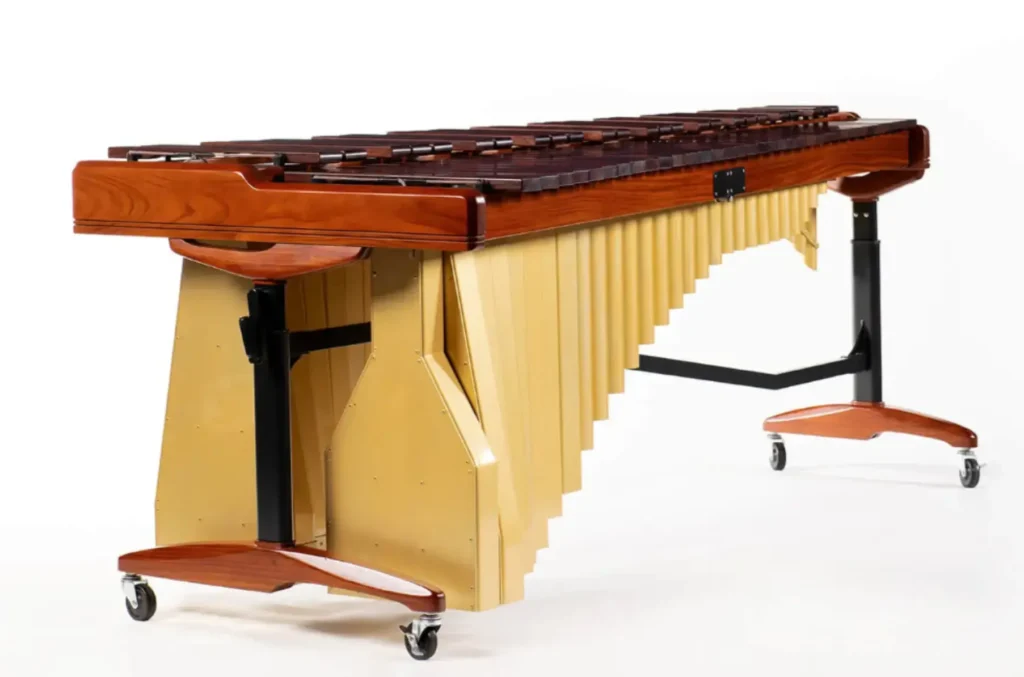
A 5-octave model offers exceptional flexibility for professional repertoire, yet it also requires more stage space, larger storage areas, and greater transportation planning than a 4-octave instrument.
For many buyers, the goal isn’t to own the largest marimba—it’s to own the one they’ll actually use to its full potential.
Comparing Common Marimba Ranges
| Range | Common Users | Advantages | Consider Before Buying |
| 4 Octaves | Schools, beginners, community programs | Compact, affordable, easy to move | Limited for advanced solo repertoire |
| 4⅓ Octaves | Universities, advanced students | Excellent balance of range and size | Slightly larger footprint than a 4-octave model |
| 4½ Octaves | Conservatories, percussion ensembles | Supports more contemporary repertoire | Higher investment and storage requirements |
| 5 Octaves | Professional performers, orchestras | Full concert repertoire and maximum flexibility | Largest size, highest cost, greater transport needs |
4-Octave: A Practical Choice for Education
For schools and community music programs, a 4-octave marimba often provides everything needed for classroom instruction, ensemble rehearsals, and introductory performance opportunities.
Its smaller footprint makes it easier to move between classrooms or store when not in use, while the reduced size can also be an advantage in rehearsal spaces where every square meter counts.
If your primary focus is music education rather than professional solo literature, a well-built 4-octave marimba is far more capable than many buyers initially expect.
4⅓-Octave: The Most Versatile Middle Ground
If there’s one range that suits the widest variety of players, it’s the 4⅓-octave marimba.
The additional lower notes significantly expand the instrument’s musical possibilities without dramatically increasing its overall size.
For universities, advanced students, community ensembles, and developing performers, this range often strikes the ideal balance between practicality and versatility.
It’s also one of the easiest recommendations to make for buyers who want an instrument that can continue supporting them as their repertoire grows.
4½-Octave: More Freedom for Expanding Repertoire
A 4½-octave marimba begins to enter professional territory.
The wider range opens the door to more contemporary works and allows performers to explore repertoire that makes greater use of the instrument’s lower register.
For institutions building advanced percussion programs, this range provides additional flexibility while remaining slightly more compact than a full 5-octave model.
5-Octave: When the Full Range Is Worth It
For professional performers, conservatories, and orchestras, a 5-octave marimba is often the preferred choice.
Its extended range allows musicians to perform virtually the complete modern marimba repertoire without compromise.
However, the decision should never be based solely on prestige.
A full-size marimba occupies considerably more space, weighs more, and requires greater planning for transportation and storage. If those additional notes won’t be used regularly, a smaller instrument may represent better long-term value.
Bigger Isn’t Always Better
Imagine two buyers.
The first is a conservatory preparing students for international competitions.
The second is a community arts center offering weekly percussion classes.
Both have the budget for a 5-octave marimba.
Should they purchase the same model?
Probably not.
The conservatory is likely to benefit from the extended range because students will regularly perform advanced solo repertoire.
The community arts center, however, may gain more value from a slightly smaller instrument that’s easier to move, easier to store, and better suited to the music being taught.
The best choice isn’t determined by budget—it’s determined by purpose.
Buying Tip
Instead of asking, “What’s the biggest marimba I can afford?”, ask:
“What’s the smallest marimba that comfortably supports everything I want to play over the next five to ten years?”
That question often leads to a smarter long-term investment.
Questions to Ask Yourself
Before choosing an octave range, consider the following:
- Will you regularly perform advanced solo repertoire?
- How much performance or storage space is available?
- Will the instrument be moved frequently?
- Are you buying for one player or an entire music program?
- Could your repertoire expand in the future?
Once you’ve answered those questions, the next decision becomes much easier: choosing the materials that will shape your instrument’s sound.
Step 3: Choose the Right Tone Bar Material
After deciding on the octave range, the next question many buyers ask is:
“Should I choose African Padauk or Rosewood?”
It’s a reasonable question, but not necessarily the right one.
A better question is:
Which material makes the most sense for the way I plan to use my marimba?
Both African Padauk and Rosewood are respected choices used on high-quality marimbas around the world. Neither is universally “better.” Instead, each offers a different balance of sound, durability, maintenance, and long-term value.
Understanding those differences will help you make a decision based on your actual needs rather than assumptions.
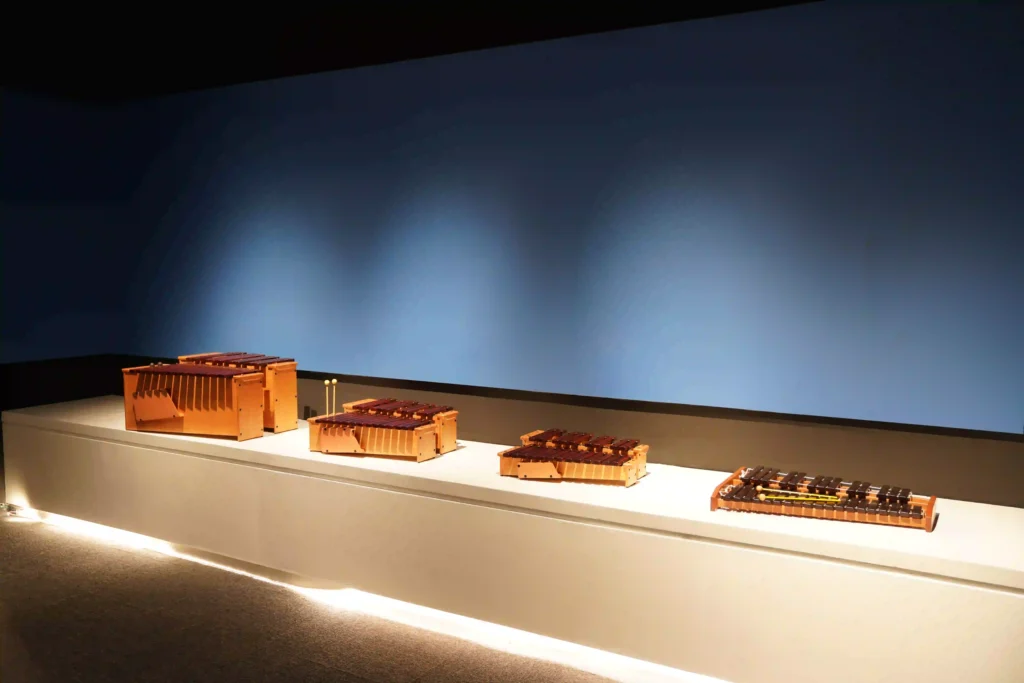
A Quick Comparison
| Feature | African Padauk | Rosewood |
| Tone | Warm, balanced, clear | Rich, complex, highly expressive |
| Sustain | Moderate | Longer sustain |
| Climate Stability | Excellent | More sensitive to humidity and temperature |
| Maintenance | Low | Requires more care |
| Typical Buyers | Schools, universities, community ensembles | Conservatories, professional performers, orchestras |
For most buyers, the decision isn’t about choosing the “best” wood—it’s about choosing the most appropriate one.
When African Padauk Makes Sense
African Padauk has become increasingly popular over the past decade, particularly in educational environments.
Why?
Because it offers an excellent combination of musical performance and practical reliability.
Schools and universities often have dozens of students using the same instrument every week. Rehearsal rooms may not always have perfectly controlled temperature or humidity, and instruments are frequently moved between classrooms and performance spaces.
In these situations, consistency matters just as much as tone.
Padauk performs exceptionally well under these conditions, delivering a warm, focused sound while requiring relatively little day-to-day maintenance.
For many educational institutions, that makes it one of the smartest long-term investments available.
When Rosewood Is Worth the Investment
Rosewood has long been associated with professional concert marimbas, and for good reason.
Its tonal character is often described as deeper, more complex, and capable of greater dynamic expression. Experienced performers appreciate how it responds to subtle differences in touch, allowing them to shape phrases with remarkable nuance.
These qualities become especially valuable in solo recitals, orchestral performances, recordings, and competitions where every musical detail matters.
However, those advantages come with greater responsibility.
Because Rosewood is more sensitive to changes in humidity and temperature, it benefits from a stable environment and careful maintenance. For professional musicians and conservatories, that’s often a reasonable trade-off. For busy classrooms, it may not always be.
Sound Isn’t Determined by Wood Alone
This is one of the biggest misconceptions in the marimba world.
Many buyers assume that if two marimbas use the same wood, they’ll sound almost identical.
In reality, tone bar material is only one part of a much larger system.
The final sound is influenced by many factors, including:
- Precision tuning
- Tone bar shaping
- Resonator design
- Frame stability
- Overall craftsmanship
A carefully built Padauk marimba can easily outperform a poorly manufactured Rosewood instrument.
That’s why experienced buyers evaluate the complete instrument—not just the species of wood listed on the specification sheet.
Think About Your Environment, Not Just Your Preferences
Imagine you’re purchasing a marimba for a school where students practice every day, rehearsals take place in different rooms, and the instrument is occasionally transported for performances.
Would a material that requires minimal maintenance make life easier?
Now imagine you’re preparing for an international solo competition where every tonal detail matters.
In that situation, would a more expressive tone justify the additional care?
Neither answer is right or wrong.
The better choice depends entirely on where the instrument will spend most of its life.
Buying Tip
Don’t ask:
“Which wood sounds better?”
Instead, ask:
“Which wood is better suited to my performance environment?”
That simple shift in thinking often leads to a much better purchasing decision.
Questions to Ask Yourself
Before deciding on a tone bar material, consider these questions:
- Who will use the instrument most frequently?
- Will the marimba remain in a climate-controlled environment?
- How much maintenance are you prepared to perform?
- Is your priority maximum musical expression or long-term durability?
- Will the instrument mainly be used for education, ensemble performance, or professional concerts?
Once you’ve answered those questions, you’re ready to look beyond the keyboard itself and evaluate the construction features that influence both sound and playing experience.
Step 4: Look Beyond the Keyboard
By this point, you’ve probably narrowed down the octave range and have a good idea which tone bar material best suits your needs.
Many buyers stop here.
After all, if two marimbas have the same range and use the same type of wood, shouldn’t they perform almost the same?
Not necessarily.
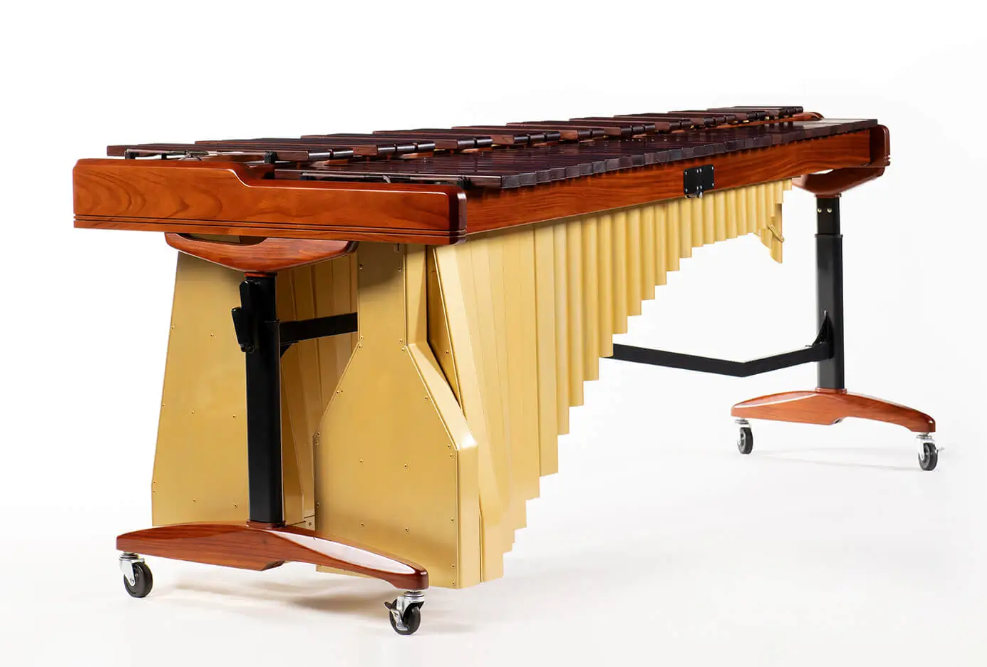
The keyboard is only one part of the instrument. A marimba is a carefully engineered system in which the tone bars, resonators, frame, and height adjustment all work together to shape the playing experience.
These components may not be the first specifications listed on a product page, but they often determine whether an instrument feels enjoyable to play for years—or becomes frustrating after only a few months.
Resonators: More Than Just Metal Tubes
The aluminum tubes beneath the tone bars are called resonators, but their role goes far beyond simply making the instrument louder.
Each resonator is carefully matched to the pitch of its corresponding tone bar. When designed correctly, it reinforces the note, helping produce the warm, full sound that makes the marimba instantly recognizable.
Good resonator design can improve:
- Projection in larger performance spaces
- Sustain, particularly in the lower register
- Balance across the keyboard
- Clarity when playing with an ensemble
These improvements may be subtle when viewed individually, but together they have a significant impact on the instrument’s overall voice.
Why Frame Construction Deserves More Attention
Imagine performing an energetic four-mallet passage while the instrument shifts slightly every time you move across the keyboard.
Even if the marimba sounds beautiful, the experience quickly becomes distracting.
A stable frame isn’t simply about durability—it directly affects confidence while performing.
Look for a frame that offers:
- Solid support without unwanted movement
- Smooth mobility when repositioning the instrument
- Reliable construction for years of regular use
- Easy access for maintenance and assembly
This is particularly important for schools and performance organizations where the instrument may be moved several times a week.
Adjustable Height Isn’t Just About Comfort
Many buyers see height adjustment as a convenient extra feature.
In reality, it’s often much more important than they expect.
Playing at the wrong height changes the position of your shoulders, wrists, and elbows. Over long practice sessions, even small ergonomic issues can lead to unnecessary fatigue and make technical passages feel more difficult than they should.
For institutions, adjustable height offers another practical advantage: one instrument can comfortably accommodate multiple performers of different ages and heights throughout the day.
Instead of adapting to the instrument, the instrument adapts to the player.
Don’t Overlook Mobility
Unlike many percussion instruments, a marimba is rarely left untouched in one location forever.
Schools move instruments between classrooms and concert halls.
Universities reposition them for rehearsals and recitals.
Professional performers transport them to recording sessions and performance venues.
That makes mobility an important part of ownership.
When comparing models, consider practical questions such as:
- Does the frame roll smoothly?
- Can it be assembled without unnecessary complexity?
- Will it fit through standard doorways?
- Is there enough space to store it safely when not in use?
These details may not influence the sound directly, but they can have a major impact on day-to-day use.
Buying Tip
When evaluating two similar marimbas, don’t spend all your time comparing the keyboard.
Spend a few minutes looking at the parts you’ll interact with every day—the frame, the wheels, the height adjustment system, and the overall construction.
Those are often the features you’ll continue to appreciate long after you’ve forgotten the specification sheet.
Expert Insight
Professional percussionists rarely judge a marimba by a single feature.
Instead, they ask a broader question:
“Does this instrument feel predictable and reliable every time I play it?”
That confidence comes from the way every component works together—not from any one specification alone.
Questions to Ask Yourself
Before making a final decision, consider the following:
- Will several people share this instrument?
- How often will it need to be moved?
- Is adjustable height important for your players?
- Will the marimba be assembled and disassembled regularly?
- Does the overall construction inspire confidence for long-term use?
Answering these questions will help you evaluate a marimba as a complete instrument rather than a collection of individual specifications.
Step 5: Think About Ownership, Not Just Price
When comparing marimbas, it’s easy to focus on the purchase price.
After all, it’s usually the first number buyers notice.
However, experienced music educators, ensemble directors, and professional performers often evaluate an instrument differently. Instead of asking, “How much does it cost?”, they ask:
“How well will this instrument serve us over the next five to ten years?”
That shift in perspective changes almost every buying decision.
A marimba isn’t a disposable purchase. It’s an instrument expected to support countless rehearsals, performances, lessons, and recordings throughout its lifetime. The goal isn’t simply to buy a marimba—it’s to buy one that continues to perform reliably year after year.
Looking Beyond the Initial Investment
Two marimbas may appear similar on paper, yet offer very different ownership experiences.
One may require less maintenance, adapt more easily to different performers, and remain stable after years of regular use. Another may initially seem less expensive but prove more difficult to transport, maintain, or integrate into a growing music program.
That’s why experienced buyers evaluate value, not just price.
What Contributes to Long-Term Value?
Several factors influence how a marimba performs throughout its lifetime.
| Consideration | Why It Matters |
| Build Quality | A well-built instrument is more likely to remain stable after years of regular use. |
| Tone Bar Material | Different materials have different maintenance requirements and environmental tolerance. |
| Height Adjustment | One instrument can comfortably accommodate multiple performers. |
| Assembly & Maintenance | Simpler maintenance saves time for schools and organizations. |
| Included Accessories | Items such as mallets and dust covers reduce additional purchasing costs. |
| After-Sales Support | Access to replacement parts and technical assistance adds confidence to your investment. |
While no single feature determines value on its own, together they shape the ownership experience.
Think About Daily Use
Imagine a university percussion studio where several students practice every day.
The instrument may be moved between rehearsal rooms, adjusted for different performers, and played for hours at a time.
Now compare that with a marimba used primarily for occasional concerts in a performing arts center.
Both buyers need a quality instrument, but their daily experiences will be very different.
Thinking about how the marimba will actually be used often leads to better purchasing decisions than simply comparing specifications.
Ownership Includes Logistics
For large percussion instruments, ownership begins long before the first note is played.
Before placing an order, consider practical questions such as:
- How will the instrument be delivered?
- Where will it be assembled?
- Is there adequate storage space?
- Will it remain in one location or travel regularly?
- Does the institution have staff available to move it safely?
These considerations rarely appear in product specifications, yet they have a significant impact on long-term satisfaction.
Planning for International Purchases
If you’re purchasing from overseas, it’s also worth considering the buying process itself.
Production lead times, shipping arrangements, customs clearance, and delivery schedules all play an important role when planning for a new instrument—particularly if the marimba is needed before the start of a school term, a concert season, or a special performance.
Allowing sufficient time for manufacturing and international transportation helps ensure the instrument arrives when it’s needed, rather than becoming a last-minute concern.
Buying Tip
Don’t evaluate a marimba based on the day it arrives.
Evaluate it based on how you expect it to perform after hundreds of rehearsals, countless performances, and years of regular use.
That’s the perspective that often leads to the best investment.
Expert Insight
Professional buyers rarely ask, “Which marimba is the cheapest?”
Instead, they ask:
“Which marimba will still be meeting our needs five years from now?”
It’s a simple question—but one that often leads to a very different decision.
Questions to Ask Yourself
Before making your final shortlist, ask yourself:
- Will this instrument still meet our needs as our repertoire grows?
- Is it practical for the space where it will be used?
- Have we considered transportation and storage?
- Will different performers need to adjust the playing height?
- Does the supplier provide reliable support after delivery?
If the answer to most of these questions is “yes,” you’re evaluating the instrument the same way experienced buyers do.
The final step is putting everything together and avoiding the common mistakes that can turn an otherwise good purchase into a disappointing one.
Step 6: Common Buying Mistakes (and How to Avoid Them)
By now, you should have a clear understanding of the factors that influence a marimba purchase—from octave range and tone bar materials to construction quality and long-term ownership.
Even so, it’s surprisingly easy to overlook details that only become important after the instrument arrives.
Many buyers don’t regret the marimba they purchased—they regret overlooking a practical consideration during the buying process.
Here are some of the most common mistakes and how you can avoid them.
Mistake 1: Buying for Today Instead of Tomorrow
It’s natural to focus on your current needs.
However, marimbas are built to last for many years. A student may eventually audition for a conservatory. A school percussion program may expand. A community ensemble may begin performing more demanding repertoire.
Choosing an instrument with a little room for future growth can often be more economical than replacing it a few years later.
Mistake 2: Comparing Specifications Instead of Performance
Specification sheets are useful, but they don’t tell the whole story.
Two marimbas may share the same octave range and tone bar material while offering very different playing experiences because of differences in tuning, resonator design, frame construction, and craftsmanship.
Instead of asking, “Which specification is better?” ask, “Which instrument is better suited to the way it will actually be used?”
Mistake 3: Underestimating Space Requirements
Professional marimbas occupy considerably more space than many buyers expect.
Before ordering, think about:
- Performance space
- Storage space
- Doorway width
- Assembly area
- Transportation routes
Planning these details in advance helps avoid unnecessary challenges once the instrument arrives.
Mistake 4: Ignoring Ergonomics
Players often spend hours behind a marimba during rehearsals and performances.
An instrument that cannot be comfortably adjusted may affect posture, movement, and playing technique over time.
For schools and institutions where multiple musicians share the same instrument, adjustable height becomes even more valuable.
Mistake 5: Treating the Purchase as a One-Time Transaction
A marimba isn’t simply a product—it’s a long-term musical partner.
Choosing a manufacturer that provides clear communication, dependable support, and reliable delivery is just as important as choosing the instrument itself.
Buying Tip
If you’re comparing two similar marimbas, don’t let a small difference in specifications decide the purchase.
Instead, consider which instrument will be easier to own, easier to maintain, and better suited to your musical goals over the next decade.
A Final Buying Checklist
Before making your decision, make sure you can answer “yes” to the following questions:
| Question | ✓ |
| Have I chosen the right octave range for my repertoire? | ☐ |
| Does the tone bar material match my playing environment? | ☐ |
| Is the frame suitable for how the instrument will be used? | ☐ |
| Have I considered storage and transportation? | ☐ |
| Will this instrument still meet my needs in the future? | ☐ |
| Am I choosing based on value rather than specifications alone? | ☐ |
If most of your answers are “yes,” you’re already approaching the purchase like an experienced buyer.
Which Marimba Is Right for You?
After considering the instrument’s purpose, octave range, materials, construction, and long-term value, you’re now in a much better position to narrow down your options.
The table below summarizes the recommendations discussed throughout this guide.
| Your Situation | Recommended Choice | Why |
| Elementary & Secondary Schools | 4-Octave Marimba | Compact, durable, and well suited to music education. |
| Universities & Conservatories | 4⅓- or 4½-Octave Marimba | Supports a broader range of repertoire while remaining practical for daily teaching. |
| Community Ensembles | 4⅓- or 4½-Octave Marimba | Balances musical flexibility with portability and storage requirements. |
| Professional Performers | 5-Octave Marimba | Offers the full range required for advanced solo and orchestral repertoire. |
It’s worth remembering that there isn’t a single “best” marimba.
The right choice depends on who will use the instrument, where it will be played, and how your musical goals may evolve over time.
How JINLEI MUSIC Can Help
At JINLEI MUSIC, we work with music schools, universities, distributors, percussion ensembles, and professional performers around the world. Because every customer has different requirements, we believe the buying process should begin with understanding your needs rather than recommending a single model.
Whether you’re looking for a compact instrument for classroom instruction or a professional concert marimba for advanced performance, our team can help you compare the available options and recommend a model that fits your repertoire, available space, and budget.
If you’re planning an institutional purchase or comparing several configurations, we’re also happy to provide personalized recommendations and quotations based on your specific requirements.
Conclusion
Buying a marimba isn’t about choosing the largest instrument or the most expensive model.
It’s about selecting an instrument that supports the way you learn, teach, rehearse, and perform—not just today, but for many years to come.
By defining your goals first, understanding the importance of octave range, selecting the right tone bar material, evaluating the instrument’s construction, and considering long-term ownership, you can make a decision with confidence rather than uncertainty.
A thoughtfully chosen marimba becomes more than an instrument. It becomes a reliable partner in every lesson, rehearsal, and performance that follows.
FAQ
How do I know whether I need a 4⅓-octave or a 5-octave marimba?
The best choice depends on the repertoire you expect to perform rather than simply your budget. A 4⅓-octave marimba is often sufficient for schools, universities, community ensembles, and many advanced students because it supports a wide variety of educational and performance repertoire while remaining more compact and easier to transport. If you regularly perform advanced solo literature or orchestral works that require the instrument’s lowest register, a 5-octave marimba is usually the better long-term investment.
Is African Padauk a good choice for professional use?
Yes. African Padauk produces a warm, balanced sound and is widely used on high-quality marimbas around the world. Its excellent stability also makes it well suited to schools, universities, and performance organizations where instruments are played frequently in different environments. Many professional performers also appreciate Padauk for its consistency and dependable performance.
Does a marimba require assembly after delivery?
Most full-size marimbas are shipped partially disassembled to protect the instrument during transportation. Assembly typically involves attaching the frame, installing the resonators, and positioning the keyboard. Clear assembly instructions are usually provided, and experienced suppliers can offer technical assistance if questions arise during setup.
How should a marimba be stored?
Whenever possible, store the instrument in a clean, dry environment away from direct sunlight, excessive humidity, or rapid temperature changes. Using a dust cover when the marimba is not in use helps protect the tone bars and resonators from dust and accidental damage. If the instrument needs to be moved regularly, ensure it is transported carefully and stored on a stable, level surface.
How often does a marimba need maintenance?
Routine maintenance is relatively simple. Regularly remove dust from the tone bars and resonators, inspect moving parts on the frame, and check that all hardware remains secure. Instruments used in schools or performance venues should also be inspected periodically for signs of wear. With proper care, a quality marimba can provide many years of reliable performance.
What accessories should I purchase with a marimba?
At a minimum, most players should have an appropriate pair of mallets and a protective dust cover. Depending on how the instrument will be used, additional accessories such as transport covers, replacement mallets, or maintenance supplies may also be worthwhile. Choosing the right accessories from the beginning helps protect your investment and ensures the instrument is ready for daily use.
Do you ship marimbas internationally?
Yes. Marimbas can be shipped to customers around the world. Because these are large instruments, shipping methods and delivery times vary depending on the destination and order size. If you’re purchasing for a school, distributor, or performance organization, it’s a good idea to request a quotation early so production schedules and transportation can be planned in advance.
How long does production usually take?
Production times vary depending on the model and current manufacturing schedule. For many custom-built marimbas, production typically takes 30 to 60 business days before shipment. Large institutional orders or customized configurations may require additional time, so early planning is recommended if the instrument is needed for a specific performance or academic term.
Can I request a quotation for multiple instruments?
Absolutely. Schools, universities, distributors, orchestras, and community music organizations frequently purchase multiple instruments at the same time. Providing information such as the number of instruments, destination country, intended use, and preferred models allows the supplier to prepare a quotation that best matches your requirements.
I’m still not sure which marimba is right for me. What should I do?
If you’re deciding between two models, start by considering your repertoire, available space, and long-term goals rather than focusing on specifications alone. In many cases, discussing your requirements with an experienced supplier can help narrow the options quickly. Sharing information about who will use the instrument, where it will be played, and your expected budget often leads to a recommendation that better matches your needs than comparing specifications by yourself.