Choosing a Taiko drum size is not as simple as picking a diameter. A larger drum may offer a deeper, more commanding sound, but it also takes up more space and can be harder to transport. A smaller drum is easier to manage, but may not provide the tonal weight or stage presence you need.
More importantly, Taiko size cannot be separated from Taiko type. A 1.5-shaku Nagado Daiko and a similarly sized Oke Daiko are not equivalent instruments. Their shell depth, construction, weight, tensioning method, and musical roles are different.
A better way to choose is:
Taiko type → drum size → intended use → player and stand → storage and transportation
This guide walks through that process so you can find a Taiko that fits both the sound you want and the way you actually plan to use it.
Quick Answer: What Taiko Size Should I Choose?
If you just need a starting point, use this table to narrow your options:
| Practical need | Starting point | Why |
|---|---|---|
| First Taiko setup for an adult | 1.4–1.6 shaku Nagado Daiko | A practical balance for practice and general ensemble use |
| Children and shorter players | 1.2–1.5 shaku Nagado Daiko | Easier access to the playing surface and more manageable handling; confirm the final choice with the stand height |
| General ensemble use | 1.4–1.6 shaku Nagado Daiko | A useful balance of sound and practicality |
| Mobile performance | 1.6–2.0 shaku Oke Daiko | The lightweight stave construction is generally easier to transport |
| High-pitched rhythmic voice | Shime Daiko, from Namitsuke through 4-chogake | Provides clear rhythmic definition |
| Large-stage impact | 3 shaku or larger; large Nagado, O-Hira Daiko, or other large-stage Taiko | Greater low-frequency and visual presence |
| Limited storage space | Oke Daiko, Hira Daiko, or a smaller Nagado | Can reduce the space required, depending on the complete setup |
These are starting points rather than fixed rules. The right size depends on both the type of Taiko and how you intend to use it.
Taiko Size Is Not Just About Diameter
Drumhead diameter is usually the first specification buyers notice, but it only tells part of the story.
When comparing Taiko, consider four factors:
Head diameter + shell depth + construction + weight
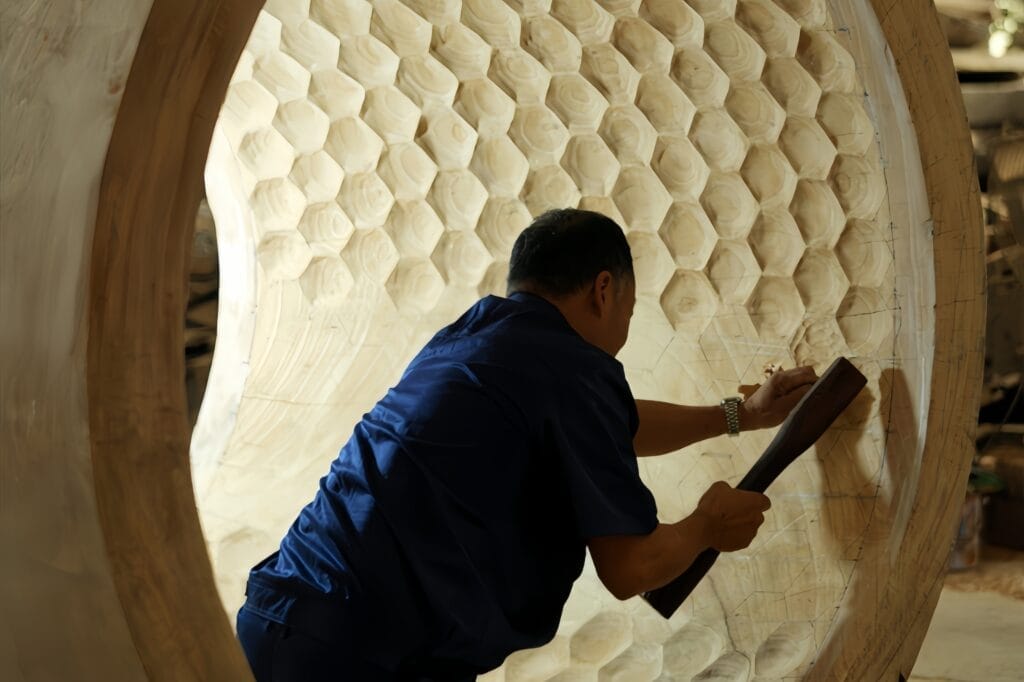
Head diameter contributes to the drum’s tonal character, while shell depth affects its proportions and resonance. Construction also matters: a hollowed solid-wood Nagado and a stave-bodied Oke can feel very different even when their head diameters are similar.
Weight becomes especially important if the drum regularly moves between classrooms, rehearsal spaces, vehicles, festivals, or stages.
This is why Taiko should not simply be ranked from “small” to “large.”
What Does “Shaku” Mean in Taiko Sizing?
Taiko dimensions are often expressed in shaku, a traditional Japanese unit of length.
One shaku is approximately 30.3 cm (11.9 inches), while one sun is one-tenth of a shaku, or about 3.03 cm (1.19 inches).
For quick reference:
| Size | Approximate head diameter | General size character |
|---|---|---|
| 1.3 shaku | 39 cm (15.4 in) | Compact |
| 1.4 shaku | 42 cm (16.5 in) | Small to medium |
| 1.5 shaku | 45 cm (17.7 in) | Medium and versatile |
| 1.6 shaku | 48 cm (18.9 in) | Medium to large |
| 1.8 shaku | 54–55 cm (21.3–21.7 in) | Large |
| 2.0 shaku | 60–61 cm (23.6–24.0 in) | Large; often considered for Miyake\/Yatai-style playing setups |
However, the shaku number should never be considered alone.
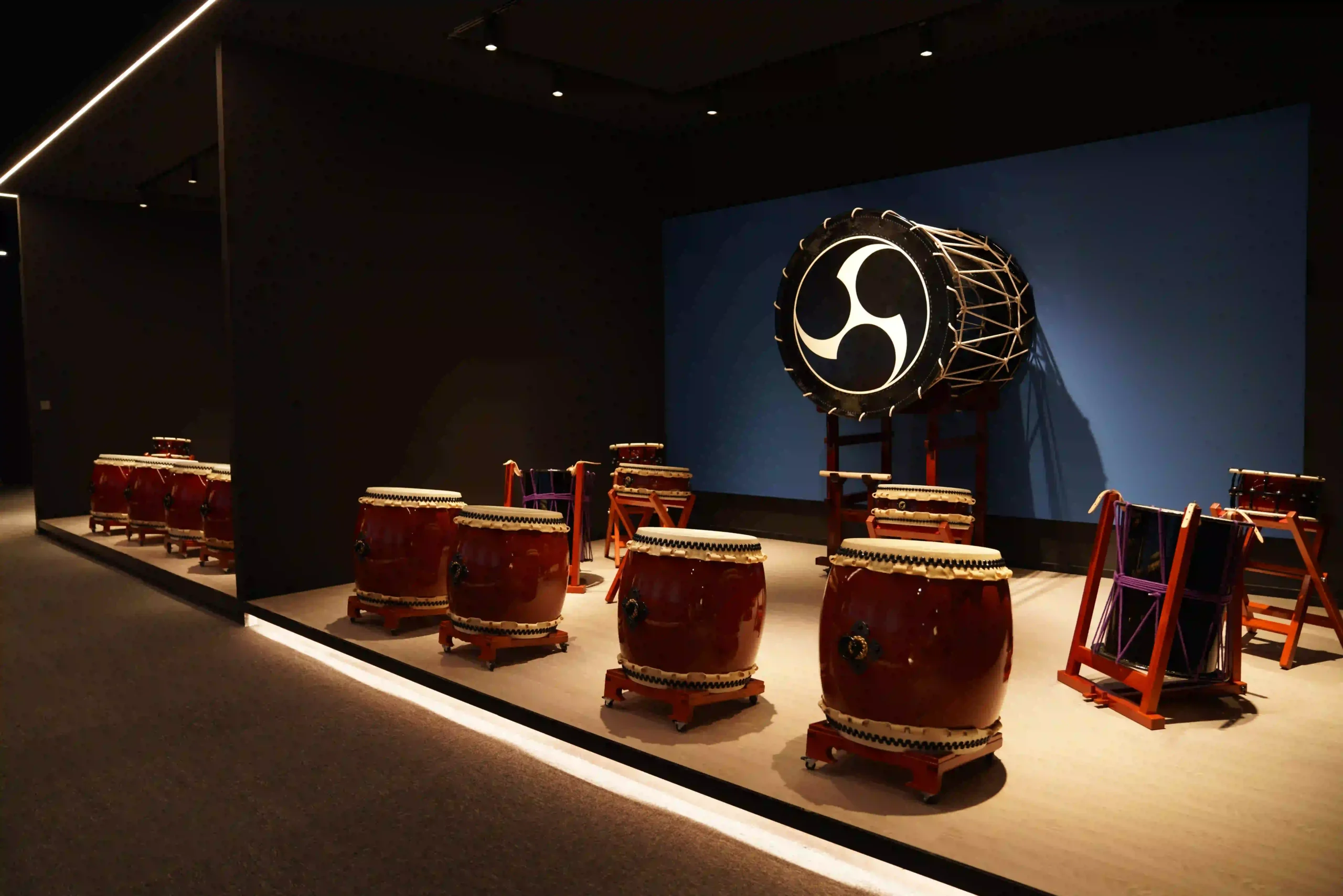
A 1.5-shaku Nagado and an Oke with a similar head diameter can have different depths, weights, playing positions, and handling requirements.
Start With the Taiko Type, Then Choose the Size
If you have not decided which kind of Taiko you need, choosing an exact size is premature.
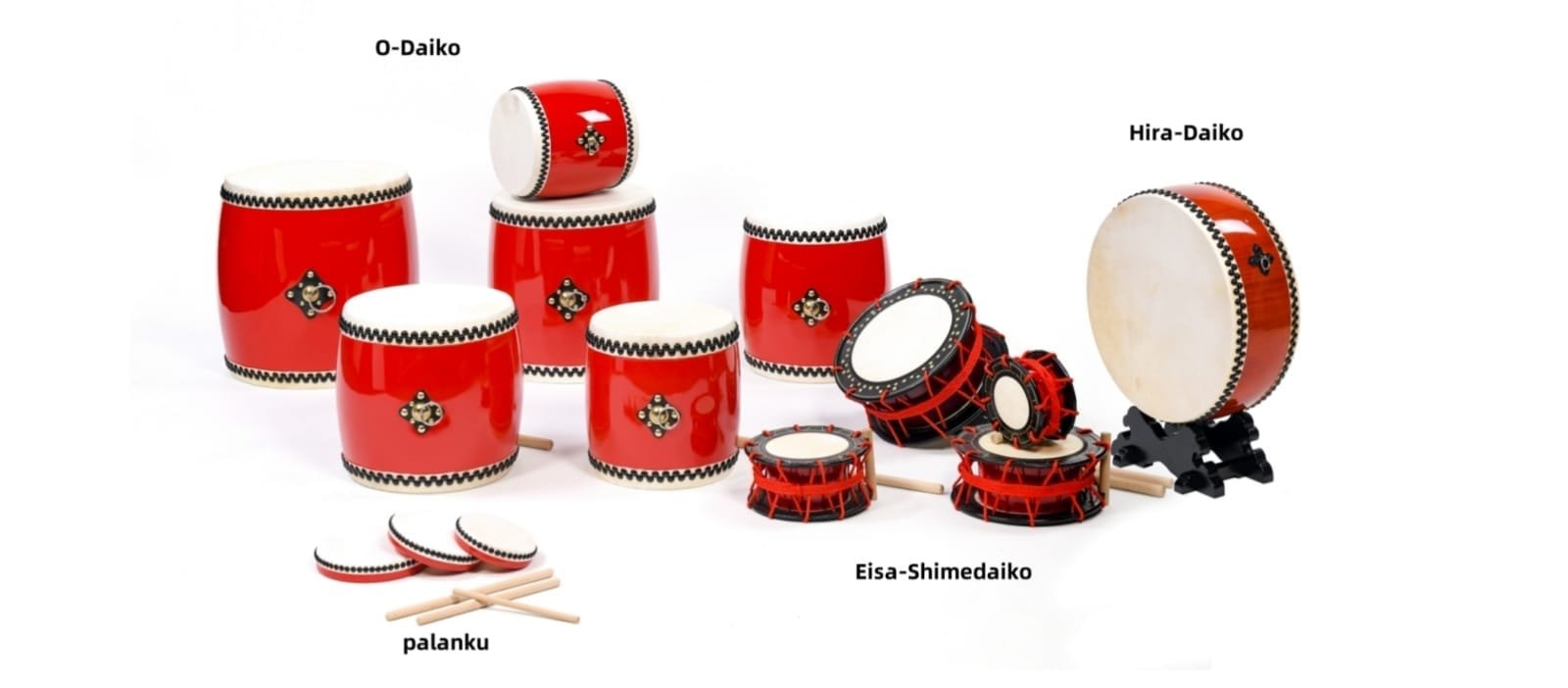
The purpose here is not to repeat a full guide to the different types of Taiko drums, but to understand how size works differently within each type.
Nagado Daiko: A Versatile Starting Point
For many buyers, Nagado Daiko is the easiest place to understand Taiko sizing.
As both head diameter and body size increase, the drum generally develops greater physical and low-frequency presence.
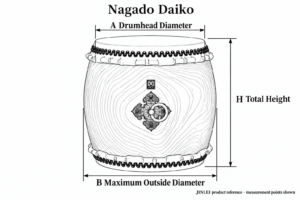
Using common Nagado dimensions as a practical reference:
For a first Taiko, the middle of the range is often a practical place to start. It provides enough playing surface and tonal presence for general ensemble use without immediately introducing the handling challenges of a very large drum.
That does not mean every beginner needs a 1.5-shaku Nagado. Player height, stand, rehearsal space, and intended use still matter.
Oke Daiko: When Portability Matters
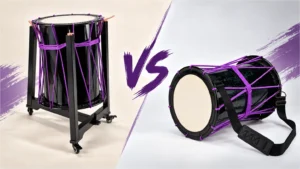
Oke Daiko uses a stave-built body and rope-tensioned construction, so its sizing logic differs from that of a hollowed Nagado.
This is particularly important for performers who need mobility. A larger head diameter does not necessarily create the same weight and handling challenges as a similarly sized solid-body drum.
For Oke, compare:
diameter + body depth + total weight + playing method
rather than diameter alone.
The key principle is simple:
Size, weight, and portability are three different specifications.
Hira Daiko: Large Diameter, Shallower Body
Hira Daiko demonstrates why diameter alone can be misleading.
Its relatively shallow body allows a substantial playing surface without the same body depth as a comparable Nagado.
For buyers looking for strong visual presence or a broad playing surface, this can make Hira a useful alternative to simply choosing a larger and deeper Nagado.
When comparing Hira sizes, pay attention to both head diameter and body depth.
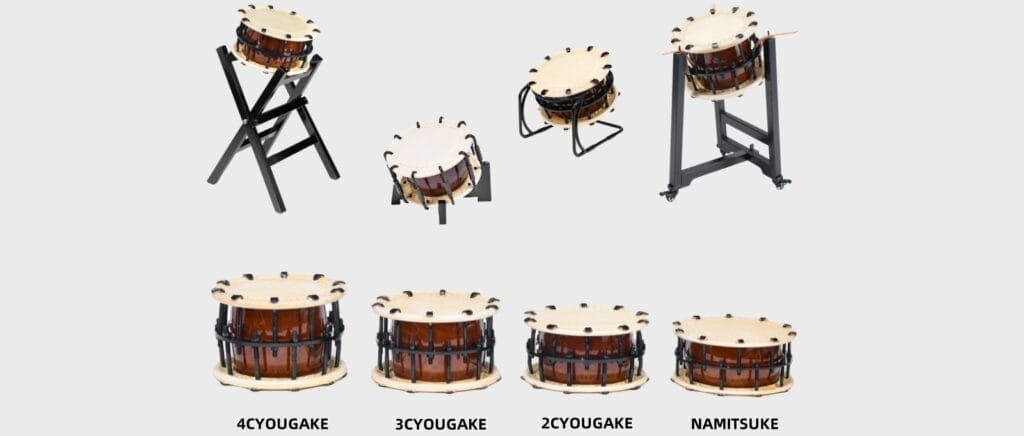
Shime Daiko: Choose by Musical Role
Shime Daiko should not be selected using the same sizing logic as Nagado.
Its role is typically higher, tighter, and more articulate, providing rhythmic definition within the ensemble. The goal is therefore not simply to choose a larger drum for more low-end sound.
Consider the required pitch, tension, playing position, and how the Shime needs to balance with the other Taiko in your ensemble.
O-Daiko: When Size Becomes Part of the Performance
With an O-Daiko, physical scale becomes part of both the musical and visual effect.
Larger instruments can provide powerful low-frequency presence and dramatic stage impact, but they also require more planning for stands, storage, transportation, and performance space.
For an O-Daiko, think in terms of the complete system:
Drum + stand + performance space + transportation
Choose the size according to the role it needs to play rather than simply maximizing diameter.
How Does Taiko Size Change the Sound?
Once you know which Taiko type you need, sound becomes one of the main reasons to choose one size over another.
In general, increasing the drumhead diameter tends to support a deeper tonal character and greater low-frequency presence.
This is useful in ensembles because different sizes can create different sonic layers:
Smaller / tighter voices → rhythmic clarity
Medium voices → main ensemble body
Larger voices → lower foundation and dramatic accents
But diameter is not the only factor.
Shell Depth Matters Too
Two Taiko with similar head diameters can sound different because of their shell depth, construction, tension, hide, and materials.
Nagado and Hira are a good example: similar diameters do not necessarily mean similar resonance or playing characteristics because their body proportions differ significantly.
For more detail on how construction and material influence tone, see How Taiko Drum Wood Affects Sound.
Bigger Does Not Automatically Mean Better
A larger Taiko can provide deeper tonal weight, but it also usually requires more space and handling.
More importantly, the deepest possible sound may not be what your ensemble needs.
A medium drum that balances naturally with the rest of the group can be more useful than a larger drum that dominates a small rehearsal or performance space.
A useful rule is:
Don’t buy the largest Taiko your budget allows. Buy the size that best fits the musical role.
Choose Your Taiko Size by How You Will Use It
The intended use of the drum can quickly narrow your options.
For Beginners
A smaller drum is not automatically easier to learn on.
A first Taiko should provide a comfortable playing position, sufficient playing surface, manageable handling, and enough versatility for future ensemble use.
For many adult beginners, a medium Nagado is a sensible starting point for comparison. Smaller setups may be more practical when space or portability is a priority.
For Children and Schools
For younger players, consider player height, stand height, weight, and ease of handling rather than diameter alone.
Schools should also think about shared use. A drum may be played by students of different ages, so the stand and overall setup need to accommodate more than one player.
A collection of manageable medium and smaller instruments is often more flexible than purchasing only large Taiko.
For Ensembles and Dojos
Established groups should ask:
Which voice is missing from our current setup?
Rather than buying every drum in the same size, an ensemble can combine Shime for rhythmic definition, medium Nagado for the main body, Oke for mobility or tonal variation, and larger drums for low-end impact.
The objective is tonal balance, not simply owning more drums.
For Stage and Mobile Performance
Stage performers need to consider both sound and visual scale. Larger Nagado and O-Daiko can be effective when the venue and arrangement justify their size.
For festivals, parades, and other mobile settings, priorities shift toward weight, portability, setup speed, and movement. Oke Daiko may therefore be a better choice even when a similar head diameter is available in another construction.
Player Height, Stand Height, and Playing Position
The drum itself does not determine playing height.
A better formula is:
Playing height = drum dimensions + stand configuration
Based on JINLEI’s practical setup experience, a useful starting reference for the height of the playing surface in a standard upright setup is around 70 cm for primary-school players and 75 cm for older students in many Asian markets. For many European and North American setups, starting references are often around 75 cm for primary-school players and 78 cm for older students. These are not universal ergonomic rules: individual height, arm length, stance, Taiko type, and stand angle should determine the final position.
Selected JINLEI Taiko stand models allow height or angle adjustment, helping schools and ensembles accommodate different players without choosing the drum by diameter alone.
The same Nagado can feel very different on an upright, angled, or low stand.
Before choosing a larger or smaller drum specifically for player height, check how the intended stand positions the playing surface. This is particularly important for children and for schools where several players share the same instrument.
Whenever possible, think of the Taiko and stand as one playing system rather than two separate purchases.
For a horizontally mounted O-Daiko, JINLEI commonly uses a center striking-point height of approximately 165–180 cm as a starting range. When ordering a custom JINLEI O-Daiko and stand, buyers can specify a comfortable center striking height so the complete setup matches the intended players and performance posture.
Don’t Forget Space, Storage, and Transportation
Before moving up to a larger size, ask:
- Can the drum be moved safely?
- Will it fit through doors and into your vehicle?
- Where will the drum and stand be stored?
- Does your rehearsal space provide enough playing clearance?
- Does the larger size offer a musical benefit that justifies the extra space?
These considerations become increasingly important for schools, touring groups, and large instruments such as O-Daiko.
Taiko Size Recommendation Chart
Use the following as a starting point rather than a fixed prescription:
| Use case | Taiko types to consider | Size direction | Main priority |
|---|---|---|---|
| First Taiko setup | Nagado Daiko | Medium | Versatility |
| Children or shorter players | Nagado Daiko or a lightweight setup | Small to medium | Comfortable use and handling |
| School program | Nagado Daiko plus Shime Daiko | Small to medium | Flexibility for shared use |
| General ensemble | A mixed Taiko setup | Mainly medium, supported by other sizes | Tonal balance |
| Mobile performer | Oke Daiko | Choose by weight and musical role | Portability |
| Limited storage space | Oke, Hira, or smaller Nagado | Compact setup | Space efficiency |
| Stage performance | Nagado Daiko | Medium to large | Sound and visual presence |
| Deep ensemble voice | Large Nagado or O-Daiko | Large | Low-frequency impact |
Once you identify the right category, compare the actual dimensions and specifications of individual models.
Common Taiko Sizing Mistakes
- Choosing by diameter alone: Shell depth, construction, and weight can make similarly sized Taiko very different.
- Assuming bigger is always better: Larger drums offer more low-end presence, but also require more space and handling.
- Ignoring the stand: Playing height depends on both the drum and its stand.
- Forgetting storage and transport: Make sure the complete setup works beyond the rehearsal room.
- Buying every drum in the same size: Mixed sizes can give an ensemble better tonal balance.
For additional purchasing considerations, see our Taiko Drum Buying Guide.
Final Thoughts
There is no single “best” Taiko size.
Start by deciding what the drum needs to do, then choose the appropriate Taiko type and compare sizes within that category. Consider sound, player comfort, stand height, storage, and transportation before making the final decision.
For many first-time buyers, a medium Nagado is a useful starting point—but a mobile performer, school, or established ensemble may arrive at a very different answer.
Ultimately, the right size is the one that fits your musical role, player, and real-world setup.
Browse JINLEI’s Taiko drums to compare available types and dimensions before choosing your setup.
Frequently Asked Questions
What is the best Taiko size for a beginner?
There is no universal beginner size, but a medium Nagado is often a useful starting point for adult beginners because it balances playing surface, sound, and versatility. Smaller setups may suit younger players or limited practice spaces.
What does 1.5 shaku mean on a Taiko drum?
One shaku is approximately 30.3 cm, so 1.5 shaku corresponds to about 45.5 cm. Always check what the measurement refers to and avoid comparing different Taiko types by shaku alone.
Is a bigger Taiko drum louder?
Not necessarily. Larger drums generally offer deeper tonal character and greater low-frequency presence, but perceived loudness also depends on tension, construction, playing technique, and room acoustics.
What size Taiko is best for children?
Smaller and more manageable Taiko are often practical, but player height, stand height, weight, and playing position are just as important as drum diameter.
Should a Taiko ensemble use different drum sizes?
Often, yes. Different sizes and types can provide rhythmic definition, a central ensemble voice, and deeper low-frequency support, creating a more balanced overall sound.
How do I choose between Nagado and Oke Daiko?
Start with intended use rather than diameter. Nagado is a versatile option for many stationary setups, while Oke’s stave-built construction makes it particularly useful when portability and flexible performance configurations matter.