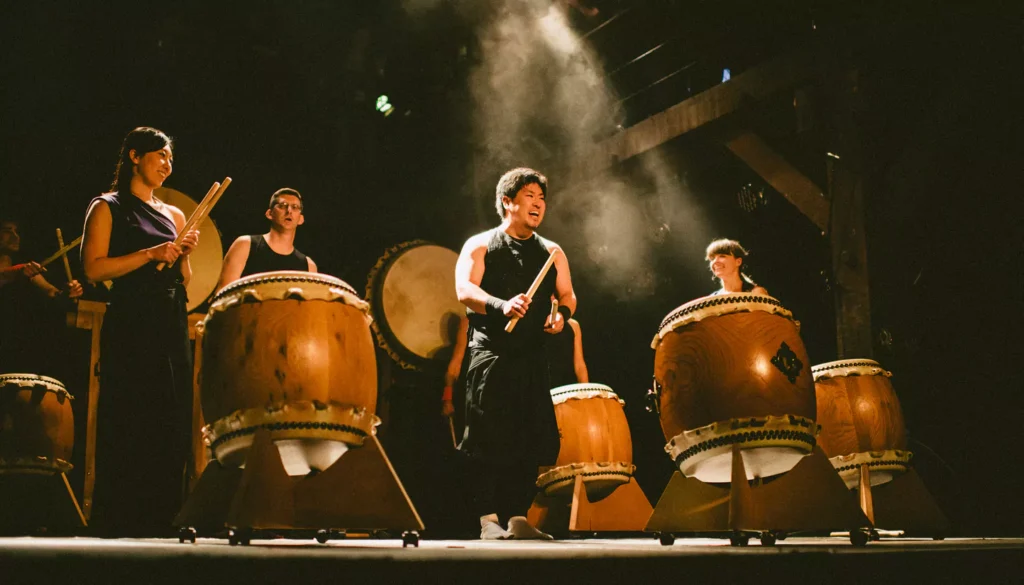
Taiko drums are designed to produce powerful, projecting sound, and a group of drums played together can become especially loud in an indoor rehearsal space. But there is no single reliable answer to the question, “How many decibels is a Taiko drum?”
The actual sound level depends on the type and size of the drum, the bachi, striking force, number of performers, distance from the instrument, and the acoustics of the room. A single Taiko played with controlled strokes in a large space is a very different listening environment from ten players rehearsing at full intensity in a small studio.
This distinction matters for more than comfort. According to the World Health Organization’s safe listening guidance, hearing risk depends on sound level, duration, and frequency of exposure. The louder the environment, the less time it takes for sound exposure to become a concern.
So instead of looking for one universal Taiko decibel number, it is more useful to understand what makes Taiko loud, how the surrounding space changes what you hear, and how to manage that sound appropriately.
Before Planning a School, Dojo, or Ensemble Rehearsal Space
Before choosing instruments or deciding whether a room is suitable, consider the complete rehearsal setup:
- how many people will play at the same time;
- the room size and the amount of hard, reflective surface;
- shared walls, floors, and ceilings;
- the duration and frequency of rehearsals;
- whether the session is for quiet technical work or full-intensity playing;
- where teachers, students, and other players will stand;
- whether you can measure the real rehearsal rather than estimate it;
- stands, bachi, floor isolation, storage, and hearing protection.
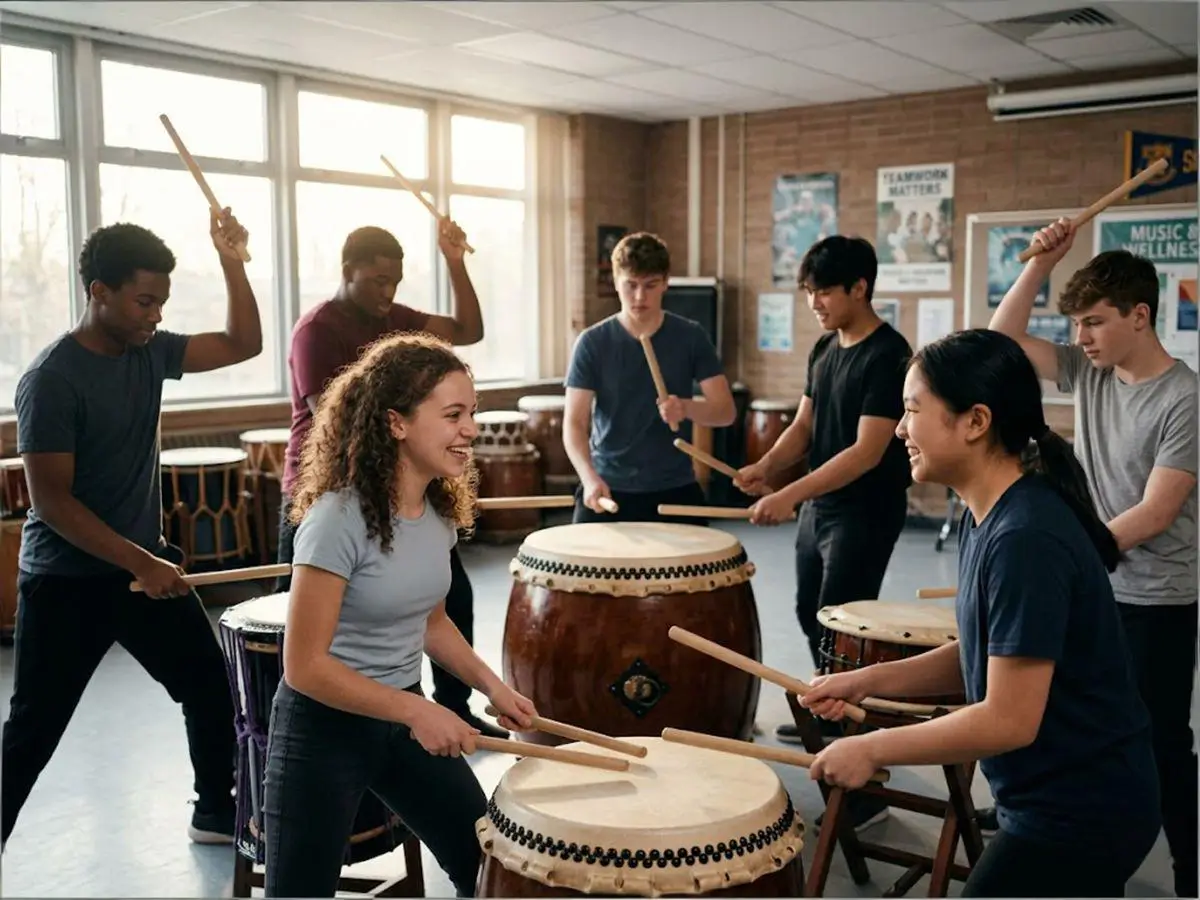
A smaller drum does not automatically create a low-exposure environment. A class of students playing smaller drums together in a reflective room may be more demanding than one player using a larger drum in a spacious hall.
Priorities for Different Taiko Organizations
Schools
Schools should evaluate class size, stand stability, safe spacing, lesson duration, nearby classrooms, and any applicable school or local safety requirements. A lesson can rotate students between drums, practice pads, movement, rhythm exercises, and observation so that every student does not need to play at full intensity throughout the class.
Taiko Dojos
Dojos should consider cumulative weekly exposure, especially for instructors and regular members. Test the room during a representative class—not only with one drum in an empty space—and distinguish technical practice from full-performance rehearsal.
Performance Teams
Performance groups should evaluate both their usual rehearsal room and the actual venue. Assess the full ensemble and plan for sound monitoring, quiet breaks, hearing protection, stand placement, and clear communication between players.
How Loud Is a Taiko Drum?
Taiko can produce high sound levels, particularly when played forcefully or as part of an ensemble. However, assigning a fixed decibel figure to “a Taiko drum” would be misleading.
Sound measurements can change significantly depending on:
- Taiko type and dimensions
- Drumhead tension and construction
- Bachi size, weight, and material
- Striking force and technique
- Distance from the drum
- Number of drums being played
- Indoor or outdoor environment
- Room size and acoustic reflections
Even measurements of the same drum can vary depending on where the sound level meter is positioned. This is why a statement such as “Taiko drums produce X dB” needs context before it is useful.
Putting Decibels Into Context
Decibels can be difficult to interpret without comparison. WHO gives approximate examples such as normal conversation at around 60 dB, heavy traffic heard from inside a car at around 85 dB, and a motorcycle at around 95 dB.
More importantly, sound level and exposure time work together. WHO’s safe-listening guidance uses 80 dB for up to 40 hours per week as one reference point, while at 90 dB the corresponding weekly safe-listening time falls to about four hours.
These figures should not be interpreted as a measurement of Taiko itself. They simply illustrate why knowing that an instrument is “loud” is not enough—the duration and repetition of exposure also matter.
For Taiko players, that means a short outdoor performance and a two-hour indoor rehearsal should not automatically be treated as equivalent sound-exposure situations.
Measure the Real Rehearsal Environment
If sound exposure affects your planning, measure a representative rehearsal with:
- normal attendance and the usual combination of instruments;
- typical playing intensity, including any full-ensemble passages;
- readings from player, instructor, and other relevant positions;
- different zones of the room; and
- the full rehearsal duration, not only a brief peak.
A phone app can be useful for preliminary screening, but formal assessment may require calibrated equipment and a qualified professional. Record the date, room, number of players, duration, instruments, measurement positions, and results so that later changes can be compared consistently.
The WHO safe-listening guidance and NIOSH noise resources both emphasize that exposure depends on sound level and time. A measurement without duration and location is therefore incomplete.
What Makes One Taiko Louder Than Another?
Taiko loudness is not controlled by a single feature. Drum dimensions matter, but so do construction and the way the instrument is played.

Drum Size
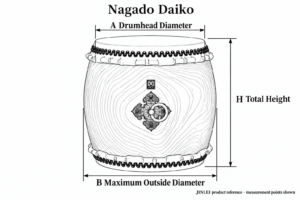
Larger Taiko generally offer greater low-frequency presence and can create a stronger physical sense of sound. However, bigger does not automatically mean proportionally louder.
Increasing diameter changes the tonal character and vibrating surface of the instrument, but actual sound level still depends on construction, tension, striking force, and other factors.
This distinction is important when choosing a drum. If you are deciding between different dimensions, see our Taiko sizing guide for a fuller explanation of how diameter, shell depth, player needs, and intended use should influence the decision.
In practical terms, choose a larger drum because you need its tonal character and musical role, not simply because you want more volume.
Taiko Type and Construction
Different types of Taiko drums also produce different sound characteristics.
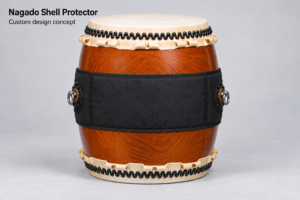
A deep-bodied Nagado can provide substantial resonance and projection, while a tightly tensioned Shime produces a higher, more cutting attack that can remain clearly audible within an ensemble. Large O-Daiko emphasize powerful low-frequency presence, while the construction and tensioning of Oke Daiko create another distinct response.
This means perceived loudness is not simply about which drum has the largest diameter. A high, sharp attack may appear particularly prominent to the listener even when another instrument produces more low-frequency energy.
Bachi and Striking Technique
The drum is only half of the sound-producing system. The other half is what strikes it.
The dimensions, weight, material, and shape of Taiko bachi influence the attack and playing response. A heavier bachi combined with a forceful stroke can produce a very different result from lighter sticks used for controlled technical practice.
Players do not need to strike at maximum force during every rehearsal. Technique-focused practice can often be performed at reduced intensity, especially when the objective is timing, kata, sticking patterns, or ensemble coordination rather than full performance projection.
For schools and indoor rehearsal groups, separating technical practice volume from performance volume can be one useful way to manage overall sound exposure.
Why Does Taiko Feel So Much Louder Indoors?
Anyone who has played the same Taiko outdoors and inside a small room has probably noticed the difference immediately.
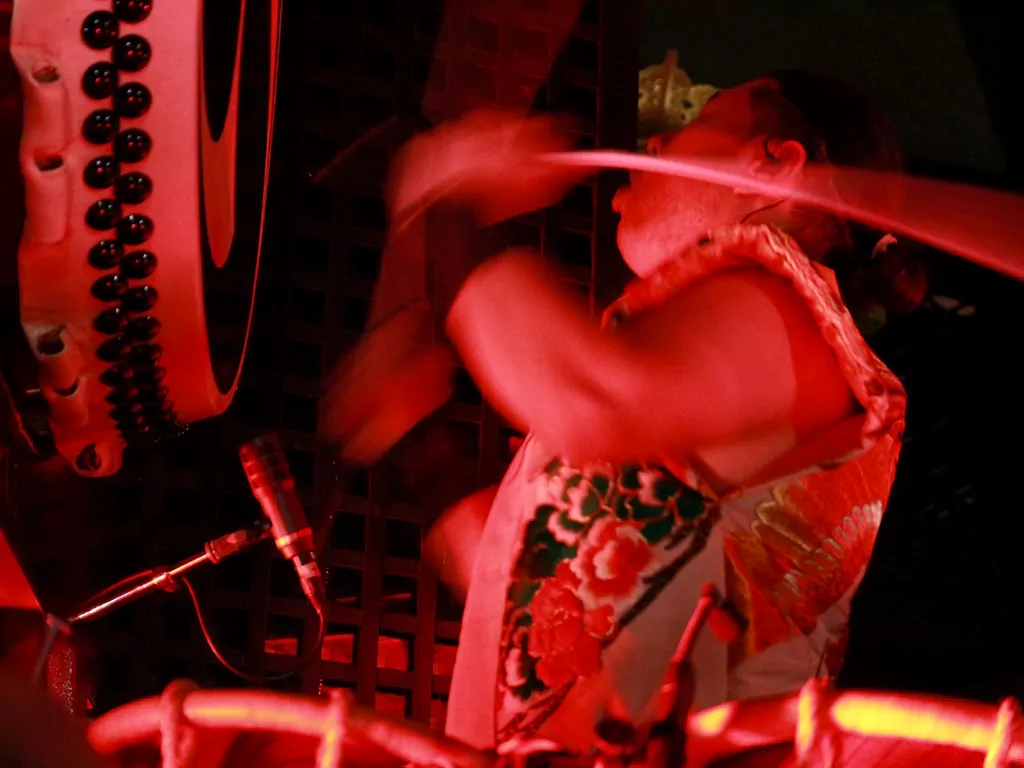
Outdoors, sound energy can disperse over a much larger area. Indoors, sound interacts with the room. Walls, floors, ceilings, windows, and other hard surfaces reflect sound back into the space. When several Taiko are being played at once, those reflections combine with the direct sound from the drums.
This can make a rehearsal room feel considerably more intense than an open-air performance.
Room Size and Reflective Surfaces Matter
A small room with concrete floors, bare walls, and a low ceiling generally creates a different listening environment from a large hall containing curtains, acoustic panels, upholstered seating, or other absorptive materials.
A player standing immediately beside several drums receives a different exposure from an audience member positioned much farther away. The question “Is this Taiko too loud for indoors?” cannot be answered from drum size alone.
You also need to consider: room size + surfaces + number of players + distance + rehearsal duration.
Acoustic Treatment Is Not the Same as Soundproofing
Acoustic treatment is primarily intended to control how sound behaves inside a room. Absorptive panels, curtains, rugs, and similar materials can reduce reflections and make a rehearsal space less harsh or reverberant.
Soundproofing, by contrast, is intended to reduce sound transmission between spaces. That typically requires structural measures involving walls, doors, floors, ceilings, gaps, and isolation.
Adding a few acoustic panels may make a Taiko room more comfortable to rehearse in, but it does not necessarily stop neighbors or people in the next room from hearing the drums.
Taiko and Hearing Safety
Because Taiko can create high sound levels, hearing safety deserves consideration—particularly during long or frequent indoor rehearsals. The key principle is that hearing risk depends on both sound level and exposure duration.
The U.S. National Institute for Occupational Safety and Health (NIOSH) recommends an occupational exposure limit of 85 dBA averaged over eight hours, using a 3 dB exchange rate: as sound level rises by 3 dB, the recommended exposure duration is cut in half. Read the current NIOSH occupational noise resources.
These occupational guidelines are not a Taiko-specific limit, nor are they a substitute for measuring your actual rehearsal environment.
Should Taiko Players Wear Hearing Protection?
Hearing protection becomes more worth considering with:
- multiple drums;
- a small or highly reflective room;
- long rehearsals;
- frequent weekly practice;
- players positioned close to loud instruments;
- repeated full-strength ensemble passages; or
- temporary ringing, muffled or dull hearing, or unusual listening fatigue after rehearsal.
For ensembles that rehearse regularly, measuring the actual sound level is more useful than estimating exposure from drum size alone. The WHO standard for safe listening venues and events emphasizes sound-level monitoring, hearing protection, and quiet zones. The broader principle is relevant: sound exposure should be actively managed rather than guessed.
Musicians’ earplugs are designed to provide a more balanced reduction across frequencies than basic foam plugs and may make ensemble cues easier to hear. Fit and attenuation still matter, and hearing protection should be combined with room choice, controlled intensity, breaks, spacing, and monitoring.
Temporary ringing or muffled hearing can be a warning sign. If tinnitus or hearing changes persist, or if a player experiences ear pain or difficulty following conversation, seek advice from a qualified hearing-health professional. This article provides general planning information and is not a medical or occupational noise assessment.
What About Children and School Taiko Programs?
Schools should take particular care when planning group Taiko activities, particularly where students are young, class sizes are large, or lessons take place in ordinary classrooms.
Consider the whole environment: number of students + room acoustics + rehearsal duration + distance between players + playing intensity.
A smaller drum does not automatically solve a loudness problem. Ten students playing smaller drums together in a reflective classroom can still create a very different sound environment from one student practicing alone.
Schools can combine appropriate room selection, stable stands, safe spacing, controlled rehearsal intensity, quiet breaks, and hearing-safety practices. Teachers can rotate students between playing, pad work, movement, rhythm exercises, and observation rather than having the whole class play continuously.
Choosing a Taiko for Your Practice Space
Loudness should not be the only reason to choose one Taiko over another, but your normal practice environment should influence the decision.
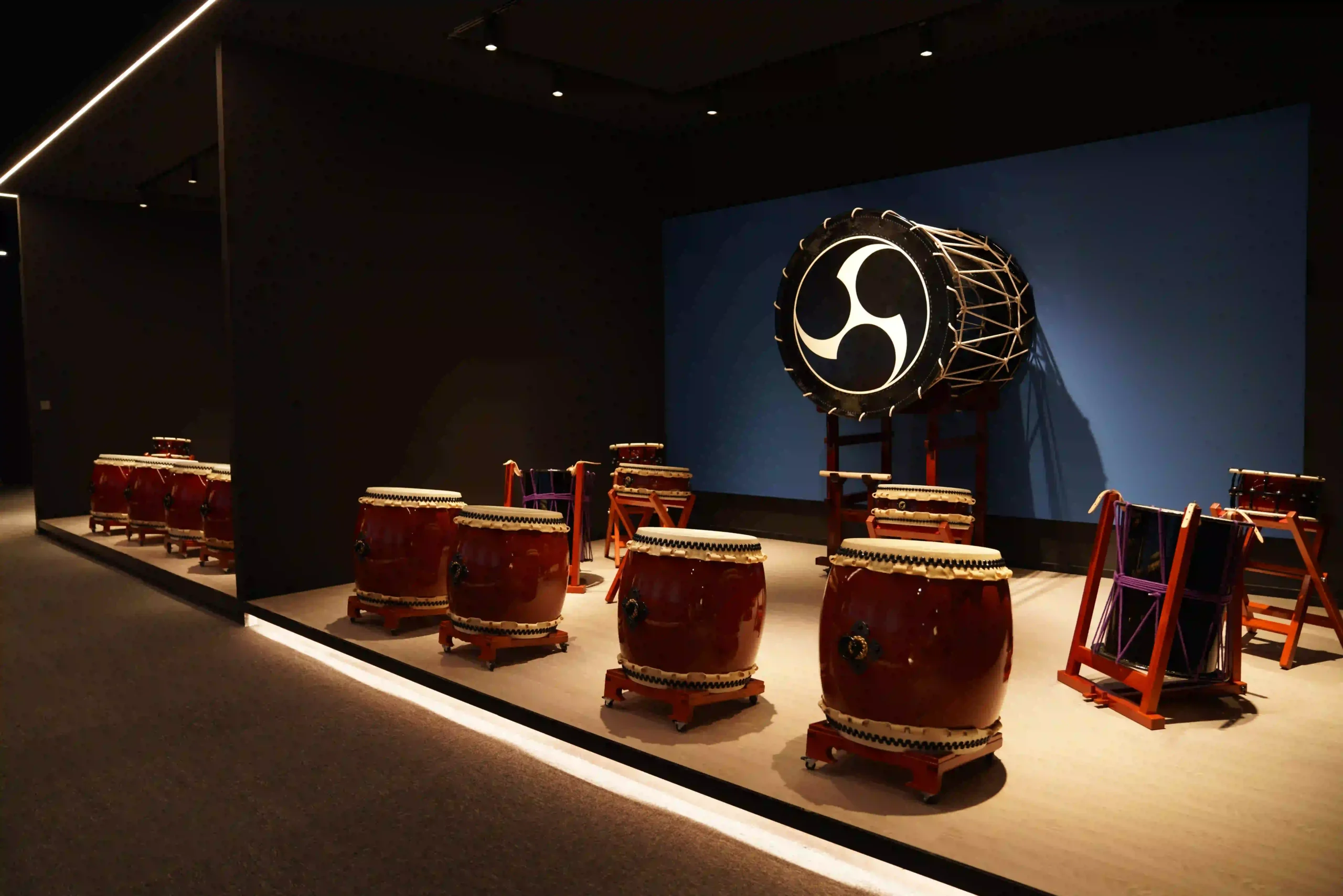
Nagado Daiko
A Nagado Daiko is a versatile foundation for many groups, but the appropriate diameter and quantity depend on the room, stand arrangement, number of players, and expected intensity.
Shime Daiko
A Shime Daiko is smaller, but its tight head and sharp attack can remain prominent in an ensemble. Smaller dimensions should not be taken to mean lower sound exposure.
Oke Daiko
An Oke Daiko is portable and flexible for movement, but its sound level still depends on tension, bachi, technique, and the number of simultaneous players.
O-Daiko
Choose an O-Daiko for its musical, visual, and low-frequency role—not simply to make the group louder. Its space, stand, transport, and rehearsal requirements should be planned before purchase.
Our Taiko Drum Buying Guide covers broader purchasing factors, while the Taiko drum collection lets you compare constructions and sizes.
Practical Ways to Manage Taiko Rehearsal Volume
- separate technical practice from full-performance rehearsal;
- use practice pads for repetitive sticking work;
- reduce striking force when projection is not the objective;
- avoid having every player perform at maximum intensity throughout the session;
- rotate players and build quiet breaks into longer rehearsals;
- select bachi appropriate to the drum and task, and sand or replace splintered bachi;
- increase spacing where the room permits;
- use suitable floor isolation when structure-borne vibration is a concern;
- schedule full-volume work in a suitable room; and
- measure representative rehearsals and review the results.
Taiko Equipment Planning Checklist
Before ordering instruments, confirm the musical role, type, size, and quantity of each drum; room dimensions and surfaces; stable stands and player spacing; appropriate bachi and practice pads; floor protection; monitoring, breaks, and hearing protection; and transport, inspection, and maintenance.
JINLEI can help organizations compare Taiko types, sizes, stands, and accessories against their player numbers, repertoire, room, storage, and transport needs. Final decisions about room suitability, sound exposure, and hearing controls should be based on site-specific assessment and applicable local requirements.
Final Thoughts
Taiko can produce powerful sound, but there is no single answer to “How loud is a Taiko drum?” Drum type, size, bachi, playing technique, ensemble size, distance, and room acoustics all influence what players and listeners experience.
Choose a Taiko for the musical role you need, then plan the instrument mix, room, stands, spacing, practice intensity, monitoring, breaks, and hearing protection together. Browse JINLEI’s Taiko drums or read our Taiko Drum Buying Guide.
For a school, dojo, or ensemble setup, JINLEI can recommend an instrument configuration based on your player numbers, repertoire, room dimensions, storage, and transport needs.
Frequently Asked Questions
How many decibels is a Taiko drum?
There is no single reliable decibel figure for Taiko. Actual sound levels vary with drum type, size, tension, bachi, striking force, distance, room acoustics, and the number of players.
Is a smaller Taiko suitable for a classroom?
It may be easier to position and store, but smaller does not automatically mean quiet. Consider the number of students, room reflections, playing intensity, lesson duration, stands, and spacing.
How many Taiko drums can be played in one room?
There is no universal number. The answer depends on room size and surfaces, instrument mix, player positions, rehearsal duration, and intensity.
Does every Taiko player need hearing protection?
Not necessarily for every session, but hearing protection may be appropriate for loud, long, or frequent rehearsals. Assess actual exposure and combine protection with monitoring, breaks, spacing, and volume management.
Can acoustic panels stop Taiko sound reaching the next room?
Acoustic panels mainly reduce reflections inside a room. They do not necessarily prevent sound or vibration from passing through walls, doors, floors, and ceilings.
Can a normal classroom host a full Taiko rehearsal?
Possibly, but do not assume it is suitable based on floor area alone. Consider reflective surfaces, nearby rooms, class size, stands, circulation, duration, and intensity.
Are Taiko drums louder than regular drums?
Not necessarily in every situation. Both Taiko and modern drum kits can produce high sound levels. Taiko is particularly noticeable because of its strong attack, projection, low-frequency energy, and ensemble effect.
Can I practice Taiko in an apartment?
Quiet technique practice may be possible, but regular full-force Taiko playing can be difficult because both sound and vibration may travel through walls and floors.
Does a bigger Taiko drum sound louder?
Not automatically. Larger Taiko generally provide greater low-frequency presence, but loudness also depends on construction, head tension, bachi, technique, and acoustics.
Should Taiko players wear hearing protection?
Hearing protection may be appropriate during loud, long, or frequent rehearsals, particularly in small reflective rooms or when multiple drums are played nearby.