What Is Taiko?
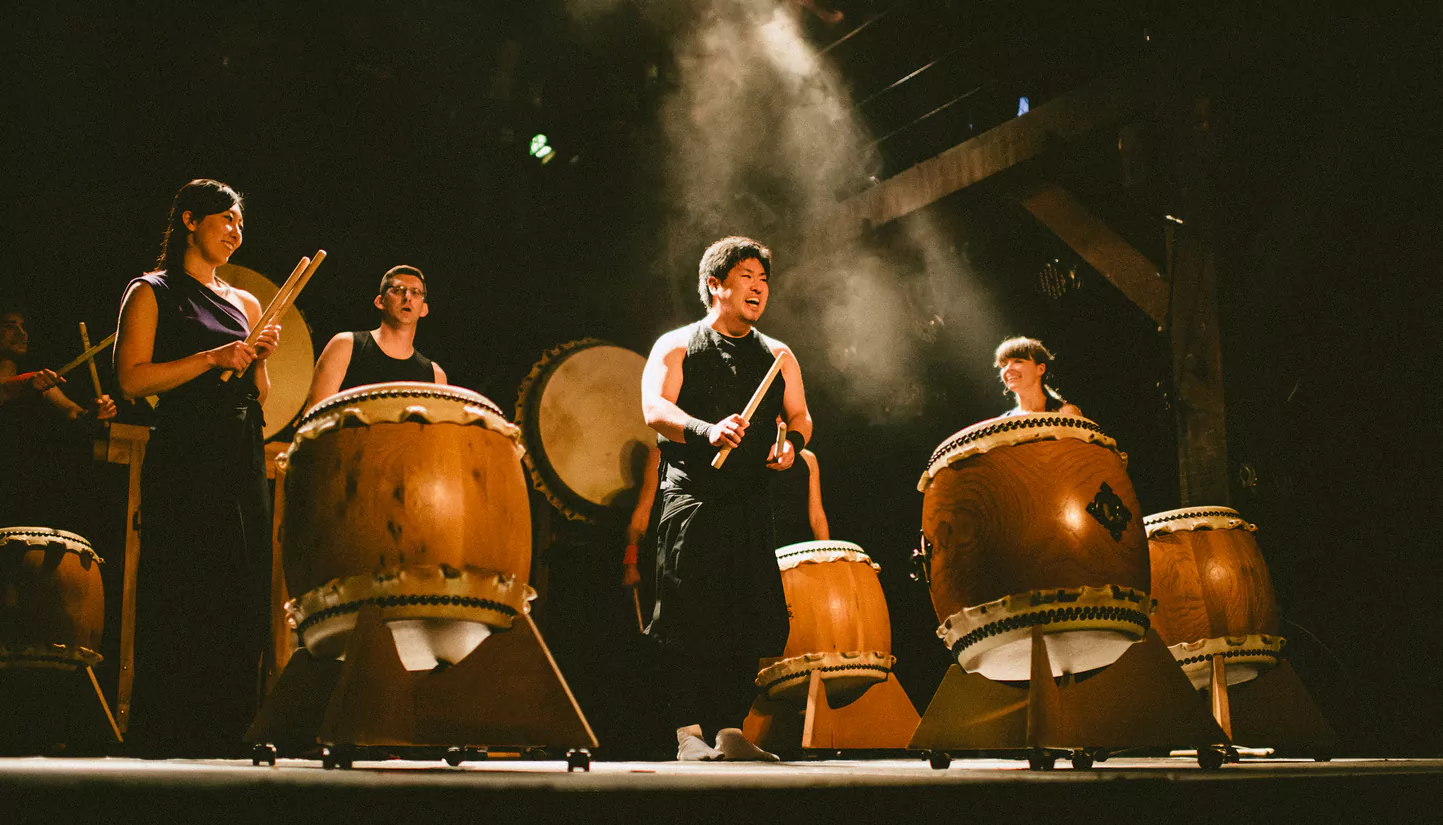
Taiko is the Japanese word for “drum.” Outside Japan, the term commonly refers to Japanese taiko performance, especially kumi-daiko: ensemble drumming that combines instruments of different sizes with coordinated rhythm, movement, and group performance.
Taiko has long been used in Japanese religious ceremonies, festivals, theater, and community events. Modern ensemble taiko developed in the 1950s and later spread internationally, where performers adapted the art for schools, community groups, and concert stages.
This guide explains the main taiko drum types, how they are constructed and used, and practical ways for beginners to start learning.
You will also find links to drum categories, bachi, and related beginner resources from JINLEI.
What Is Taiko? History and Cultural Significance
To understand Taiko, it helps to see it as more than just a drum. It is a performance tradition with deep cultural roots and a history that spans centuries across Asia. While Taiko is closely associated with Japan today, the use of drums in rituals, ceremonies, and communication can be traced throughout many parts of Asia, including early influences from China and neighboring regions.
From Ancient Traditions to the Modern Stage
Early Ritual and Community Use
In ancient societies across Asia, drums played an important role in religious ceremonies, seasonal festivals, and community gatherings. In Japan, large drums gradually became part of local traditions and were often used in shrines and ceremonial events. People believed drum sounds could connect communities, mark important occasions, and create a sense of spiritual presence.
Military and Practical Functions
As societies evolved, drums also served practical purposes. During periods of warfare, large drums were used to coordinate movement, deliver signals, and communicate across long distances. Their powerful sound made them effective tools on battlefields and during military processions.
The Rise of Modern Ensemble Taiko
For much of history, Taiko was used mainly in religious events and local traditions. Modern Taiko performance as we know it today emerged in the 1950s, when drummer Daihachi Oguchi introduced the idea of ensemble drumming, known as Kumi-daiko. Instead of using a single drum, he arranged different Taiko drums together and created coordinated group performances. This approach transformed Taiko into a dynamic stage art that later spread around the world.
More Than Rhythm: The Spirit Behind Taiko
Taiko is not only about rhythm or musical technique. Traditional practice emphasizes the connection between movement, focus, and expression. Many performers see Taiko as a discipline that combines physical technique with mental concentration and group coordination. This balance of rhythm, movement, and energy is one of the reasons Taiko continues to resonate with audiences today.
1. Kata (型) – Form, Posture and Movement
In taiko, kata refers to the physical form used while playing, including stance, posture, grip, and movement. The exact form varies among groups and teachers, but efficient movement and control help players produce a consistent sound while reducing unnecessary strain.
2. Ki (気) – Energy and Presence in Performance
Some taiko schools use the Japanese concept of ki to describe a performer’s focus, intention, and projected energy. Interpretations vary by teacher and tradition, so it is best understood as a performance concept rather than a measurable physical force.
Why this matters: Taiko training can combine rhythm, coordinated movement, concentration, and ensemble awareness. Beginners should learn technique gradually with guidance from an experienced instructor.
The 3 Main Types of Taiko Drums You Should Know
When you see a modern Taiko ensemble (Kumi-daiko) on stage, you are looking at a carefully orchestrated family of percussion. Just like a Western drum kit has snare drums, tom-toms, and bass drums, a Taiko ensemble relies on different types of drums to build its massive, layered soundscape.
If you want to understand the mechanics of Japanese drumming—or if you are looking to identify the specific sound that resonates with you—here are the three main types of Taiko drums you need to know.
1. Nagado-daiko (長胴太鼓) — The Iconic Long-Body Drum

The Nagado-daiko (literally “long-body drum”) is the ultimate icon of Japanese drumming. When people think of Taiko, this is almost always the drum they picture.
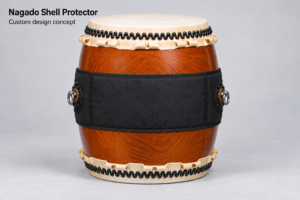
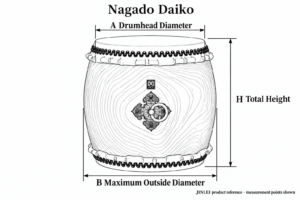
- Construction: Traditional Nagado bodies may be hollowed from a single log, while other well-made models use joined wooden staves. Both are established construction approaches; material, dimensions, drumhead tension, and workmanship all affect weight, price, and sound.
- Sonic role: Nagado-daiko usually provides a full, low-to-mid register foundation. Its exact tone and projection depend on the body material, construction, size, drumhead, and playing technique.
2. Shime-daiko (締太鼓) — The High-Pitched Timekeeper
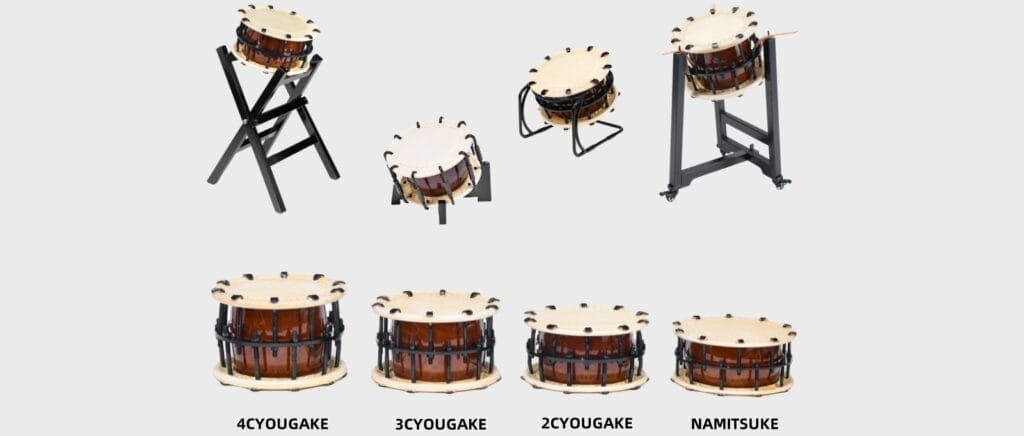
If the Nagado-daiko is the heavy bass, the Shime-daiko is the driving snare drum of the ensemble.
- The Craftsmanship: Unlike its massive counterpart, the Shime-daiko is much smaller and flatter. Its unique feature is the tuning mechanism. The drumheads are stretched over iron rings and then laced together across the wooden body using thick ropes (Nawa) or modern steel bolts.
- The Sonic Role: By tightening the ropes or bolts, players can tune the drumhead to an incredibly high tension. This produces a sharp, crisp, and penetrating sound that easily cuts through the booming bass of the larger drums. In a performance, the Shime-daiko player acts as the conductor or timekeeper, driving the tempo and keeping the entire troupe in perfect synchronization.
3. Oke-daiko (桶胴太鼓) — The Lightweight, Versatile Performer

The Oke-daiko (literally “barrel-body drum”) brings incredible versatility and dynamic movement to modern Taiko stages.
- The Craftsmanship: Instead of being carved from a single log, the body of an oke-daiko is constructed using individual wooden staves joined together, much like a traditional Japanese wooden bucket or a wine barrel. This makes the drum remarkably lightweight compared to its size. Like the Shime-daiko, it uses a rope-tension system for tuning.
- The Sonic Role: Because it is so light, players don’t just leave it on a stand—they frequently attach a strap and sling the oke over their shoulder. This allows musicians to move freely across the stage, dancing, leaping, and striking both sides of the drum simultaneously. Sonically, it offers a bright, punchy, and lively tone that bridges the gap between the deep bass and the sharp treble of the other drums.
At-a-Glance: Taiko Type Comparison
To help you visualize how these instruments work together, here is a quick reference guide:
| Drum Type | Main Characteristic | Primary Sonic Role | Performance Style |
| Nagado-daiko | Hollowed-log or stave-built body | Deep, thundering bass | Fixed on heavy stands; powerful, grounded stance |
| Shime-daiko | Rope or bolt-tensioned | Sharp, high-pitched crack | Leads the rhythm and tempo (the “conductor”) |
| oke-daiko | Lightweight barrel staves | Bright, punchy mid-range | Mobile; often slung over the shoulder for dynamic dancing |
Why Is Taiko Becoming Globally Popular?
Walk into a major city anywhere from New York to London, Sydney, or Vancouver, and you are highly likely to find a thriving local Taiko community. What was once an ancient regional tradition has transformed into a massive global movement.
People around the world aren’t just watching Taiko performances—they are actively signing up for classes and buying equipment to join the rhythm themselves. Why? Because Taiko offers a unique blend of benefits that few other art forms can match.
Physical Demands and Technique
Taiko can involve repeated arm movements, coordinated footwork, and sustained posture. The physical demands vary by drum, repertoire, technique, and performance length. Beginners should build endurance gradually and use instruction that emphasizes efficient movement.
Regular practice can develop coordination and stamina, but taiko should not be presented as equivalent to a specific exercise or calorie-burning program without supporting measurements. Players with health concerns should choose an appropriate intensity and seek professional advice when needed.
Focus and Well-Being
Many players describe taiko practice as absorbing and mentally engaging because it requires attention to rhythm, movement, and the ensemble. Individual experiences differ, and taiko should not be presented as a guaranteed treatment for stress or anxiety.
For some participants, rehearsing and performing with a group can provide enjoyment, creative expression, and a sense of focus. These are personal and community experiences rather than medical outcomes.
Community & Teamwork: The Power of Human Connection
At its heart, modern Taiko (Kumi-daiko) is a team sport. It relies entirely on cooperation, listening, and mutual respect. When an ensemble plays together, you aren’t just playing your own part; you are breathing together, moving in synchronization, and matching each other’s energy.
This creates an incredible sense of belonging and community. In a world where genuine human connection can sometimes feel rare, joining a Taiko group introduces you to a supportive, passionate community of diverse individuals all working to create one powerful, unified sound. It is a profoundly joyful experience to feel your own heartbeat sync up with the collective rhythm of a room full of people.
The Best Part? You don’t need to be a trained musician or a lifelong athlete to experience these benefits. Taiko is highly accessible, welcoming beginners of all ages, backgrounds, and fitness levels.
How to Start Your Taiko Journey: A Beginner’s Checklist
Starting your journey into the world of Japanese drumming is incredibly exciting, but you might be wondering: Do I need to buy a massive, expensive wooden drum just to get started? The short answer is no. One of the best things about Taiko is that the barrier to entry is remarkably low. You can build your rhythm, master your form, and develop your strength right from the comfort of your home with just a few essential, budget-friendly tools.
Here is your official beginner’s checklist to kickstart your Taiko practice today.
1. Get the Right Bachi (Drumsticks)
Before you play, choose bachi that suit the drum, repertoire, and your technique. Many taiko bachi use a straight cylindrical profile, but shape, taper, length, diameter, weight, and wood vary by drum type and playing style.
- Hou (ホウ / Magnolia): Lightweight and relatively soft. It is often chosen for practice and for players who prefer a lighter stick, although the right dimensions still depend on the drum and technique.
- Hinoki (ヒノキ / Japanese Cypress): Lightweight with a distinct grain and feel. It is used for some taiko bachi, but players should select size and weight according to the drum, repertoire, and instructor guidance.
Ready to find your rhythm? A great pair of drumsticks makes all the difference. Check out our premium, handcrafted Bachi here to find the perfect weight and length for your hands.
2. Set Up a Practice Pad
You don’t need a thundering, full-sized Nagado-daiko in your living room to practice your Kata (form). In fact, practicing on a specialized Taiko training pad is highly recommended for beginners.
A high-quality Taiko practice pad is designed to mimic the firm rebound and unique tension of an actual cowhide drumhead. It allows you to build muscle memory, practice your timing, and execute powerful swings without vibrating the entire house or disturbing your neighbors. It is the ultimate tool for quiet, consistent, and effective home practice.
Explore available equipment: Visit the JINLEI shop to browse current drums, bachi, stands, and accessories.
3. Find a Taiko Community or Online Course
Taiko is a deeply visual and social art form. Once you have your Bachi and practice pad, the next step is to learn the foundational rhythms and movements from experienced instructors.
- Join a Local Group: Look for local taiko groups, clubs, or dojos (道場) in your area. Learning with an experienced instructor can help you develop safe movement, timing, and ensemble skills.
- Enroll in an Online Course: If there isn’t a studio near you, don’t worry! High-quality online video courses can guide you step-by-step through the essential stances, stick grips, and traditional songs at your own pace.
See JINLEI videos: Visit the JINLEI YouTube channel for product and performance videos. For lessons, search for an established taiko group or instructor in your region.
Conclusion & Frequently Asked Questions
Taiko combines sound, movement, and ensemble coordination. Its traditions developed in Japan and continue to evolve through performers, schools, and community groups around the world.
Beginners can start with suitable bachi, a practice surface, and instruction from an experienced teacher before choosing a full drum setup.
Frequently Asked Questions About Taiko
To help you quickly navigate the essentials of this traditional art form, here are answers to some of the most common questions beginners ask:
Q: What does “Taiko” mean in Japanese?
A: In Japanese, taiko (太鼓) means “drum.” In Japan it can refer broadly to drums, while outside Japan the word often refers to Japanese taiko performance, particularly ensemble drumming known as kumi-daiko.
Q: Is Taiko drumming hard to learn for beginners?
A: Beginners can learn foundational rhythms and movements, but difficulty varies with the repertoire, physical demands, and teaching style. Developing consistent timing, efficient kata, and ensemble awareness takes regular practice and experienced instruction.
Q: What woods and construction methods are used for taiko drums?
A: Taiko drums use several woods and construction methods. Keyaki (Japanese zelkova), oak, and ash are hardwoods used in some models. Paulownia and softwoods may be used for lighter instruments or particular designs. Nagado bodies may be hollowed from a single log or assembled from wooden staves; neither method alone determines whether a drum is genuine or suitable for a player.