It is very common to happen that you raise your bachi with excitement, expecting a thunderous roar. But Instead of the powerful sound, the drum gives you a weak one.
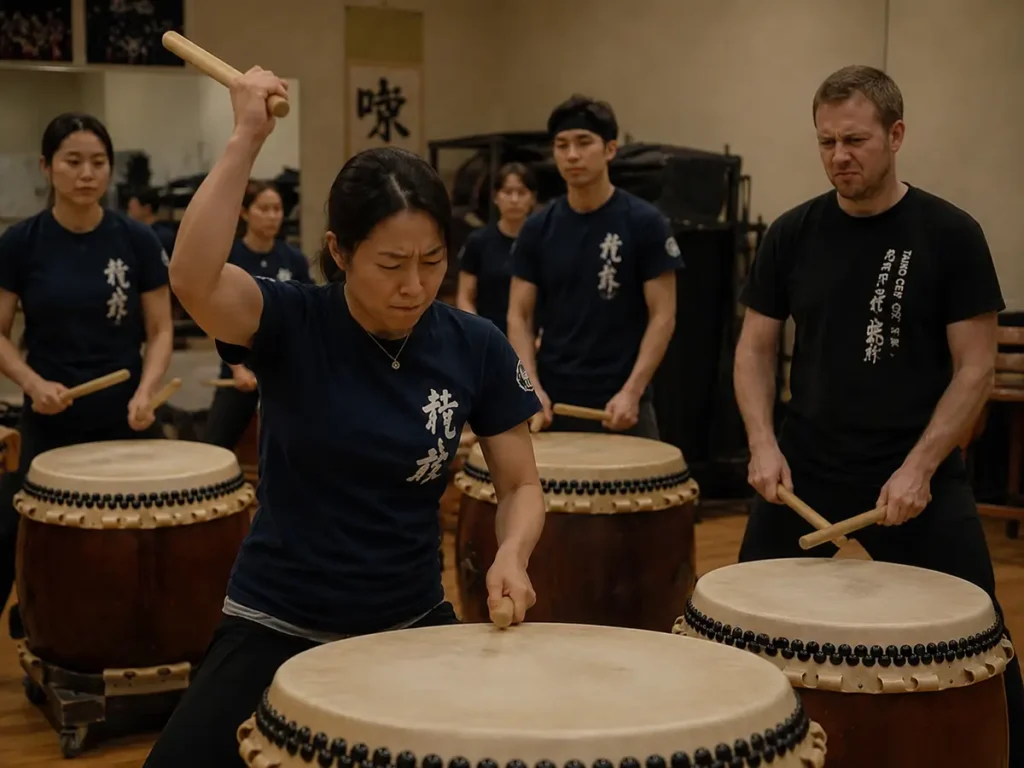
You might wonder if your drum is dead or not. Actually, most of the time, the drum isn’t dead. It’s just tired.
A taiko drumhead has life. Its quality will be affected by the weather, and it can get tired from long term playing. Today, let us talk about how to help your taiko find its voice again.
Part 1: The physics of sound
Before we start treatment, we need to understand some fundamentals of taiko drums. We can use bedsheets as the example. If you and your partner pull the sheet as tight as you can and slap it. It will make a sharp snapping sound. Taiko works the same way.
Higher tension equals a faster return to position, producing a brighter sound, while lower tension producing a flat sound.
For taiko, we don’t just want the loudness. We are chasing resonance. Only when the tension of drumhead is at its perfect sweet spot, it can produce a shaking roar.
Part 2: Three Common Killers
Sometimes a new drum sounds great, but a year later, it will totally change. There are three common killers of this situation.
Firstly, humidity is the taiko’s biggest enemy. The cowhide often absorbs moisture. When it rains, the head absorbs water. Its tension disappears instantly. Many people think the drum is broken. Actually, you just wait for a drier weather, and the sound usually comes back.
And then, creep is another reason. This is a physics term. Every material under long term stress will slowly deform. A taiko head endures extreme stress daily and your heavy strikes. This is an irreversible physical law.
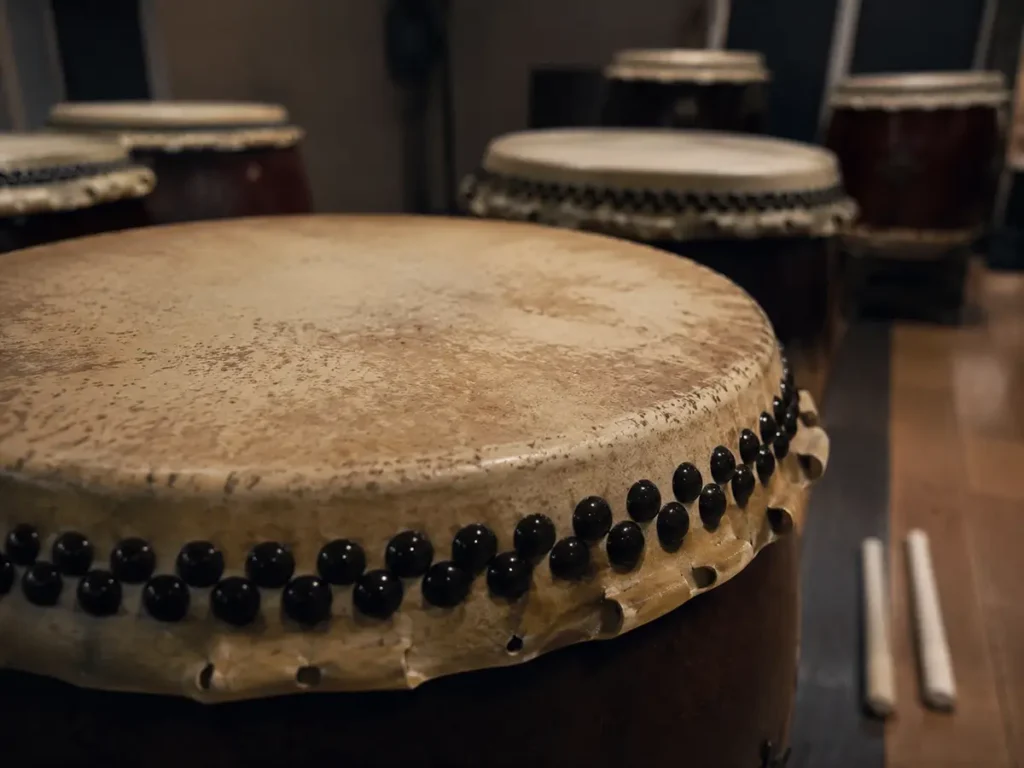
Finally, the drum sometimes isn’t the problem. You’re hitting the wrong spot. If you always hit the edge near the tacks,the sound will naturally be dead.
Part 3: How to Save Your Taiko?
Different types of taiko require completely different treatment plans.
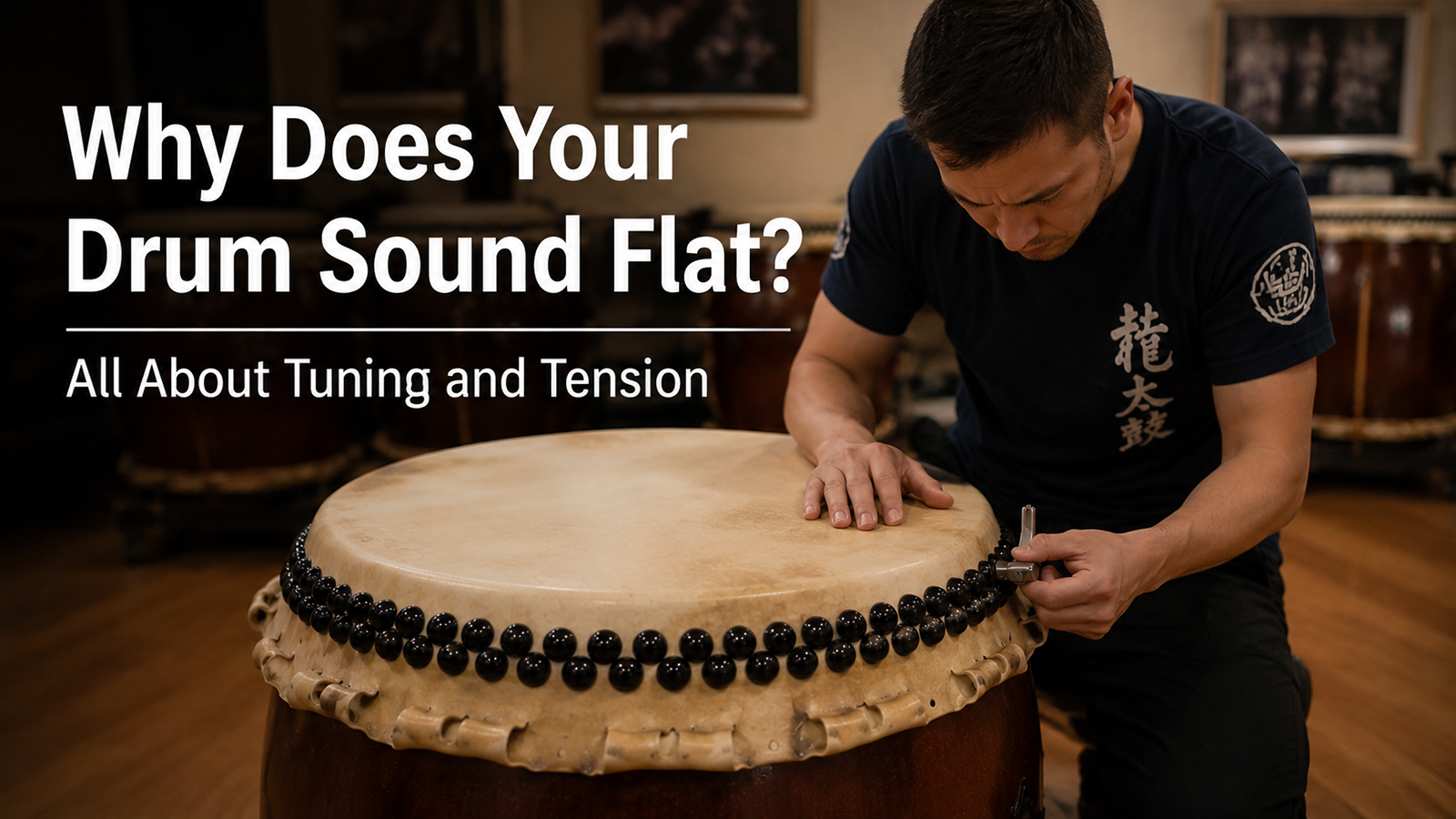
For the rope tension taiko, the biggest advantage of this kind of taiko is that you can tune them yourself. But it’s not easy. It requires strength and even more skills. You can sit on the floor, bracing the drum body with your feet. Working your way around the drum circle to ensure even tension is the most important thing.
For the most common Nagado drum, the head is nailed onto the body with iron tacks. It means that once the head loosens, you can’t tighten it by pulling a rope. Many drummers try to use hairdryers to shrink the head. These are temporary methods that cannot address the root cause and can easily ruin the instrument.
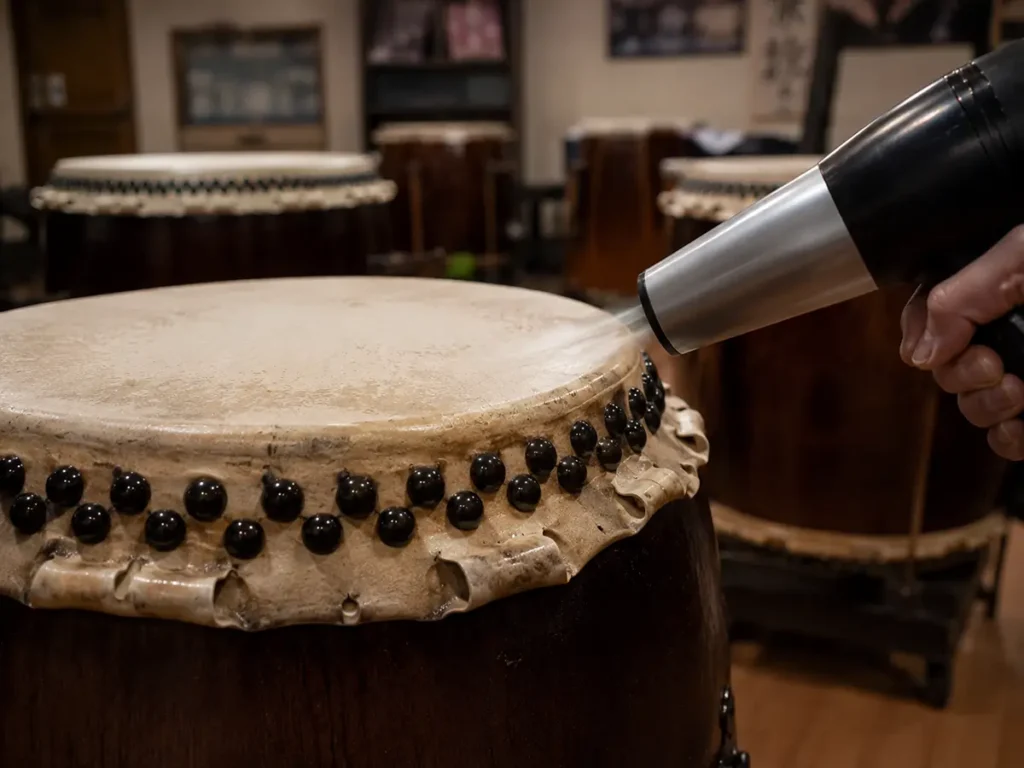
The only solution is that you need to remove the old head, and then hammer in new tacks.
Part 4: JINLEI’s Promise
This is why choosing a responsible brand is essential. If you bought the product in JINLEI, we believe selling the drum is just the beginning of our service.
If you think your drums are something wrong. Sending a video to our customer service team. Our master technicians can diagnose the drum’s condition by listening and send you detailed video tutorials. For JINLEI customers, we only charge for the costs of basic materials and labor. More importantly, our high density composite bodies are extremely stable and can withstand higher tension than traditional solid wood drums. This means the new heads we install can be stretched tighter. The good sound lasts longer.
Part 5: Self Rescue
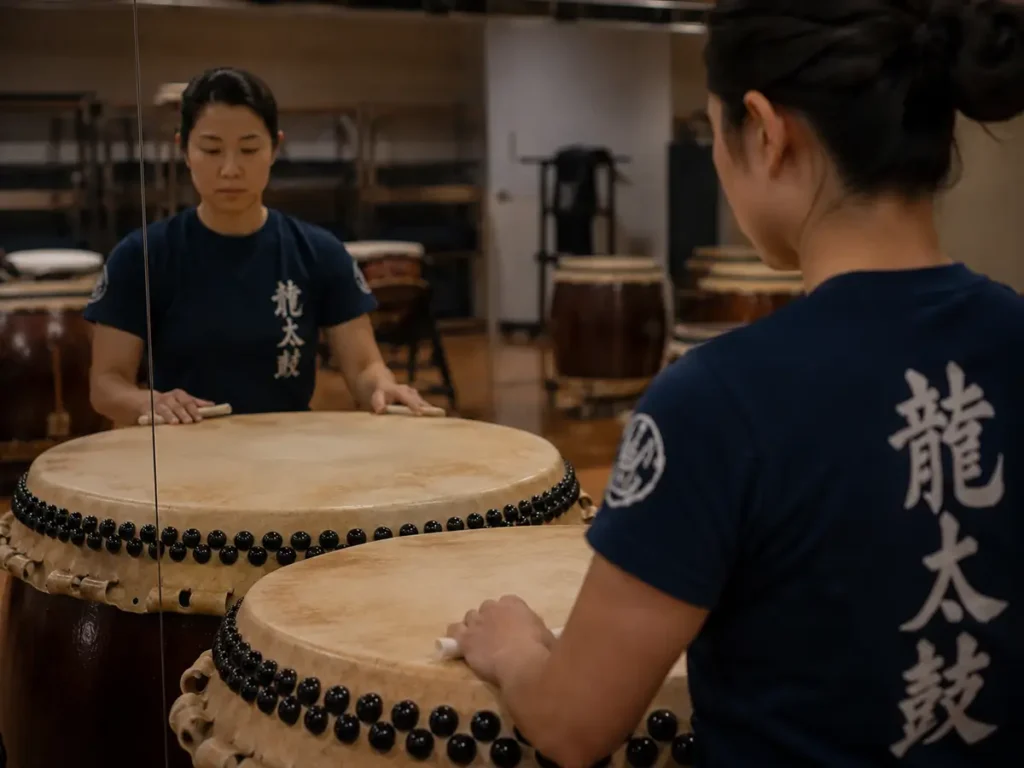
Before sending it for repair, there is one free way to improve tone. It is hitting the right spot. Many beginners have weak sounding drums because they hit randomly. One hit in the center, the next on the edge. Only the dead center can motivate the full fundamental frequency. There is a practical tip. You can practice focusing on hitting the center spot. When you can hit every strike on that spot, you will find that even an old drum can produce a powerful sound.
Conclusion
Taiko is not just an instrument. It’s a mirror.
How you treat it is how it sounds. Don’t complain that your drum doesn’t sound good. Please check and be careful with it regularly.
Can I use a hairdryer on the head to tighten it?
This way can be useful only for emergencies. If the head becomes damp just before a show, you can use a hairdryer at a distance to tighten it temporarily. But doing this often will cause the head to crack quickly.
How often do rope tension drums need tuning?
It depends on how often you play. You need to check the knots every 1-2 months, especially before a performance. You can also loosen the ropes to let the head rest. This way extends its life.