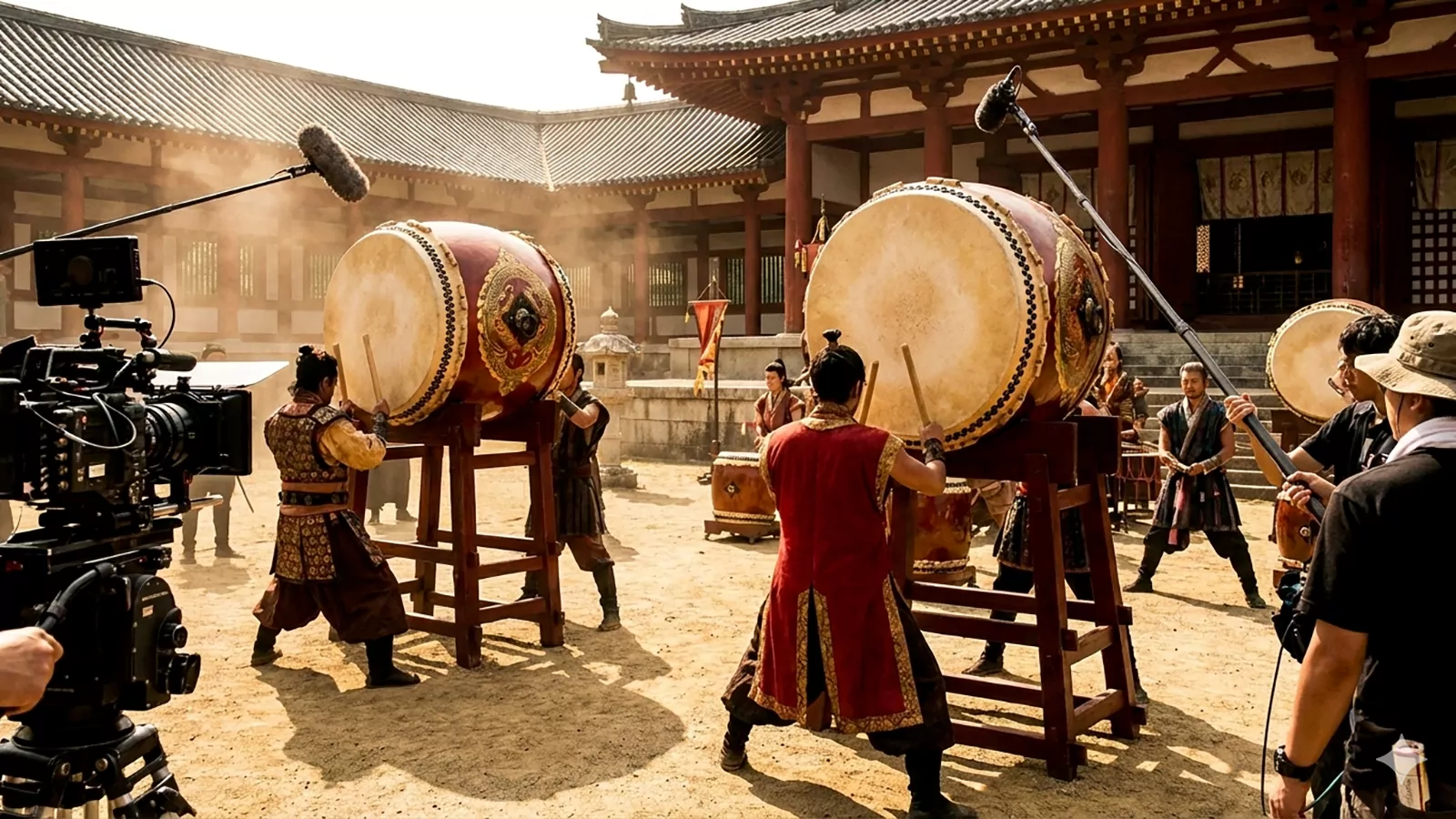
In the modern age, taiko appears not only in those traditional activities but also in film, games , and music videos. It gradually become a symbol of both sight and sound.
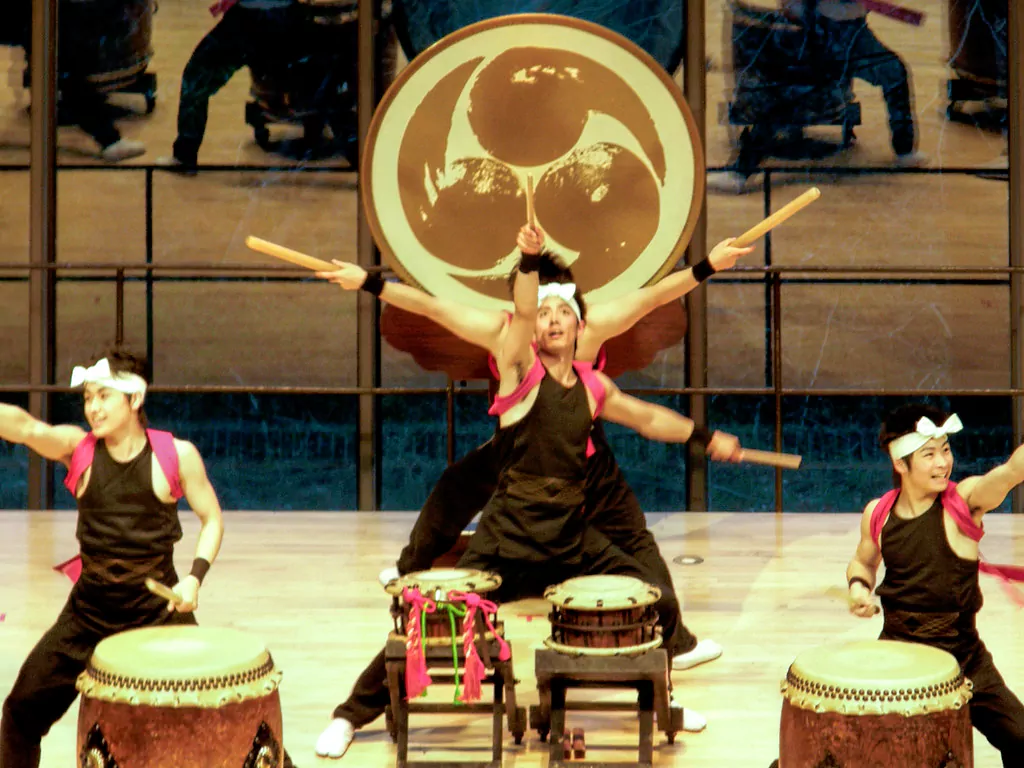
After entering the 21st century, this ancient instrument has broken through geographical and ritual boundaries from all over the world. It is no longer just a common drum, but has represented power and sanctity.
Whether its thunderous beats in The Matrix, the drumming combination of tradition and modernity in BTS music videos, or the background sound in Hayao Miyazaki’s work, taiko uses its powerful impact and visually performance to effect the global audiences.
Therefore, our article will review some typical cases of taiko drum applying in popular culture and analyze the reasons for its selection, exploring how this phenomenon reshapes contemporary young people’s perception and interest in taiko.
The typical cases from all over the world
| Media Type | Representative Works | Core Symbolism | Keywords |
| Film | The Last Samurai, The Matrix Reloaded | Samurai spirit, sense of epic, sense of Eastern power | Solemnity, Oppression, Heroism |
| Animation | Spirited Away, Demon Slayer | Otherworldly daily life, cultural roots, “hot-blooded” (passionate) interpretation | Fantasy, Intense/Soul-stirring, Cultural texture |
| Games | Taiko no Tatsujin, Sekiro, Genshin Impact | Immersive interaction, rhythm-driven, divine majesty | Rhythm, Combat, Sense of immersion |
| Music Video | BTS – “IDOL”, LiSA – “Gurenge” | Cultural confidence, collision of tradition and trend | Trendiness, Explosive power, Symbolism |
The Last Samurai
In the scenes that the conflict between samurai and modernized armies , taiko is used as a symbol of the samurai spirit. On the eve of battle, the character in this movie hears festival drumming from a distant village, serving both as a call to cultural belonging and a prediction of a war.
The Matrix Reloaded
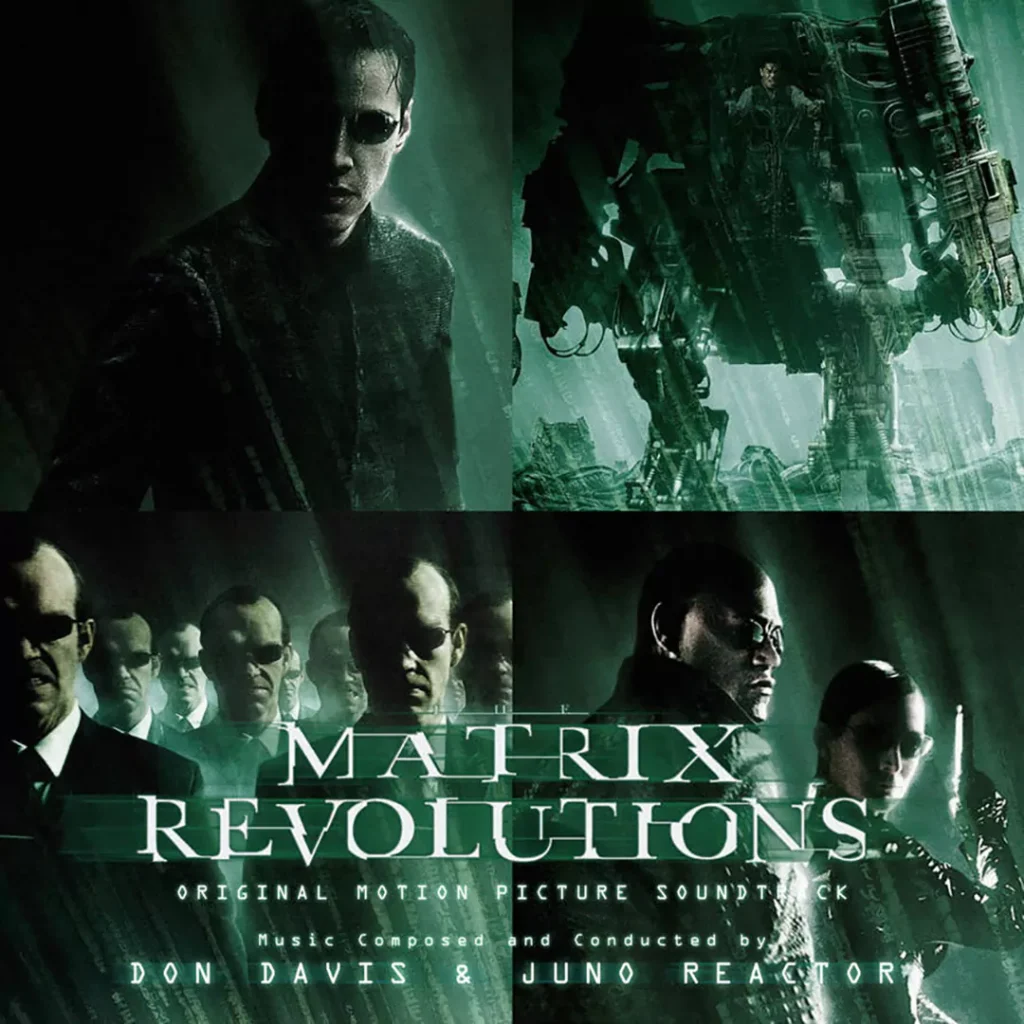
In this movie, the famous composer Don Davis uses a great amount of the low-frequency percussion which sounds like taiko. And this song also combines the sound with dense rhythmic patterns, so that it creates a sense of tension in the conflict between machines and humans. While the sound is not recorded by the real taiko, its sound design clearly draws on the sustained roar of taiko.So it becomes a classical case of the uses of taiko.
Arrival
In the key scene where a linguist tries to understand the Heptapod language, the deep drumming echoes in the background show a nonlinear perception of time.In this episode , the pulses transcend cultural differences to become a symbol of philosophical contemplation.
The reasons for choosing taiko
There are a lot of reasons why people prefer to choose taiko in background music:
- Physical Energy: the fundamental frequency of taiko can be very low, releasing energy in seconds. It means that this physical sense of vibration will directly trigger audience in the film, games and music videos, exceeding other drums.
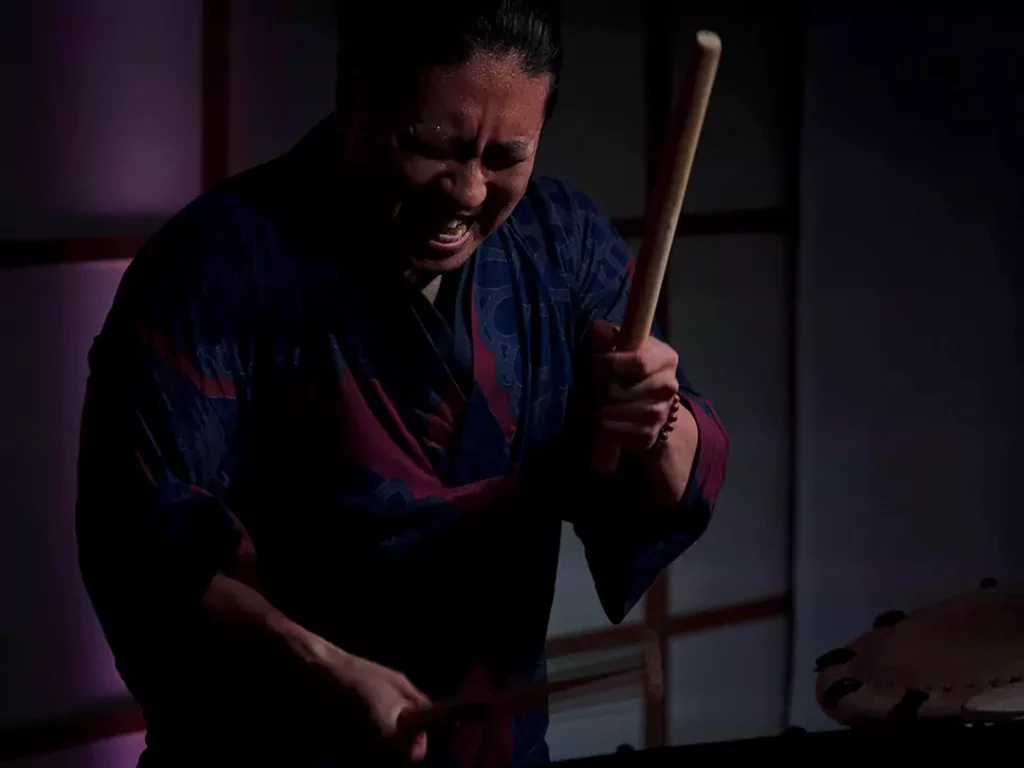
- Theatrical Performance: Taiko performance is highly theatrical, such as arm swings, stomps and shouts. All of these features create a strong visual scene. In cinematic language, a drummer’ slow mallet swing is enough to convey some meanings like determination.
- Cultural Coordinate: In the perception of global audiences, taiko stands for the eastern culture. Creators don’t need to explain the background of their work. The sound of taiko can quickly establish a cultural coordinate . So taiko is also a highly effective tool for cultural storytelling.
The Impact of the spreading of taiko
Many young people first encounter taiko through the BGM of movies and games. This unconscious enlightenment is far more effective than textbooks. According to some official surveys , more and more young people choose to participate in the global taiko workshop . The research showed that the number of participants rose significantly after 2010 because their interests were sparked by movies and games .
On the other hand, taiko in the popular media is often mixed with electronic music and rock music. It inspires some taiko groups in our real world to try something new, encouraging the communications between taiko and other cultures.
However, it is also very necessary to avoid that taiko in Western works is often stripped of its religious and historical context. For example, some Hollywood films will use taiko to create eastern stereotypes, instead of understanding them in different ways.
| Dimension | Core Features | Value to Media Creation |
| Auditory | 40-60Hz ultra-low frequency, ultra-fast transient response | Triggers adrenaline; simulates the vibration of a heartbeat or an explosion. |
| Visual | Large-scale physical movements, collective synchronicity | A “dynamic spectacle” with great dramatic tension, perfect for slow-motion shots. |
| Cultural | Strong East Asian festival / Samurai associations | Establishes “Eastern, mysterious, and sacred” scene coordinates without the need for dialogue. |
Questions and answers
Q1: Are the taiko sounds heard in some films and games all recorded live?
A: It is not entirely. Although some classical films may conduct on-site sampling, the whole industry commonly uses the virtual instrument sample libraries. These libraries record real sounds of the large taiko , allowing composers to simulate required sounds in the studio.
Q2: Why do many Western science fictions also prefer using taiko?
A: The sound of taiko possesses both vitality and a sense of rhythm. Western creators often use it to break away from purely Western orchestral modes, adding an eastern pressure to the audiences in some science fictions.
Q3: Can games like Taiko no Tatsujin actually help people learn to play real taiko?
A: They can only help players develop excellent rhythm sense and recognition of basic strokes. However, real taiko performance involves breath control and specific postures, which is hard to be simulated. It serves more as a gateway to taiko.
Q4: In modern music production, what is the difference between taiko and regular kit drums?
A: The most important differences are the frequency and resonance. Common kick drums typically have a shorter and drier sound, while large taiko have longer resonance times. They can create a natural atmosphere that is difficult for ordinary drums to achieve.
Conclusion
In the future, with the development of technologies like virtual reality and spatial audio, the immersive experience of taiko will develop deeply. Perhaps during one day, we will not only hear the sounds of drums, but also touch the vibration of the skin and see the sound waves. The ancient rhythm will continue to beat and share the sound waves with our human beings.