Introduction
Taiko instruction is not just about hitting a drum. It also involves body coordination, breath and a sense of timing.
Taiko is a representative traditional instrument. It attracts people because its powerful sound and high demand for the coordination between player’s mind and body. Learning taiko is far from simply hitting, it involves core strength, breath control and even cultural awareness. Therefore, taiko teaching cannot remain at the superficial level. Instead, it should build a systematic teaching framework.
Whether it is an interest class or a professional group , a professional taiko teacher must know how to break down technical difficulties and be skilled at inspiring students to innate sense of rhythm. This article will share a set of taiko teaching methodologies for the students at different levels. It aims to help teachers guide students more efficiently and go into the world of taiko.
Part 1: Setting Teaching Goals
1. Beginners stage
Core Goals: Firstly, beginners should master correct posture and basic striking motions. On the other hand, they also need to understand basic tones like “don” and “kA ”. Additionally, they need to practice until they can play basic rhythm patterns stably with a metronome. In the end, developing auditory sensitivity to rhythm is very important.
How to build mindset
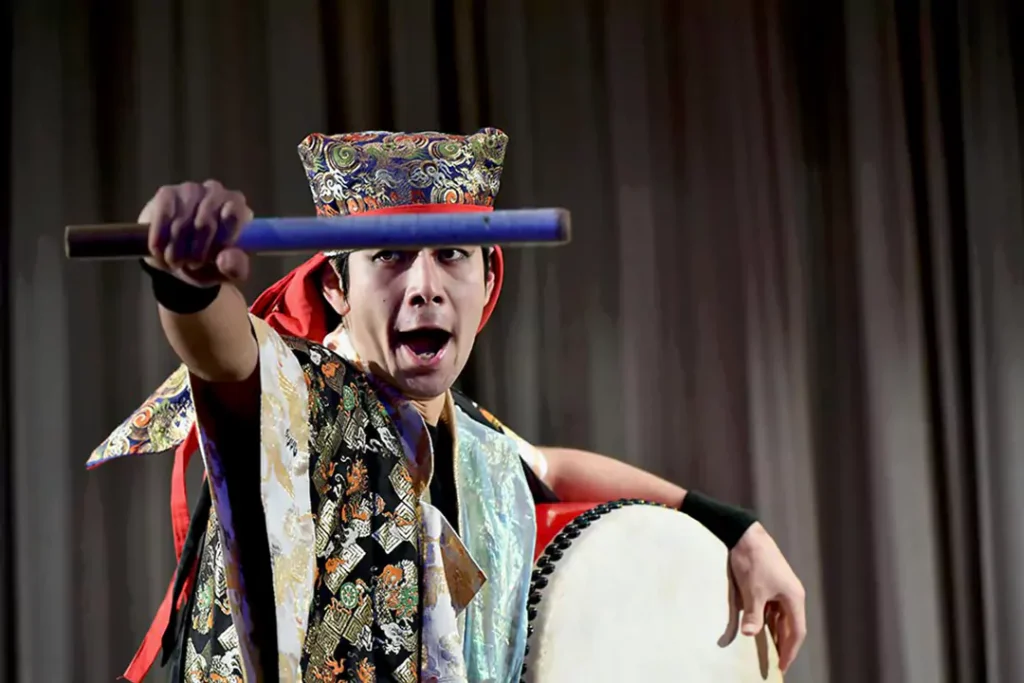
At first, beginners often get frustrated by missing beats in the bachi rhythm. Teachers should encourage students to build confidence through slow and repetitive practice.
2. Intermediate Stage
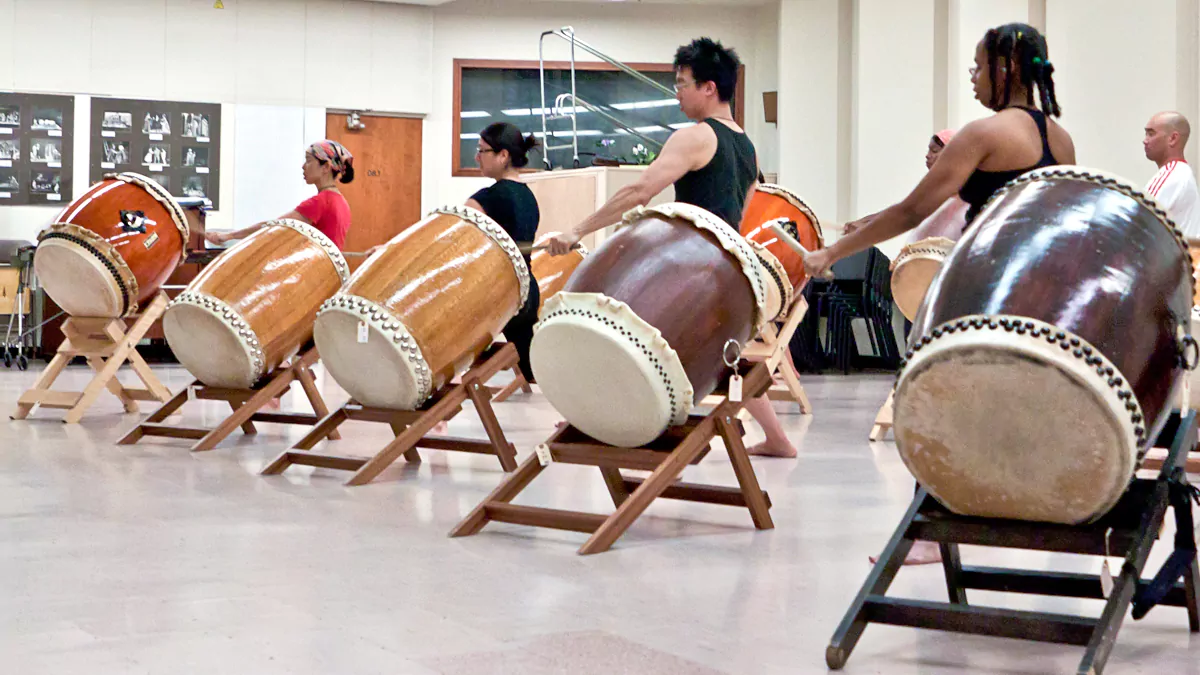
Core Goals: After learning for a while, players should master some common rhythm patterns and switch between them freely. And then, identifying deviations independently is very crucial . If they master these skills, they can participate in a small group to practice their movements and rhythm. They can also improve their technique by understanding the cultural background of taiko in festivals or performances. In addition to, this stage requires players to strengthen their awareness of listening to others, because taiko is not a solo instrument.
3. Advanced Stage
Core Goals:When you totally master the skills like stage movement and expression management to perform nagadou daiko, you need to possess the ability for rhythmic variation and handle some specific part during performance. Creating or adapting rhythmic segments is also a key skill of players.
| Learning Stage | Training Focus | Core Ability Requirements | Assessment Criteria |
| Beginner (0-3 Months) | Body Mechanics & Basic Tone | Correct Stance, Grip, Don/Ka Distinction | Stable with 60 BPM Metronome |
| Intermediate (3-12 Months) | Internal Rhythm & Teamwork | Complex Rhythm Switches, Listening to Teammates, Dynamics Control | Complete a 2-3 Minute Ensemble Piece |
| Advanced (1 Year+) | Artistic Expression & Stage Presence | Dynamic Changes, Improvisation, Emotional Delivery | Capable of Independent Public Performance |
Part 2: Teaching arrangements
First, teachers need to help students improve a sense of rhythm with metronome. They must practice slowly by hand, finally speeding up to original pace. This practice can improve students’s reaction speed. Then, students will learn to play the same rhythm pattern at three dynamic levels from soft to strong, experiencing the emotional difference.
| Tone Name | Sound Word | Hitting Position | Core Action | Sound Feature |
| Heavy Sound | Don | Drum Center | Relax wrist, use rebound | Deep, thick, resonant |
| Rim Sound | Ka | Drum Rim (Wooden Edge) | Fingertip force, small motion | Crisp, short, high-pitched |
| Rapid Hits | Tsu | Drum Center | Tiny motion, finger control | Light, flowing like water |
| Mute / Stop | (Mute) | Press Mallet on Drum | Instant stop, cut vibration | Sudden silence |
In the end, players can stand facing each other. One person leads the rhythm, the other one follows their movements and dynamics exactly, so that they can train their ability of observation and teamwork.
Part 3: How to strengthen cooperation and expressiveness
For teachers, they can establish some team rituals in advance. For example, members can have a deep breath before class, and then have mutual bows after class. This behavior will increase their sense of belonging. Setting a goal is also a good way. If members have the same goal, they will make efforts in the same direction. Not only that, teachers should encourage students to have more creative expressions.
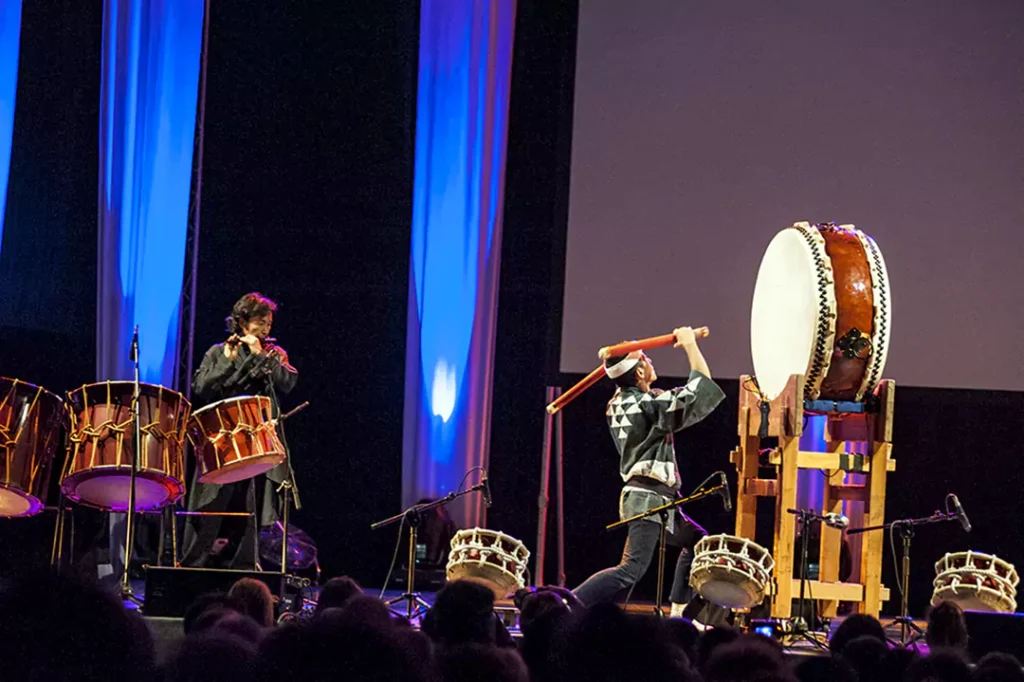
For students, they need to practice fundamentals every day and use metronome for self-recorded practice. Watching excellent performance videos is important. They can analyze movement and rhythmic design by themselves through these videos.
| Common Student Issues | Possible Causes | Suggested Corrections |
| Always Rushing | Body too tense, rapid breathing from excitement | Practice “half-beat delay” mindset; focus on deep breathing |
| Inconsistent Tone | Uneven force between hands, hitting off-center | Close eyes to feel center; train weak hand separately |
| Hand Blisters/Abrasion | Grip too tight (“death grip”), excessive friction | Emphasize “loose grip, firm hit”; check palm contact point |
| Rhythm Chaos in Ensemble | Lack of spatial awareness, staring only at own drum | Practice “blind ensemble”; require eye contact |
Teaching FAQs
Q1: How to address boredom from long-term fundamental practice?
A: I think that teachers do not just use a metronome to teach, they can find some modern pop music and electronic music with a strong beat and ask students to accompany them by using basic rhythm patterns. Also, teachers can hold some games during practice to add fun regularly.
Q2: For students with particularly poor body coordination, are there any methods to help them?
A: Teachers should help students learn to sing the rhythm loudly first before playing. If they can sing the rhythm accurately, the body movements can follow naturally.
Q3: Most of the teaching spaces are limited, so many students cannot have their own drum. What can teachers do?
A: It is very common to face this problem. I think one group can practice on drums, while another can practice motions on practice pads. Alternatively, teachers can have the waiting students play auxiliary percussion to support different rhythmic perceptions.
Q4: How to assess if a student is ready to advance to the next stage?
A: Beyond technical assessment, a qualified student should have relaxed shoulders and facial expression. If a student is sweating heavily but the sound is dead, it indicates their physical power application is not suitable to advance to the next step .
Conclusion
Taiko teaching is a shared physical exercise for teachers and students. The teacher is not merely a transmitter of technique, but also a guardian of traditional culture. The sound of shime daiko ultimately appears in the human heart. We hope that every taiko teacher can teach their students with patience, wisdom and passion. Every player should strike the drum within more hearts.