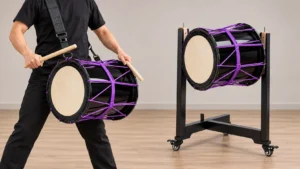
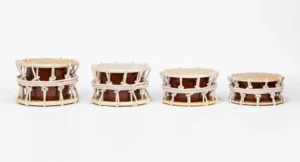
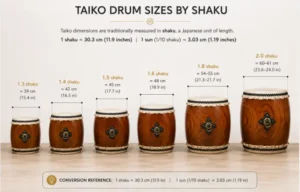
During today’s fast-paced lifestyle, people now are paying more attention to physical and mental health.While traditional exercises like running, swimming and some gym exercises are effective, we still need some fresh and engaging ways to stay motivated. Taiko drumming can be one of these kind of exercises, which is a traditional instrument with deep cultural roots. This exercise cannot only offer a unique musical experience for audiences, but also serve as a comprehensive body training . So we plan to explore how taiko drumming contributes to physical fitness through some essential factors and its emerging trend as a group activity.

Analysis of Body Movements in Taiko Performance
Taiko drumming requires drummers have strong muscles to maintain stability and balance of the whole body. During performances, drummers continuously swing the drumsticks, engaging the abdominal, back and gluteal muscles. Strengthening the core cannot only improve stick control but also reduce the risk of injury. Therefore, regular core exercises are very essential for drummers.
On the other hand, Taiko also demands a high level of coordination. Drummers must alternate their hand movements when they perform their footwork and body rotations. It is a big challenge for their body coordination which enhances drummer’s flexibility and reflexes. Therefore, with the consistent practice, drummers can gradually develop a strong sense of rhythm and improve their spatial awareness.
In the end , Taiko performances often involve sustained physical exertion, requiring considerable stamina.A full performance sometimes will last several hours , so the drummers must maintain consistent rhythm and power during this period. In order to build endurance, drummers can participate in some aerobic exercises like jogging or swimming, along with high-intensity interval training.
Stretching and Warm-Up Recommendations Before and After Practice
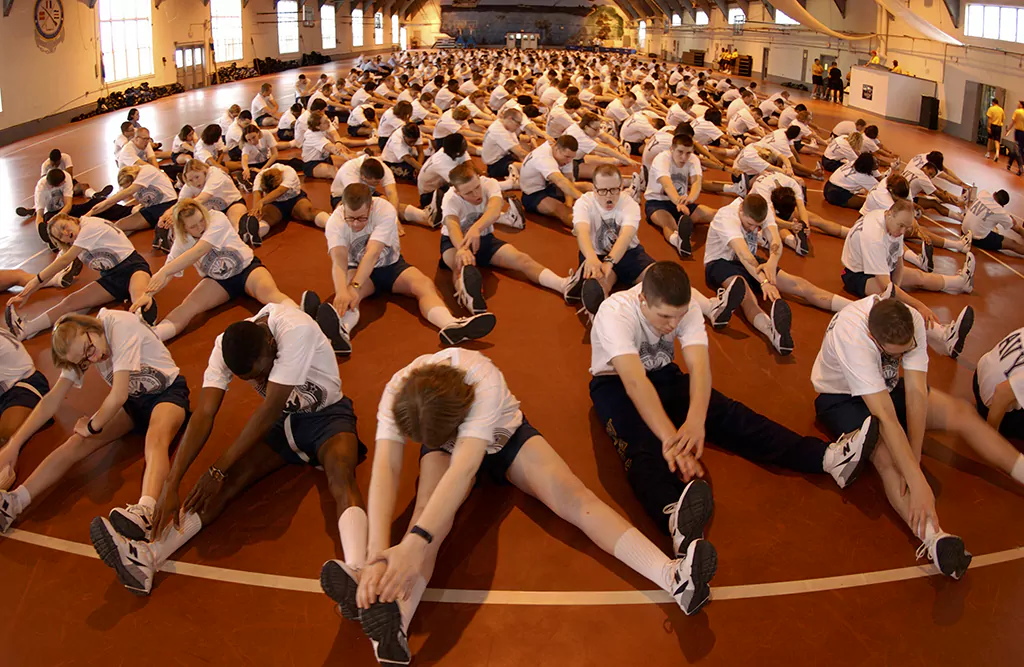
There are some warm-up and stretching suggestions for you. Drummers can begin with joint mobilization, for example, rotating and flexing wrists, ankles, knees and other joints to improve flexibility. And then focus on arms, shoulders, back and legs, holding each stretch for 15–30 seconds. Finally , drummers can practice some simple taiko movements in advance , such as air striking and footwork, to ease into intense activity. After practicing , stretching muscles can help aids muscle recovery and reduces soreness. Firstly, people can stretch arms, shoulders and back with shoulder rotations. In addition to , lowering body is also necessary. Target thighs, calves and glutes with seated forward bends or standing leg curls. Finally , deep breathing and meditation can be very effective for complete recovery.
However , some beginners often use excessive force, leading to fatigue and injury. Instead , they need to find a balance that produces clear sound without straining. So if you want to avoid making mistakes, you need to learn step by step and use a mirror to check and correct your posture in real time. Learning from experienced instructors who can provide personalized feedback is also a great way .
Recently, taiko play an internal part in group activities. It not only enhances individual fitness but also fosters teamwork. In a taiko ensemble, each member plays a specific role, and collaborating to complete a piece brings a unique sense of achievement to drummers. At the same time, mutual support and encouragement within the team make the experience more enjoyable and meaningful. Because of this, more and more people organize clubs and groups of taiko. Here are a few successful cases.
New Trends in Taiko as a Team Activity
Taiko Fitness Club was a great example. It was founded in 2018 by a group of young taiko enthusiasts. At first, it just started with casual practice in parks and has grown into a formal community. The club now hold weekly group sessions and regular public performances. Members in this club can improve their skills while building friendships.
Shō Kobayashi is another good example. He is a popular social media influencer who shares his taiko practice photos and videos on his social media account . His content range from basic tutorials to some advanced techniques. He successfully inspires many followers to have a healthier lifestyle through taiko.
The taiko club built by University of Tokyo Taiko Society was very popular . The taiko club was established in the 1990s, bringing together members from various departments. Through regular practice and performances, students can enhance their artistic skills and combine their social bonds.

With the development of technology, taiko fitness has also seen innovation and change. The introduction of smart taiko drums and artificial apps has brought new energy to the traditional training. These devices are often equipped with sensors that can track the strength, speed and accuracy of each strike in real time. Through a mobile app, users will get instant feedback and scores. This change make practice more data-driven and game-like. For example, some smart drum pads can connect to virtual reality devices. So users can play in an immersive environment , which makes training more fun and challenging.At the same time, online taiko communities and livestream’s classes are growing. People no longer need to leave home to learn from professional instructors or share experiences with drummers around the world. This approach breaks geographical and time limits. It is especially helpful for busy city dwellers. Thanks to technology, taiko drumming is no longer just a practice. It has became a link connecting enthusiasts from all over the world and helping to spread this traditional art as a modern form of exercise.
Overall, taiko is not just a traditional art form but also a healthy activity. Whether you are a beginner or an experienced drummer, taiko offers the invaluable benefits for you. I sincerely hope this article will be useful to inspire you on your taiko fitness journey!